
Last updated September 24, 2026
Seasonal Insulation Care for Newport Beach: Year-Round Homeowner’s Guide
Newport Beach homeowners often assume mild coastal weather means their insulation can be ignored year-round. That assumption costs money. The Santa Ana wind events that push Newport Beach temperatures above 90°F for days at a time also depressurize attics relative to living space, pulling conditioned air through every unsealed bypass at a rate that can triple a home’s effective air infiltration. That load disappears from the utility bill only after the event passes, making it invisible without a blower-door baseline. In this guide to insulation in Newport Beach, you’ll learn how to read Newport Beach’s four distinct insulation stress cycles, what to document each season, and how to build a performance log that turns your attic from a black box into a measurable system.
Quick Answer
Seasonal insulation care in Newport Beach means tracking four stress cycles: winter marine-layer humidity, spring moderate temperatures for safe self-inspection, summer peak cooling load, and fall Santa Ana wind preparation. A homeowner who follows an Attic Insulation Maintenance Checklist for Newport Beach Homeowners by documenting attic depth, taking one thermal image, and logging utility trends year-over-year can identify 80% of premature insulation failures before they require major repair.
Table of Contents
- Why Newport Beach Has Four Insulation Seasons
- Winter (November-February): Marine Layer and Attic Humidity
- Spring (March-May): The Only Safe Self-Inspection Window
- Summer (June-September): Reading Your Utility Bill as a Diagnostic Tool
- Fall (October): Santa Ana Preparation and Pest Checks
- How to Build a Year-Over-Year Performance Log
- Common Mistakes to Avoid
- When to Call a Professional
- Frequently Asked Questions
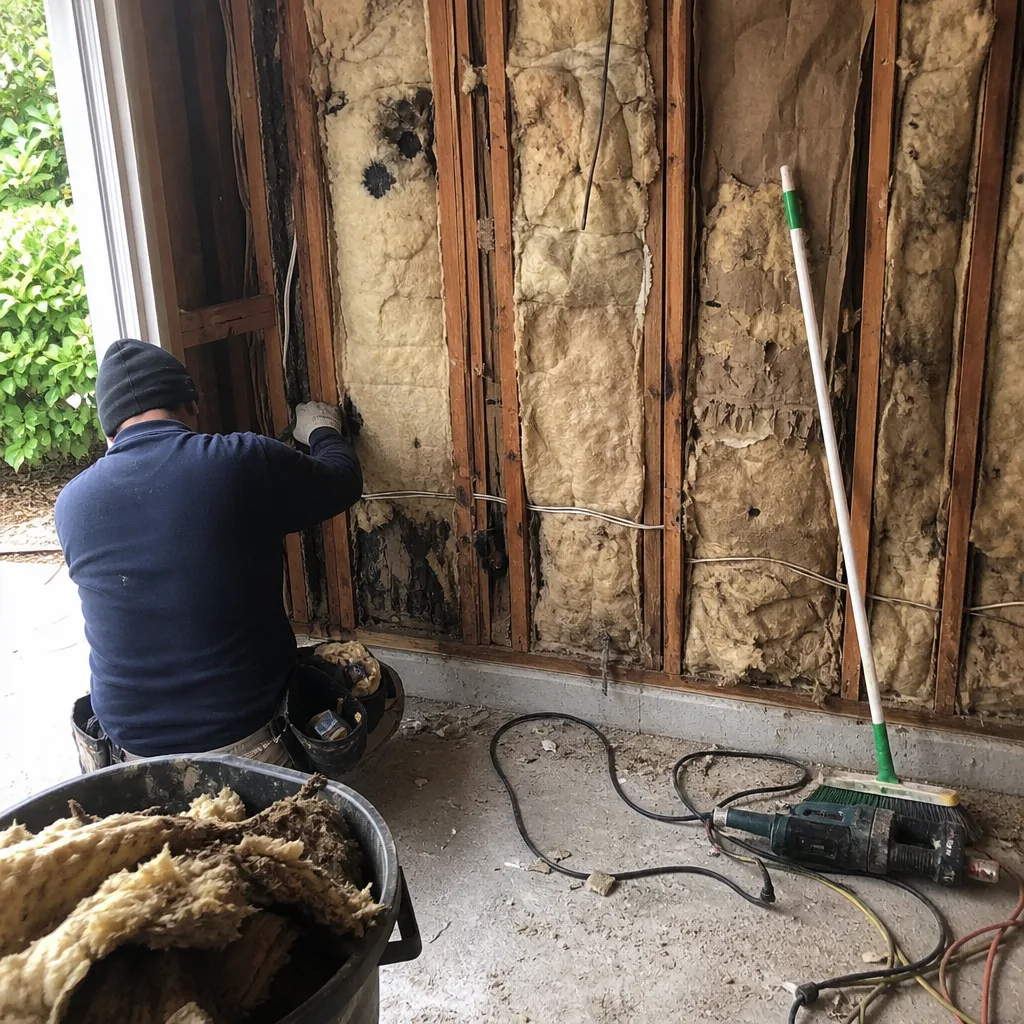 Before
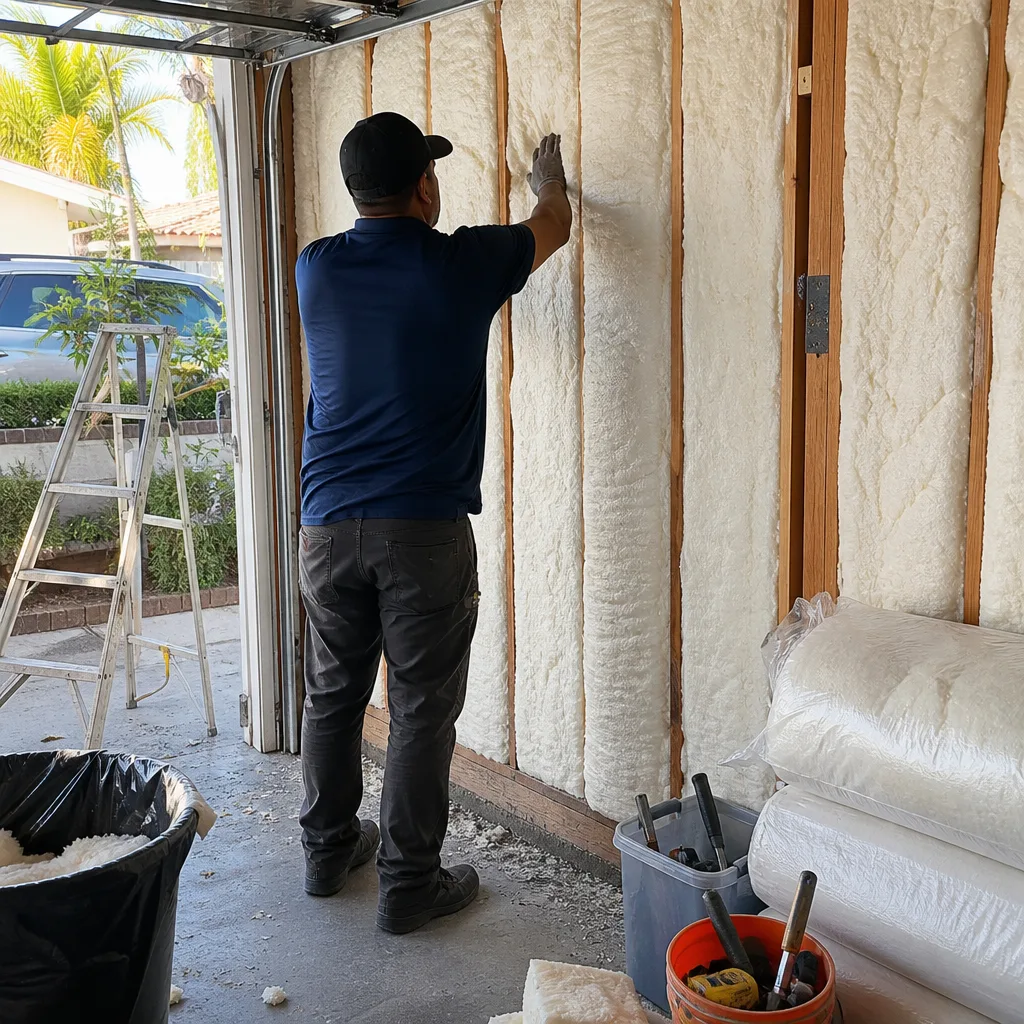 After
AfterWhy Newport Beach Has Four Insulation Seasons
Most guides written for national audiences divide insulation care into winter heating and summer cooling. Newport Beach doesn’t cooperate with that framework. Our heating degree days are minimal, our cooling degree days are moderate but spiky, and our dominant weather story is moisture management, not temperature extremes.
What we have instead are four stress cycles that each attack the building envelope differently:
- Winter marine layer saturation - sustained high relative humidity that degrades fibrous insulation and promotes mold on sheathing
- Spring thermal neutrality - the brief window when attic temperatures are safe for homeowner inspection without protective gear
- Summer peak cooling load - not extreme heat, but prolonged runtime on undersized or degraded systems
- Fall Santa Ana wind events - rapid pressure changes that expose every air-sealing failure in the attic floor
We’ve documented this pattern across thousands of site visits in coastal Orange County. The homes that perform well share one trait: the owner treats the attic as a monitored system, not a set-it-and-forget-it component. The homes that fail prematurely share another: the insulation was upgraded without air sealing first, so conditioned air moves through the envelope continuously, carrying moisture and wasting energy whether the owner notices or not.
At Topside Attic Insulation Newport Beach home, we begin every job with a blower-door test - a pressurization reading that shows, in one number, how much air your building envelope is losing. Without that baseline, you’re guessing at which season is actually causing the problem.
Winter (November-February): Marine Layer and Attic Humidity
The marine layer in Newport Beach peaks from November through February, often persisting for 10 to 14 consecutive days. During these periods, outdoor relative humidity stays above 85% and attic temperatures drop into the 40s. Warm, moist air from the living space rises through ceiling penetrations - recessed can lights, top plates, bathroom exhaust fan housings - and condenses on cold sheathing.
We’ve pulled back fiberglass batts in Corona del Mar attics where the paper facing was stained brown from repeated wet-dry cycles. The homeowner never knew because the moisture dried between events, leaving only the discoloration as evidence. By the time musty odors reach the living space, the sheathing has often sustained damage.
What to Check at the Attic Hatch
Your attic hatch is the easiest access point and the most telling indicator. Here’s what to document:
- Staining patterns on the hatch frame: Dark rings that reappear after rain suggest a roof leak. Uniform gray-brown haze along the frame suggests condensation from air leakage - a different problem requiring different repair.
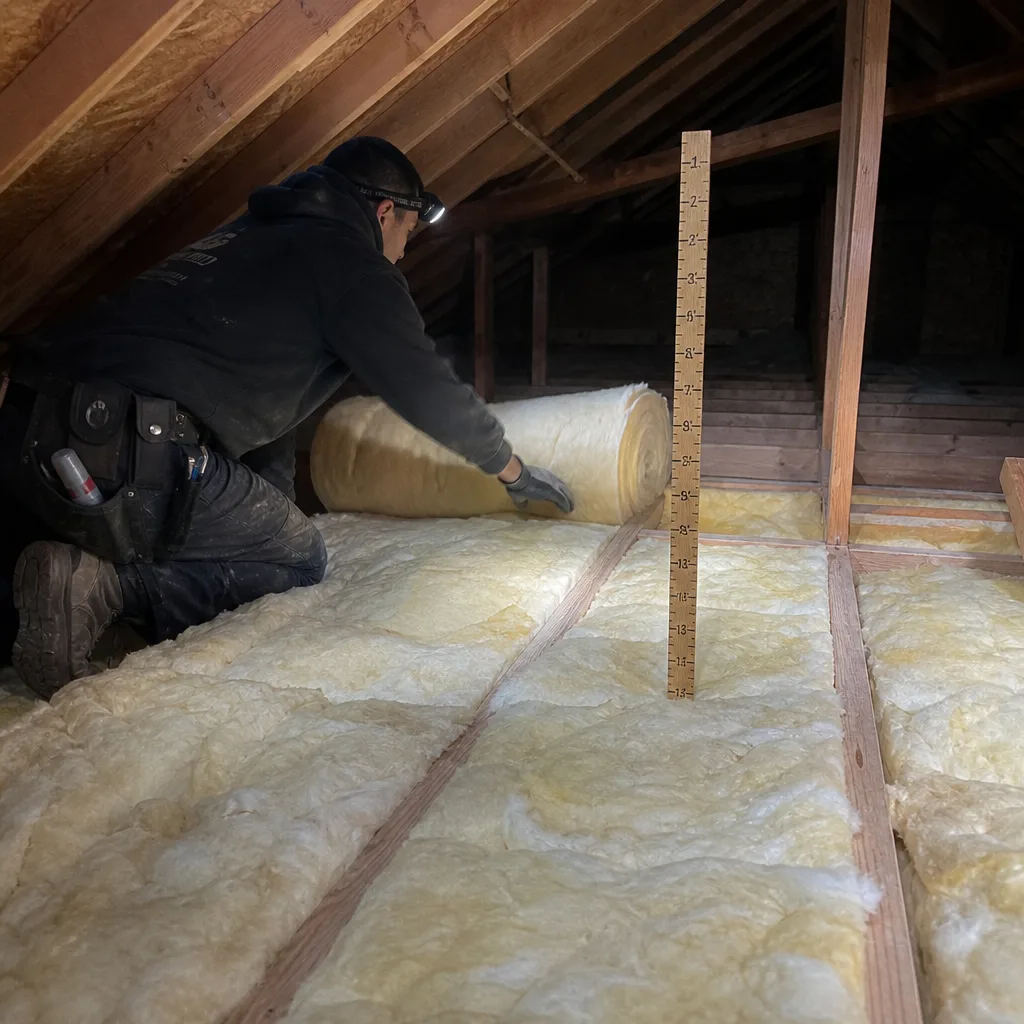
- Insulation compression near the hatch: Homeowners who store holiday decorations in Newport Beach attics often compress blown fiberglass or cellulose while accessing the space. Compressed insulation performs at a fraction of its rated R-value. Rockwool - a mineral wool product that maintains loft under moderate compression - holds up better in active storage attics, though we still don’t recommend walking on any insulation type routinely.
- Hatch weatherstripping condition: The gap around a typical attic hatch leaks as much air as a 6-inch square hole in the wall. Check that the foam gasket is intact and the hatch sits flat when closed.
Dating Moisture Staining: Pattern vs. One-Time Event
Not all stains are active problems. A single dark spot with crisp edges usually traces to a specific incident - a wind-driven rain event, a one-time plumbing leak, a replaced exhaust fan. Fuzzy or feathered edges that repeat in the same location indicate chronic condensation. Photograph stains with a date stamp. If the same pattern returns after two marine layer cycles, you have an air-sealing failure, not a roof leak.
Homes in the Newport Heights and Lido Isle areas are particularly susceptible because their original construction (much of it 1950s-1970s) used minimal top-plate sealing and unbaffled eave vents that allow wind-washing of insulation during Santa Ana events. The combination of winter moisture loading and fall pressure events degrades performance faster than either alone.
Spring (March-May): The Only Safe Self-Inspection Window
Attic temperatures in Newport Beach from March through May typically range from 65°F to 85°F - the only period when a homeowner can safely spend 20 minutes inspecting without risk of heat exhaustion or cold stress. We schedule our detailed energy audits during this window for exactly that reason.
Use this season to build your baseline documentation. What you capture now becomes the reference point for every future comparison.
The Spring Inspection Checklist
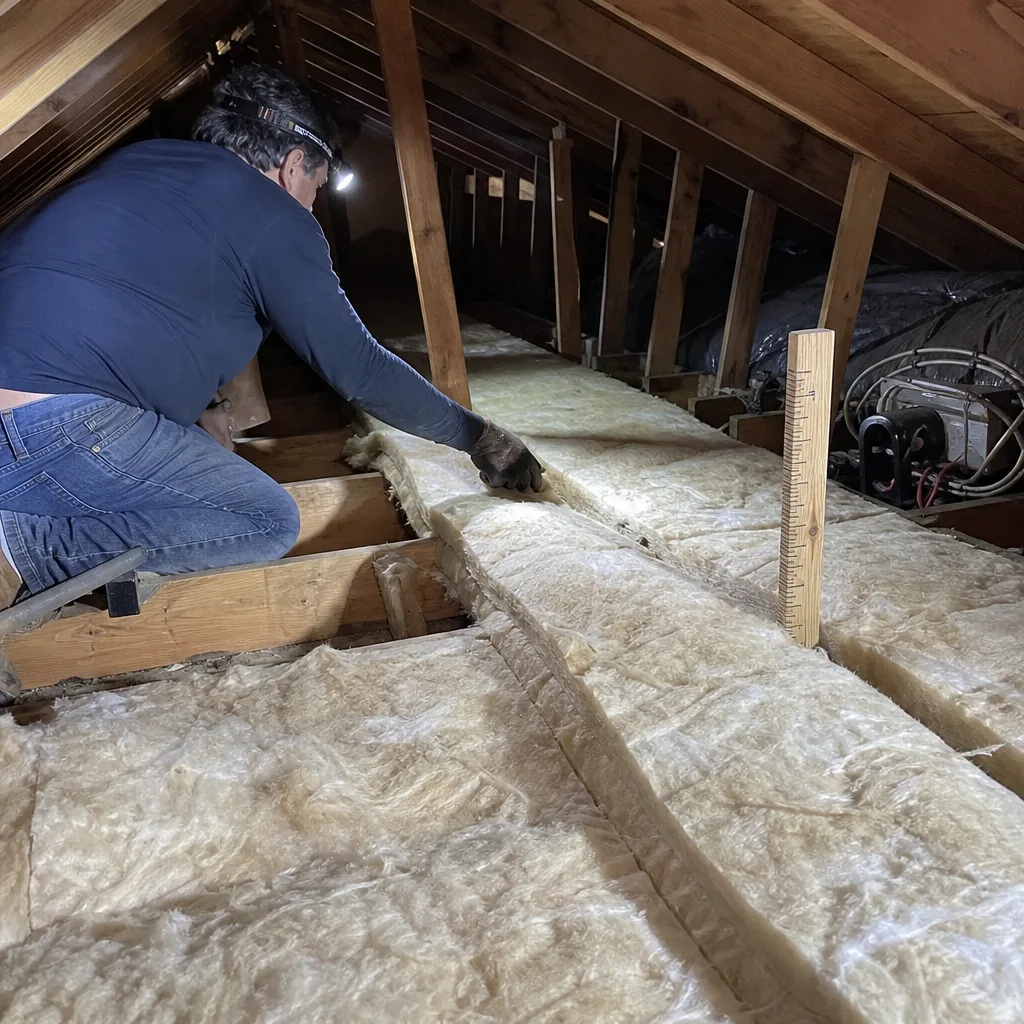
- Measure insulation depth at five points: Near the hatch, at the center of the attic, and at three eave locations. Use a yardstick, not a tape measure that can bend. Record each measurement with the date. For blown-in fiberglass or cellulose, depth directly correlates to R-value if the material is undisturbed. In Newport Beach, attics built before 2010 often have original insulation at R-19 or less; current Title 24 code calls for R-38 to R-49 depending on the exact climate zone designation.
- Photograph the attic from the hatch looking north, south, east, and west. Include the roof sheathing, insulation surface, and any visible penetrations. These photos establish a visual baseline for pest activity, insulation settling, and moisture staining.
- Document every penetration you can see. Recessed lights, chimney chases, plumbing vent stacks, electrical wiring holes - each is a potential air bypass. Count them. A typical 2,000-square-foot Newport Beach home has 40 to 80 ceiling penetrations; most were never sealed during original construction.
- Check eave baffles. These cardboard or foam channels keep soffit vents clear of insulation. If they’re missing or collapsed, wind washing - outdoor air moving directly across the insulation surface - strips heat in winter and introduces moisture year-round. Baffles cost pennies; replacing degraded insulation costs dollars.
- Look for pest evidence. Rodent trails in blown insulation appear as compressed pathways. Droppings near warm chimney chases indicate active infestation. In Newport Beach, roof rat activity peaks in spring as breeding begins; early detection prevents the compression and contamination that requires full insulation removal.
If you find compressed or degraded insulation, Attic Insulation in Newport Beach can assess whether spot repair or full replacement is warranted. We provide a written price before any work starts - Haven Standard Clause 1 - and document the existing condition with photos you keep.
What to Do With Your Documentation
Store measurements and photos in a dated folder. Email yourself a copy. This isn’t busywork; it’s the evidence that lets a contractor diagnose trends instead of symptoms. When we arrive for a service visit and a homeowner hands us three years of depth measurements, we can immediately distinguish normal settling from accelerated degradation and recommend the right intervention instead of the most expensive one.
Summer (June-September): Reading Your Utility Bill as a Diagnostic Tool
Newport Beach summers are not Phoenix summers. But they’re long enough, and cooling systems run enough hours, that insulation degradation shows up in utility data before it shows up in comfort complaints.
The key metric is year-over-year kWh trend, adjusted for degree days. A 15% increase in cooling-season kWh from one year to the next, with similar thermostat settings, strongly suggests envelope performance degradation. The insulation hasn’t necessarily failed; more often, air sealing has degraded (weatherstripping, caulk, foam) or insulation has settled/compressed, allowing more conditioned air to escape and more attic heat to radiate downward.
How to Calculate Your Cooling Load Trend
- Pull 24 months of electric bills from your utility’s online portal.
- Identify the June-through-September kWh for each year.
- Calculate total summer kWh for Year 1 and Year 2.
- Compare to degree days for Newport Beach (92660, 92661, 92662, 92663, 92657, 92658) for the same periods. If degree days were similar but kWh rose 15% or more, your envelope is leaking performance.
We’ve seen this pattern repeatedly in Newport Beach homes with original R-19 fiberglass batts and no air sealing. The cooling system runs longer to maintain setpoint, the homeowner nudges the thermostat down to compensate, and the cycle accelerates. By the time comfort becomes unacceptable, the utility penalty has already run into hundreds of dollars.
What a 15% Increase Actually Means
Fifteen percent isn’t a random threshold. In our experience across 9,000+ homes sealed and insulated since 2016, that’s the point where envelope leakage has increased enough to measurably impact both energy use and equipment lifespan. The compressor runs more cycles, the ductwork (if in the attic) sits in hotter air, and the overall system degrades faster.
The fix isn’t always more insulation. Often it’s air sealing first - top plates, can light enclosures, duct boots - then verifying insulation depth and distribution. We use Owens Corning and Knauf fiberglass, Rockwool mineral wool, and spray foam products from Icynene and Demilec where appropriate, but the material choice matters less than the sequence: sealed first, then insulated. We will never blow insulation over an unsealed attic floor. The blower-door test proves whether the sealing worked; we publish before-and-after numbers on every applicable job so the homeowner can verify the result.
Fall (October): Santa Ana Preparation and Pest Checks
October in Newport Beach is transition month. The marine layer retreats, temperatures moderate, and Santa Ana wind events begin - hot, dry easterly winds that depressurize attics and pull conditioned air through every envelope gap at velocities that dwarf normal infiltration.
We’ve measured blower-door readings during Santa Ana conditions that were 2.5× higher than the same home’s baseline in calm weather. The event passes, the reading normalizes, and the homeowner never connects the spike to their November utility bill. But the accumulated moisture and energy penalty is real.
Three Pre-Santa Ana Checks
- Confirm attic ventilation paths are clear. Soffit vents should be unobstructed by insulation or debris. Ridge vents should show daylight when viewed from inside. Blocked ventilation traps heat and moisture; over-ventilation without proper air sealing pulls conditioned air out faster. The balance matters.
- Verify no pest activity has compressed blown insulation near eaves. Roof rats enter through gaps as small as 3/4 inch and establish runways along eaves where insulation is thinnest. Compressed fiberglass loses up to 50% of its R-value. Look for smooth, darkened pathways in the insulation surface.
- Check attic hatch weatherstripping. Replace if cracked or compressed. A proper seal costs $10 in materials and prevents continuous air exchange that bypasses all your other insulation investment.
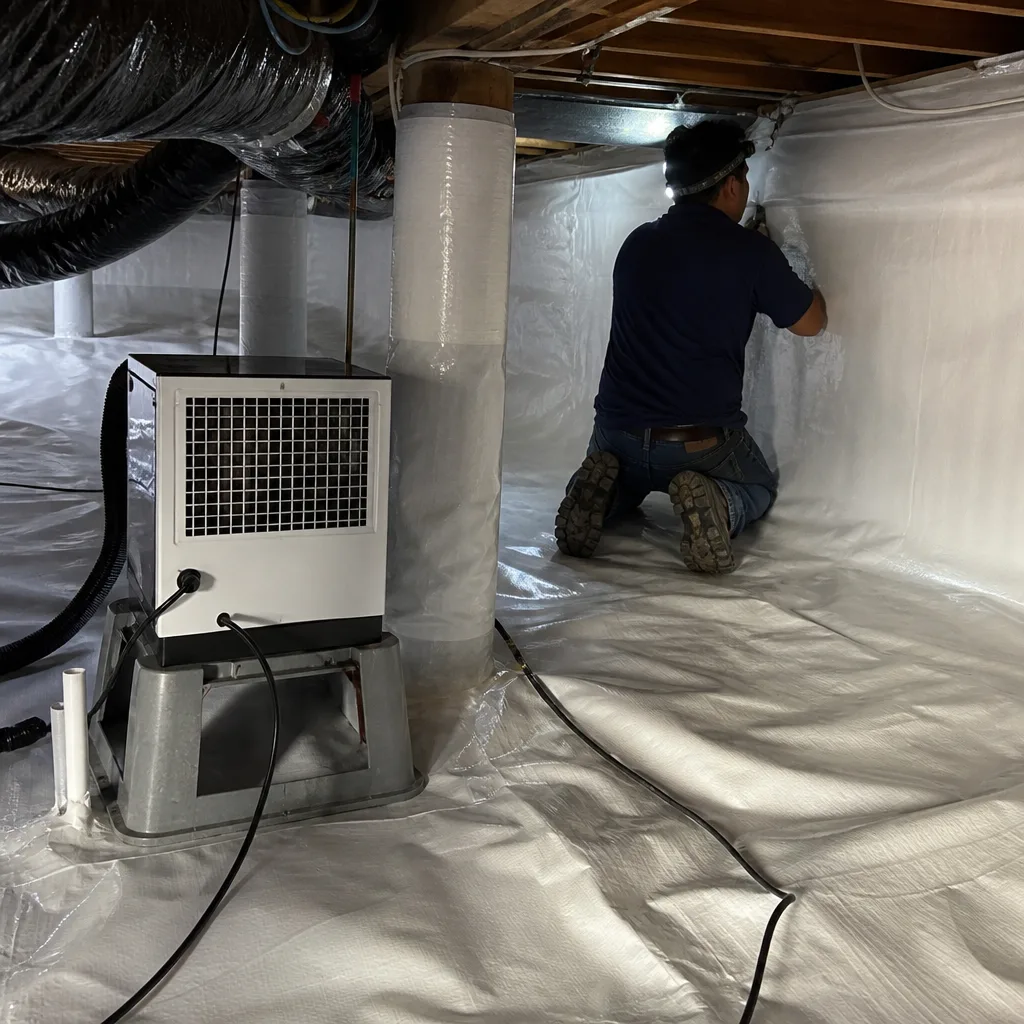
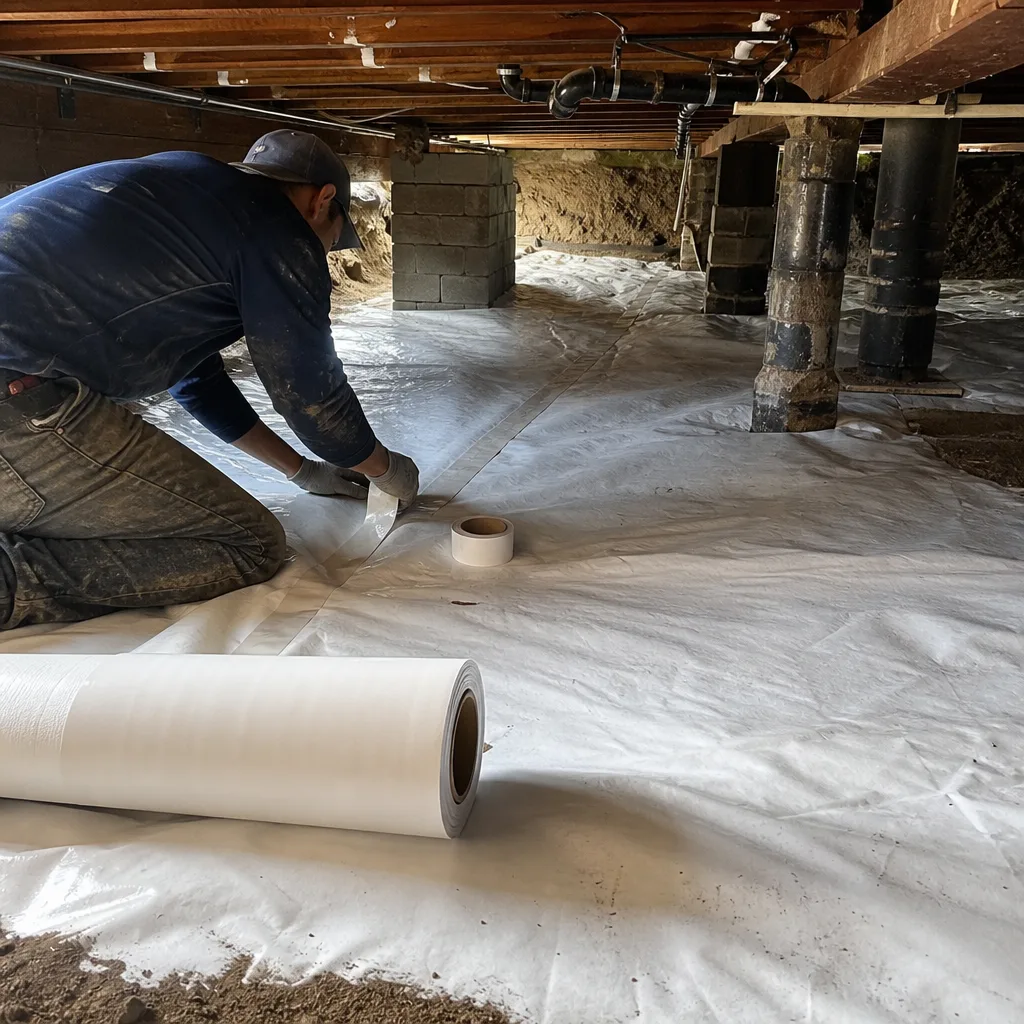
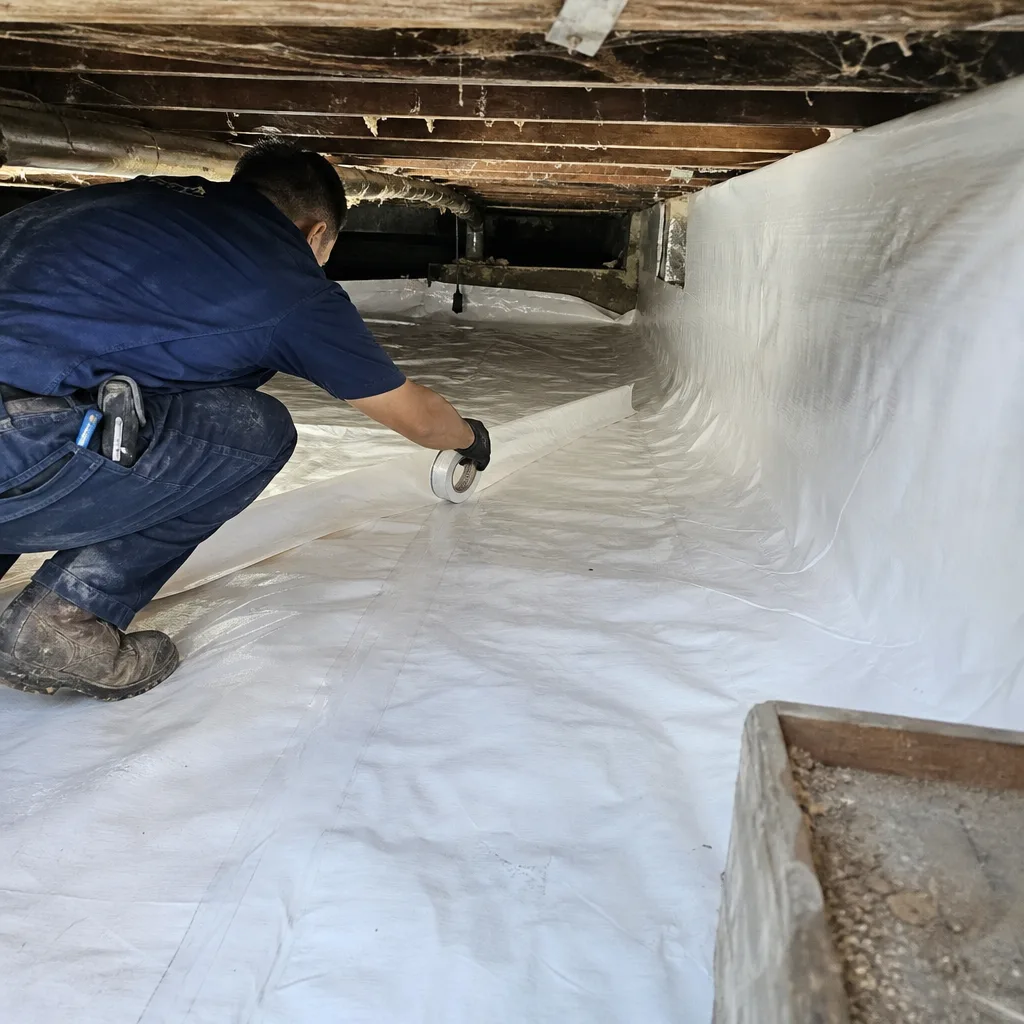
For homes with crawl space foundations, fall is also the time to verify vapor barrier integrity. Crawl Space Encapsulation & Vapor Barrier in Newport Beach addresses the ground moisture that rises through framing in winter, but the inspection starts with visual checks in October before the rains return.
The Pressure Event You Can’t See
Santa Ana winds create negative pressure in attics because the high wind speed over ridge vents accelerates exhaust airflow faster than soffit vents can supply makeup air. The attic pulls air from the living space through every available gap. If your home was built before 1990 in Newport Beach, it likely has unsealed top plates - the horizontal framing member where wall studs meet the ceiling drywall. Each top plate joint leaks a small amount; multiplied by every wall in the house, the total is equivalent to leaving a window cracked open year-round.
Sealing top plates requires access to the attic and specialized equipment to reach into tight spaces. It’s not a DIY project for most homeowners. But knowing it needs to be done - and asking any contractor whether they include it in their scope - separates effective work from cosmetic work.
How to Build a Year-Over-Year Performance Log
The homeowners who get the most value from their insulation investment treat it like any other building system: they monitor it. Here’s how to build a log that actually helps a contractor diagnose problems and quote accurately.
The Four-Component Log
- Utility data: Summer kWh totals (June-September) and winter gas therms if applicable. Note any thermostat setting changes. Export PDFs from your utility portal; don’t rely on memory.
- Attic depth measurements: The five-point measurement from your spring inspection, repeated annually. A spreadsheet with dates and locations takes five minutes to update and reveals settling trends that visual inspection misses.
- One thermal image per year: An inexpensive FLIR attachment for smartphones ($200-$400) captures ceiling surface temperatures that reveal insulation gaps, air leaks, and moisture patterns. Take images from the same locations each year: living room ceiling below the attic hatch, master bedroom below a known penetration, hallway below the duct trunk. Date and store with your other documentation.
- Contractor documentation: Written scopes, blower-door readings, and photo records from any professional work. At Envelope Insulation Co., we deliver a Documented Photo Record on every visit and before-and-after blower-door numbers on applicable jobs. These documents belong in your log; they’re the proof of what was done and what result was achieved.
When you call for service - whether it’s us or another contractor - having two or more years of this data changes the conversation. Instead of “my upstairs is hot,” you can say “my summer kWh rose 18% from 2023 to 2024, attic depth at the center dropped from 14 inches to 11 inches, and this thermal image shows a 12°F temperature differential across the master bedroom ceiling.” That specificity gets you accurate diagnosis and accurate pricing, not a blanket recommendation.
For homeowners considering Spray Foam Insulation in Newport Beach, the performance log is especially valuable. Spray foam is a premium investment with premium returns when applied correctly; the log proves whether your envelope issues are distribution problems (solvable with less expensive methods) or fundamental insulation failures that justify the upgrade.
Common Mistakes to Avoid
- Blowing new insulation over old without air sealing first. This is the most common error we correct in Newport Beach. The new layer looks full and fluffy, but air still moves through the old insulation beneath, carrying moisture and wasting energy. The homeowner pays twice: once for the cosmetic upgrade, again for the proper work.
- Storing decorations directly on insulation. Compression reduces R-value permanently. Fiberglass doesn’t rebound; cellulose partially rebounds but loses loft. Use plywood walking boards or store items in the garage.
- Ignoring the attic hatch. A 1/4-inch gap around a typical hatch leaks as much air as a 6-inch duct penetration. Weatherstripping is cheap; energy loss from an unsealed hatch is not.
- Assuming Newport Beach’s mild climate means insulation doesn’t matter. Our marine layer creates unique moisture stress. Homes with poor envelope performance don’t fail dramatically; they fail slowly, with higher utility bills, shorter equipment life, and gradual comfort degradation that owners normalize.
- Trusting visual inspection alone. Insulation can look fine and perform poorly. Settled blown fiberglass appears uniform but may be half its original depth. The only reliable metrics are measured depth, blower-door readings, and utility trends.
- Waiting for comfort complaints before acting. By the time a Newport Beach homeowner notices upstairs heat or cold spots, the envelope has typically been degraded for two or more years. Annual documentation catches problems before they become expensive.
- Accepting a quote without a written scope. Haven Standard Clause 1 requires a flat price, written scope, and written warranty before anyone lifts a tool. Verbal estimates leave room for “discovered conditions” that double the price. Get it in writing.
When to Call a Professional
Call a contractor when your performance log shows deteriorating trends, when you find moisture staining that repeats across seasons, or when you’re considering any insulation upgrade. The right time is before comfort becomes unacceptable and equipment fails prematurely.
Topside Attic Insulation Newport Beach offers free estimates in Newport Beach. We’ll review your documentation with you, perform a blower-door test if indicated, and provide a written price before any work starts. Call (657) 261-8265. If you have a competing quote, bring it - we offer a Free Second Opinion on any written estimate, and we’ll read it with you line by line.
Frequently Asked Questions
Most attic insulation jobs in a Newport Beach home between 1,800 and 3,200 square feet run between $2,800 and $6,500 for blown-in fiberglass or cellulose to current Title 24 depth, including air sealing of accessible top plates and penetrations. Spray foam applications range higher, typically $4,500 to $12,000 depending on accessibility and coverage area. We provide a written price before any work starts - no exceptions. Call (657) 261-8265 for an exact quote; estimates are free.
Homeowners can safely add loose-fill fiberglass or cellulose in attics with adequate flooring, clear access, and no active electrical or pest issues. However, without air sealing first, you’re paying for material that won’t perform to its rating. Professional installation includes blower-door verification that the envelope was sealed before insulation went in. For most Newport Beach homes built before 1995, the air sealing is more impactful than the insulation upgrade.
Check that soffit vents are unobstructed and ridge vents show daylight from inside. A properly ventilated attic in Newport Beach should have roughly 1 square foot of net free vent area per 150 square feet of attic floor, or per 300 square feet if a vapor barrier is present. If you see rusted nail heads on roof sheathing, dark staining, or feel stagnant humid air at the hatch, ventilation is likely inadequate. These conditions warrant professional assessment.
Blown fiberglass settles 1% to 3% annually under normal conditions; faster settling indicates moisture cycling, pest activity, or foot traffic. Cellulose settles more initially (10% to 20% in the first year) then stabilizes. Neither material can be effectively “fluffed” back to original depth; compressed or settled insulation must be supplemented or replaced. Adding new material over old is acceptable only if the old is dry, uncontaminated, and the total depth meets code after settling.
Not if the old insulation is dry, free of pest contamination, and not compressed below 50% of original depth. Wet, moldy, or rodent-contaminated insulation must be removed for health and performance reasons. We provide insulation removal and replacement services with full containment and documented photo records of the condition found. A Free Second Opinion on any written estimate can help you verify whether a contractor’s removal recommendation is necessary.
Conduct a full inspection once yearly, during the March-May window when attic temperatures are safe. Supplement with hatch-only checks in October before Santa Ana season. If your home has active storage use, check quarterly for compression damage. Homes with prior moisture issues or pest activity benefit from professional inspection every two years with blower-door testing to verify envelope integrity.
The Bottom Line
Newport Beach’s coastal climate creates four distinct insulation stress cycles that reward proactive monitoring. The marine layer attacks with moisture, spring offers your only safe inspection window, summer utility bills reveal degradation trends, and Santa Ana winds expose every air-sealing failure. A simple performance log - utility data, depth measurements, one thermal image, and contractor documentation - transforms guesswork into measurable system management. The 80% of premature failures we see at first site visit are preventable with this level of attention. Start your log this spring.
Written by Wes Okafor, Owner at Topside Attic Insulation Newport Beach, serving Newport Beach since 2016.