
Last updated September 24, 2026
DIY vs Professional Insulation: The Newport Beach Homeowner’s Decision Guide
Renting a blower at Home Depot and adding blown cellulose to your attic is legal without a permit in Newport Beach if you’re not jumping more than one R-value category. But here’s what the rental counter won’t tell you: if you blow that cellulose over an attic with unsealed top-plate bypasses, you’ve just locked in permanent air leakage. In our blower-door testing across Newport Beach homes, that single sequencing error reduces the effective performance of new insulation by 30-50%. This guide breaks down which insulation tasks a homeowner can genuinely handle, which ones create hidden liability, and how to tell the difference before you’ve spent money you can’t get back - and you can find more guides & resources in our blog.
Quick Answer
Most Newport Beach homeowners can safely DIY three insulation tasks: attic hatch weatherstripping, accessible rim joist batts in a conditioned crawlspace, and recessed light air-sealing covers. Everything else - blown attic topping, wall cavity batts, spray foam around HVAC penetrations, or any work crossing the permit threshold - carries measurable downstream risk from air leakage, vapor management, or resale disclosure requirements that typically erase any labor savings.
Table of Contents
- The Three Insulation Tasks You Can Actually DIY in Newport Beach
- Four Tasks That Create Downstream Risk Without Professional Air Sealing
- When DIY Labor Savings Exceed Performance Penalties: A Real Calculation
- What to Demand from Any Contractor, Even on Partial DIY Jobs
- Permits, Inspections, and What Newport Beach Actually Requires
- Insurance and Resale Disclosure: The Hidden Cost of Unpermitted Work
- Common Mistakes to Avoid
- When to Call a Professional
- Frequently Asked Questions
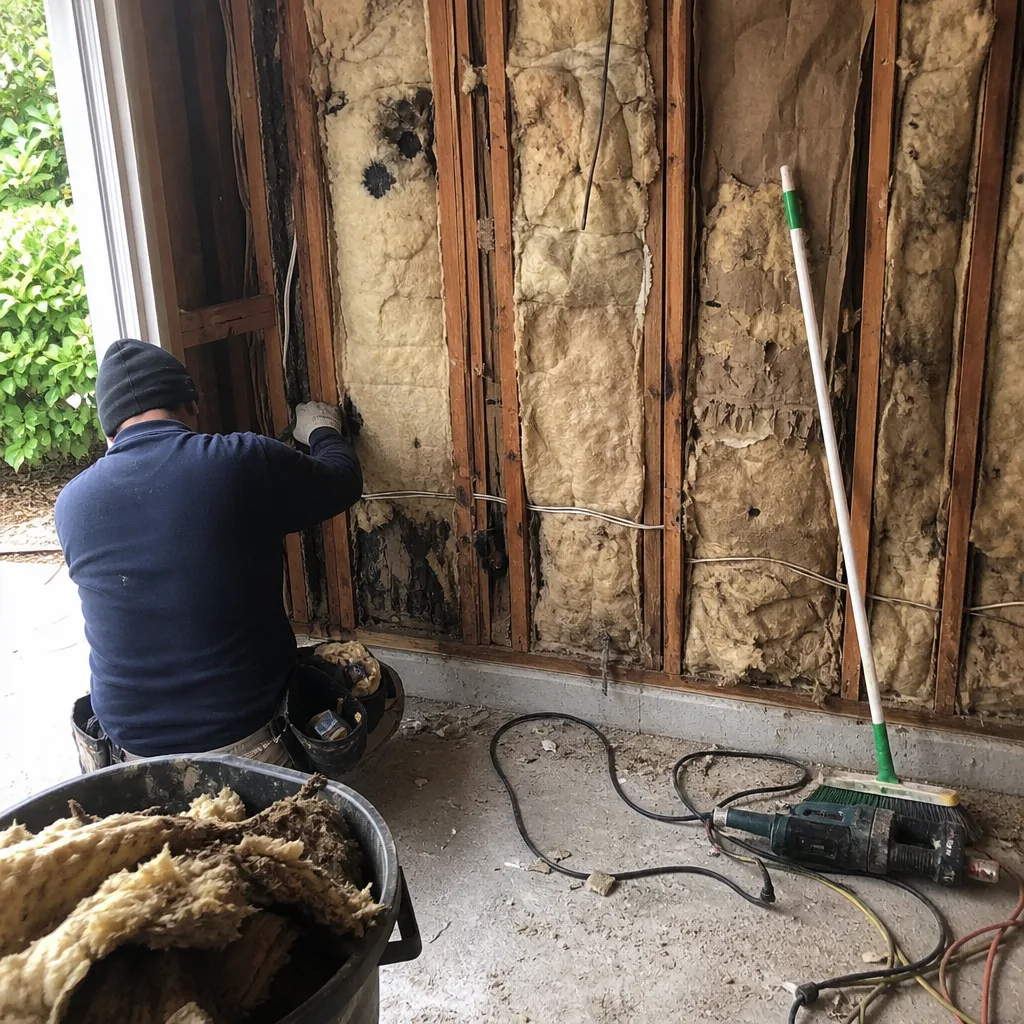 Before
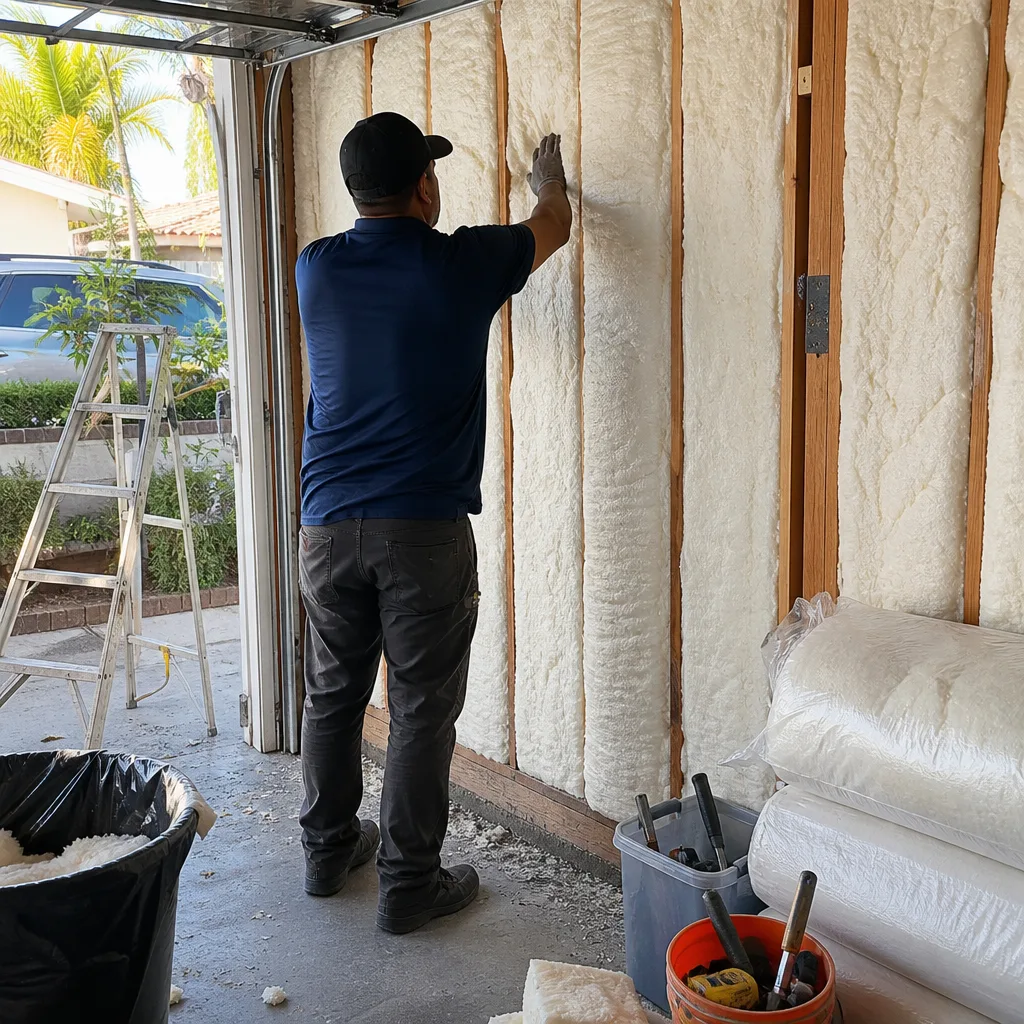 After
AfterThe Three Insulation Tasks You Can Actually DIY in Newport Beach
Not every insulation job requires a crew. In Newport Beach’s mild coastal climate - where we don’t deal with freeze-thaw cycling that cracks rigid foam or extreme humidity that degrades fiberglass - three specific tasks are genuinely appropriate for a careful homeowner. We’ve specified the exact products and methods because vague advice is how DIY goes wrong.
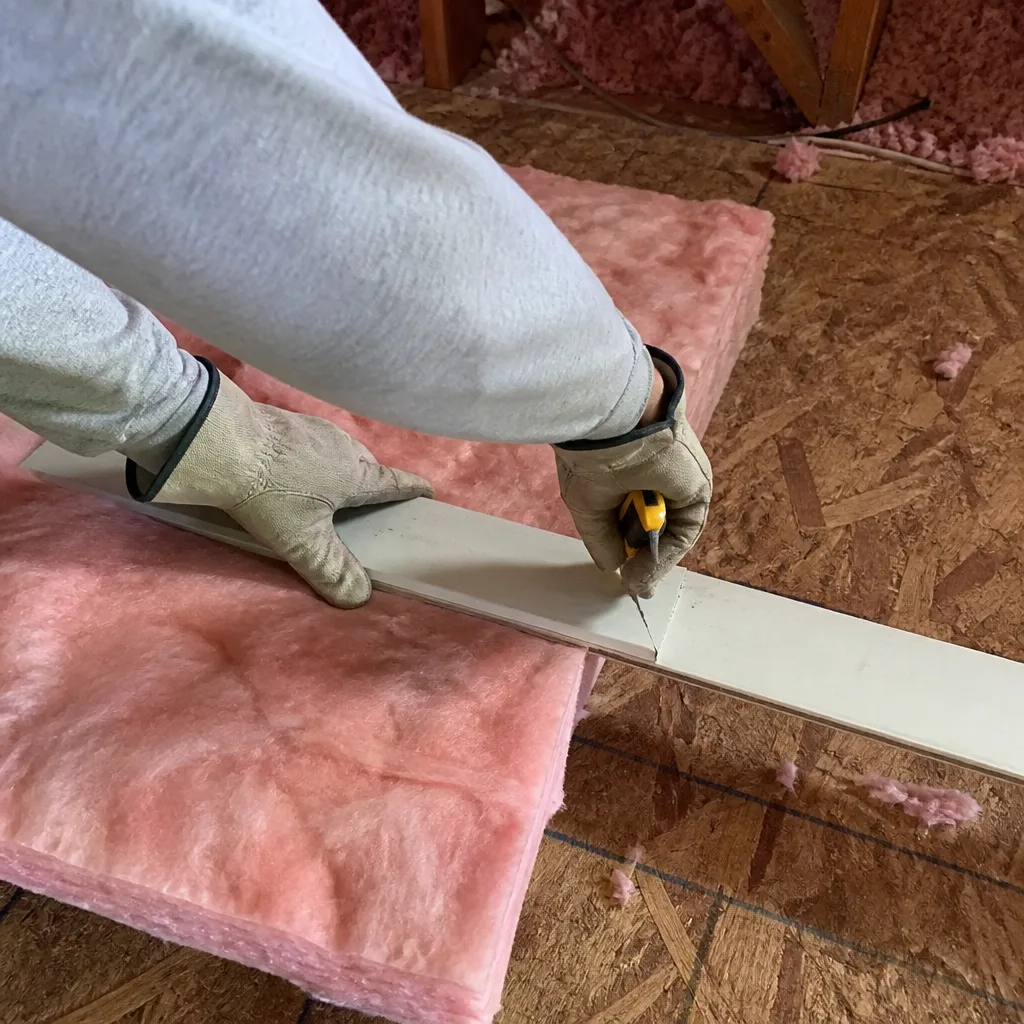
1. Attic Hatch Weatherstripping
The attic hatch is the most overlooked thermal bypass in most homes. A 1/8-inch gap around a standard 22-by-30-inch hatch leaks as much conditioned air as a 6-inch hole in your wall.
What to buy: Frost King K36/36H compression weatherstrip (closed-cell PVC, 3/8-inch width) or similar; two compression latches to pull the hatch tight against the seal.
How to install:
- Remove the hatch and clean the frame edge with denatured alcohol.
- Apply the compression strip to the frame (not the hatch), running it continuously around all four sides.
- Install compression latches on the two short sides; the hatch must deflect the weatherstrip by roughly 30% when latched.
- Add rigid foam board (1-inch XPS or polyiso) to the hatch itself if it’s uninsulated - attach with construction adhesive and cap nails.
Cost: $25-40 in materials. Time: 45 minutes. This is pure air sealing, not insulation, but it eliminates a bypass that blower-door tests consistently show as a top-five leakage site.
2. Accessible Rim Joist Batts in a Conditioned Crawlspace
The rim joist - where your foundation wall meets the floor framing - is a thermal bridge in every crawlspace home. In Newport Beach’s Corona del Mar and Balboa Peninsula neighborhoods, where 1950s-1970s ranch homes sit over vented crawlspaces, this is often the coldest surface in winter.
When this is appropriate: Only in a conditioned or encapsulated crawlspace where moisture is controlled. Do not install absorbent batts in a vented, damp crawlspace - you’ll grow mold.
What to buy: Rockwool Comfortbatt R-23 (5.5-inch) for 2×6 rim joists, or R-15 for 2×4 framing. Rockwool resists moisture and doesn’t support mold growth, which matters in coastal humidity.
How to install:
- Cut batts 1/2 inch oversized and friction-fit into each rim joist bay.
- Seal the perimeter of each batt with acoustic sealant or low-expansion foam - the batt is the insulation, but the sealant is what stops air movement.
- Install a vapor-smart membrane (like CertainTeed MemBrain) over the batts if your crawlspace sees seasonal humidity above 70%.
Cost: $3-4 per linear foot of foundation. Time: 2-3 hours for a typical 1,200 sq ft footprint.
If your crawlspace isn’t encapsulated, Crawl Space Encapsulation & Vapor Barrier in Newport Beach is the prerequisite step, not an upsell.
3. Recessed Light Air-Sealing Covers
ICAT-rated recessed lights (insulation contact, air-tight) are required in new construction, but Newport Beach has thousands of pre-2010 homes with non-ICAT cans that leak conditioned air directly into attics.
What to buy: Tenmat FF130E fire-rated light cover (fits most 5-6 inch cans) or similar UL-listed cover. Do not use homemade cardboard boxes - they’re a fire hazard and won’t pass inspection.
How to install:
- Turn off the circuit at the breaker. Verify with a non-contact voltage tester.
- Position the cover over the can in the attic, leaving 3 inches clearance from any bulb housing.
- Seal the cover’s base to the drywall with fire-rated caulk or foil tape.
- Insulate over the cover with your existing attic material - the cover is now your thermal and ignition barrier.
Cost: $15-25 per fixture. Time: 15 minutes per light after attic access.
These three tasks share a critical feature: they’re all air-sealing work that happens at accessible, visible locations. None requires a blower-door test to verify, none involves combustion safety, and none crosses into permitted work.
Four Tasks That Create Downstream Risk Without Professional Air Sealing
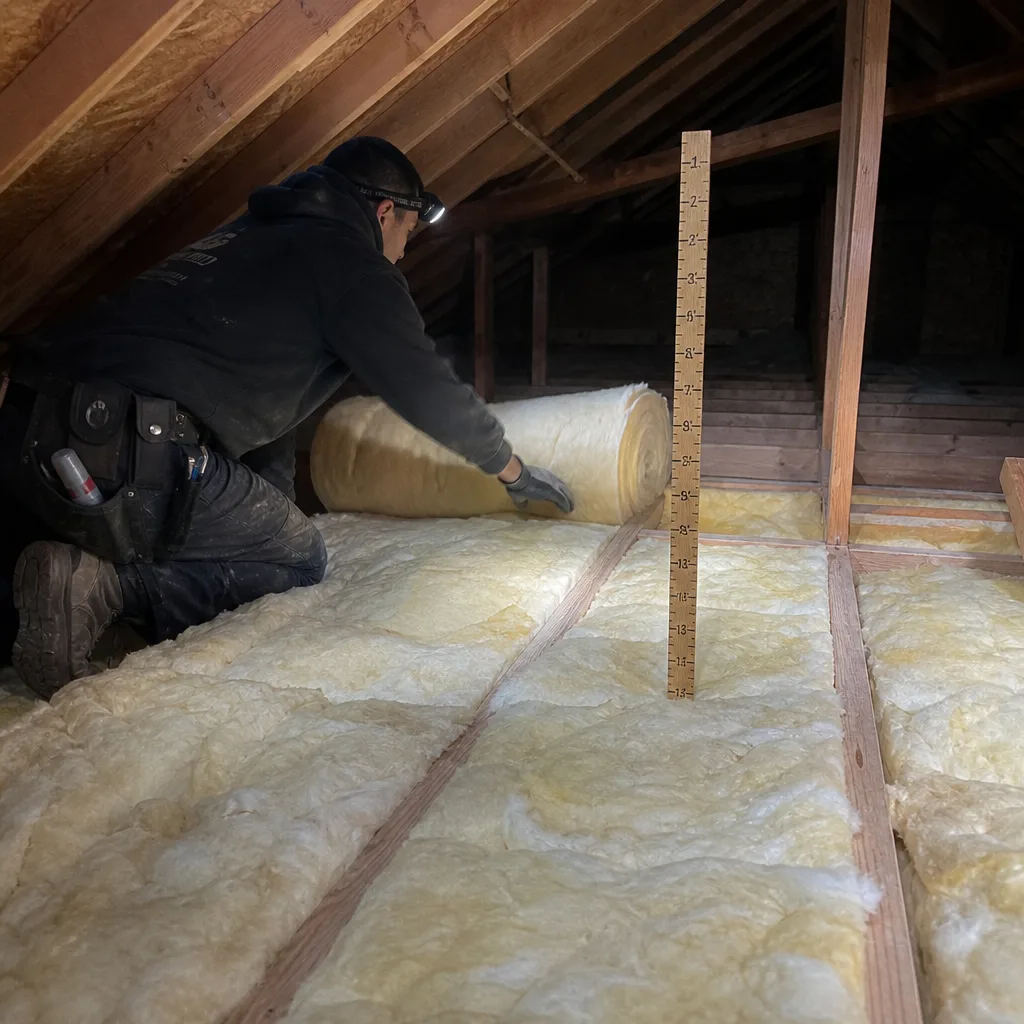
This is where the DIY-vs-professional question gets distorted. Most homeowners frame the decision as “Can I physically do this?” when the relevant question is “What am I locking in that I can’t see?” If you’re unsure whether to hire out, see our guide on How to Hire a Insulation Contractor in Newport Beach: A Step-by-Step Guide.
1. Blown Attic Topping Without Pre-Sealing
This is the most common DIY insulation project, and it’s where the 30-50% performance penalty originates.
Here’s the mechanism: blown cellulose or fiberglass settles into a uniform blanket. If that blanket covers unsealed top plates, plumbing chases, electrical penetrations, and chimney bores, those leaks become permanently buried. You can’t seal them later without removing material. The insulation performs as if it’s not there because conditioned air is still escaping around it.
In a 2023 job on a 1962 home in the Newport Heights neighborhood, our blower-door test read 4,200 CFM50 before any work - a pressurization reading that shows, in one number, how much air the building envelope was losing. After air sealing (top plates, can lights, two plumbing chases, a chimney bore, and a dropped soffit), the reading dropped to 2,100 CFM50. Then we blew cellulose. If the homeowner had blown cellulose first, the post-installation reading would have been approximately 3,500 CFM50 - better than nothing, but 67% worse than the properly sequenced result.
The labor savings of skipping the sealing step: roughly $800-1,200 on a typical Newport Beach attic. The performance penalty: $40-60 per year in wasted conditioning energy, compounding indefinitely, plus the cost to remove and re-install material when the homeowner eventually realizes the mistake.
2. Batt Replacement in Existing Wall Cavities
Removing drywall to replace wall cavity batts is invasive, expensive, and often unnecessary. But when homeowners do tackle it - typically during a bathroom or kitchen remodel - they almost never verify whether the cavity was actually the problem.
A blower-door test with a theatrical fog machine or infrared camera identifies whether the wall is leaking through the cavity itself, through electrical outlets, or around the window rough opening. Without this diagnosis, you might replace perfectly good batts while missing the actual leakage path. We’ve seen $3,000 remodels where the homeowner replaced R-13 batts with R-15 and achieved zero measurable improvement because the air was moving around the cavity, not through it.
3. Spray Foam Around HVAC Penetrations
Spray foam - whether Icynene open-cell or Demilec closed-cell - is excellent at sealing and insulating simultaneously. It’s also a combustion safety hazard when applied around furnace venting, water heater flues, or any atmospheric combustion appliance without proper testing.
Sealing a furnace closet too tightly can backdraft the flue, pulling carbon monoxide into living spaces. California’s Title 24 now requires combustion safety testing (CAZ depressurization test) when envelope tightening exceeds specific thresholds. A homeowner with a can of Great Stuff and good intentions can create a lethal condition that passes visual inspection.
We don’t recommend DIY spray foam in any application involving HVAC or combustion equipment. Spray Foam Insulation in Newport Beach requires trained installation and post-work verification.
4. Any Work Crossing the Permit Threshold
Newport Beach Building Division requires permits for insulation work that:
- Increases R-value by more than one category (e.g., R-19 to R-30 is permitted; R-19 to R-21 is not)
- Involves spray foam application of any thickness
- Modifies or covers electrical, plumbing, or HVAC systems
- Occurs in a fire-rated assembly (shared walls in multifamily construction)
Unpermitted work that should have been permitted creates two problems: it voids homeowner’s insurance coverage for related damage, and it must be disclosed on California’s Transfer Disclosure Statement (TDS) at sale - which we’ll cover in detail below.
When DIY Labor Savings Exceed Performance Penalties: A Real Calculation
Let’s run the numbers on the most common scenario: a 1,600 sq ft single-story Newport Beach home with an existing R-19 attic, unsealed, built in 1975. For detailed pricing context, see our Insulation Cost Breakdown: The Newport Beach Homeowner’s Reference for 2026.
The DIY Path
Materials: 40 bags of GreenFiber cellulose at $12/bag = $480. Blower rental: $75/day. Protective gear, baffles, and incidental: $145. Total: $700.
Time: 6-8 hours for a careful homeowner.
Result: R-38 cellulose over unsealed bypasses. Blower-door estimate (based on our local data): 3,800 CFM50, down from 4,200 - a 9% improvement from the added insulation’s wind-washing resistance, but the fundamental leakage unchanged.
The Professional Path (Documented)
Scope: Air sealing (top plates, can lights, penetrations, baffle installation at eaves) plus blown cellulose to R-38.
Typical Newport Beach range: $2,400-3,200 for this footprint, depending on accessibility and existing conditions. Attic Insulation in Newport Beach pricing varies by home configuration.
Result: Blower-door reading typically 2,000-2,400 CFM50 post-work - a 43-52% reduction in envelope leakage.
The Break-Even Analysis
At Newport Beach’s electricity rates (roughly $0.32/kWh for Tier 2-3 usage in 2024-2025) and moderate heating degree days, the properly air-sealed attic saves $280-340 annually versus the DIY-topped attic’s $90-110. The $1,700-2,500 additional first cost pays back in 7-9 years on energy alone.
But energy isn’t the full picture. The sealed attic delivers:
- Measurable indoor air quality improvement (less attic dust and pollen infiltration)
- Reduced moisture drive in coastal humidity
- Documented performance for resale
- No future removal cost when the homeowner realizes the bypasses need sealing
The DIY path only makes financial sense if: (1) the attic is already professionally air-sealed, or (2) the homeowner plans to sell within 3 years and won’t recover the investment. Even then, the unpermitted-work disclosure risk (below) may negate the savings.
What to Demand from Any Contractor, Even on Partial DIY Jobs
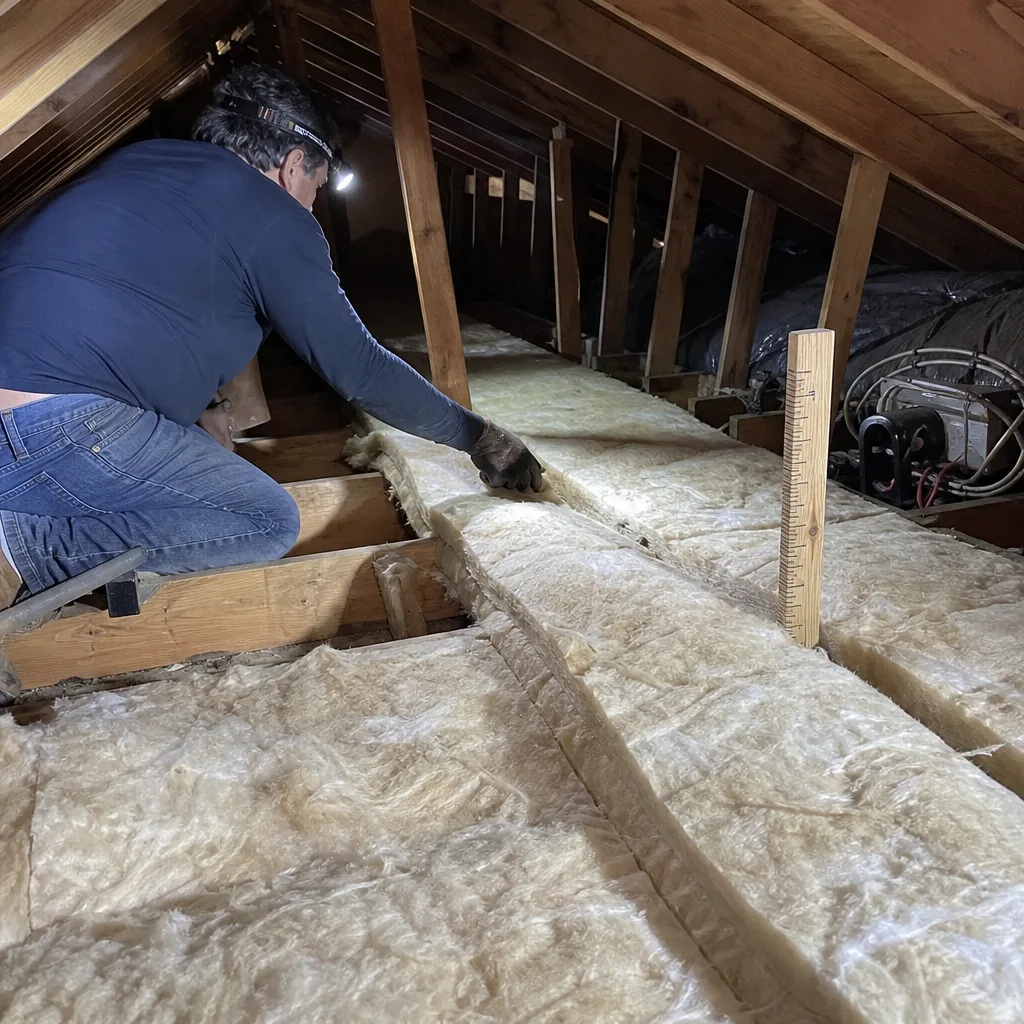
Whether you DIY the hatch weatherstripping and hire out the attic, or vice versa, documentation is what separates a finished job from a verifiable one. Under Haven Standard: Have it in writing - every job begins with a written price and ends with a documented record.
Here’s what to request, in writing, from any contractor working on your envelope:
- Which bypasses were sealed, with photo documentation. Not “we air sealed the attic” - specific locations: “top plates at east and west walls, three plumbing chases, two electrical penetrations, chimney bore at north slope.” Photos should show before and after at each location.
- Exact product specifications. Manufacturer, product line, density (for spray foam), and installed R-value. “Blown cellulose” is insufficient - “GreenFiber All Borate cellulose, 1.5 lbs/cu ft density, R-38 at 10.25 inches” is what future contractors need to know.
- Pre-seal ACH50 or CFM50 reading. Without a baseline, you can’t verify improvement. The number itself matters less than having a number - future work needs a reference point.
- Written scope and written warranty delivered before work starts. Haven Standard Clause 1: flat price, written scope, written warranty before anyone lifts a tool. Any contractor who won’t commit to this in writing is telling you something about how they handle problems.
At Envelope Insulation Co., every applicable job includes before-and-after blower-door numbers so the homeowner can verify the air-sealing result. We’ve published these on 9,000+ homes since 2016 - every one with a written price before work started and a documented record when the crew left.
Permits, Inspections, and What Newport Beach Actually Requires
Newport Beach Building Division follows the 2022 California Energy Code (Title 24, Part 6) with local amendments. Here’s what triggers permitting; for the full regulatory picture, read Insulation Permits, Codes & Inspections in CA: What You Need to Know.
| Work Type | Permit Required? | Inspection Required? |
|---|---|---|
| Batt replacement in existing walls (same R-value) | No | No |
| Attic topping, R-19 to R-30 or greater jump | Yes | Yes - pre-cover and final |
| Attic topping, R-19 to R-21 (one category) | No | No |
| Spray foam, any thickness | Yes | Yes - thickness verification |
| Crawlspace encapsulation with vapor barrier | Yes | Yes |
| Air sealing only (no insulation change) | No | No |
The permit threshold is based on R-value category jumps, not absolute R-value. Categories are: R-11, R-13, R-15, R-19, R-21, R-30, R-38, R-49, R-60. R-19 to R-30 is two categories - permit required. R-30 to R-38 is one category - no permit.
Permitted work requires a HERS (Home Energy Rating System) rater to verify insulation grade and installation quality for Title 24 compliance. This is not a municipal inspector function - it’s a third-party verification that adds $150-300 to permitted jobs but provides documented compliance for your records.
In Newport Beach’s coastal zone, there’s an additional consideration: the Local Coastal Program (LCP) requires that any work affecting the building envelope in properties seaward of Coast Highway or in designated historic districts must comply with visual impact standards. Insulation work itself rarely triggers this, but if your project includes exterior rigid foam that changes wall thickness or window depth, LCP review may be required.
Insurance and Resale Disclosure: The Hidden Cost of Unpermitted Work
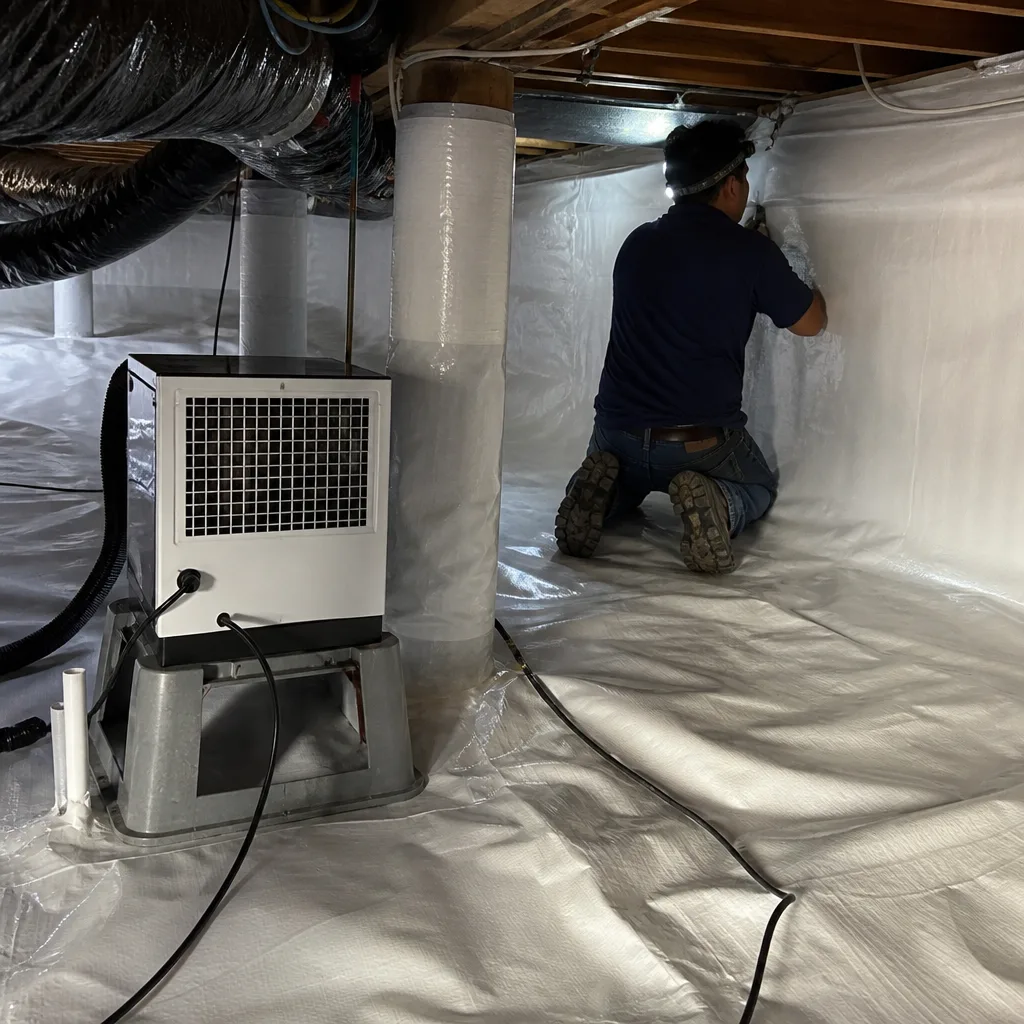
This is the risk-management dimension that most DIY-vs-professional comparisons ignore entirely.
Homeowner’s Insurance
Standard HO-3 policies cover “sudden and accidental” damage but exclude losses from “faulty, inadequate, or defective” work. If unpermitted spray foam installation leads to a fire, or unsealed attic work causes moisture damage that collapses a ceiling, your insurer may deny the claim based on the lack of permit and professional installation. We’ve reviewed insurance denials where the adjuster’s first question was “Who performed the work and was it permitted?”
California Transfer Disclosure Statement (TDS)
Sellers must complete Form SPQ (Seller Property Questionnaire) and TDS (Transfer Disclosure Statement) in every California residential sale. Question 4.C on the SPQ asks: “Have you made any additions, structural modifications, or other alterations to the property without required permits?”
Insulation work that required a permit and didn’t get one must be disclosed. Failure to disclose exposes the seller to post-closing litigation - buyers have discovered unpermitted attic work during pre-sale inspections, used it to renegotiate, or sued after closing when the issue surfaced in a subsequent inspection.
Even permitted DIY work creates a documentation gap. A professional contractor provides invoices, permits, and inspection sign-offs that chain of title cleanly. A homeowner’s weekend project leaves no paper trail - which means no proof of what was installed, when, or to what standard. When that home sells in Newport Beach’s $2M+ market, the absence of documentation becomes a liability.
The 365-Day Done Right Promise - if it’s not done right, we make it right - applies to our completed work because it’s backed by a written scope and written warranty delivered before anyone starts. DIY work has no equivalent recourse.
Common Mistakes to Avoid
- Installing insulation before air sealing. This is the single most expensive error we correct. Once cellulose or fiberglass covers a bypass, sealing it requires complete removal. In a Newport Beach attic with 8-10 inches of existing material, that’s a $1,200-1,800 do-over before the actual sealing begins.
- Blocking soffit vents with insulation. Coastal attics need ventilation to manage humidity. Stuffing batts into eaves without baffles chokes airflow and can cause condensation damage to roof sheathing. We see this most in the older ranch homes of Balboa Island, where 1950s construction had minimal original ventilation.
- Using the wrong product for the location. Fiberglass batts in a damp crawlspace absorb moisture and compress. Open-cell spray foam against a roof deck without proper vapor analysis can trap moisture. Rockwool or closed-cell foam are often the correct choices in Newport Beach’s humidity, but the decision requires site-specific assessment.
- Ignoring combustion safety after envelope tightening. Any air-sealing work that reduces leakage by more than 20% can change pressure dynamics around atmospheric combustion appliances. The CAZ test is not optional - it’s code, and it’s life-safety.
- Assuming “more R-value” equals “better performance.” An R-38 attic with unsealed bypasses performs like R-20-25 in practice. An R-30 attic with complete air sealing often outperforms it, as our blower-door data from Corona del Mar and Newport Coast homes consistently shows.
- Not documenting what was done. Future buyers, future contractors, and future you all need to know what product, what depth, what date, and what baseline performance existed. The Documented Photo Record on Every Visit that we provide isn’t a marketing feature - it’s a permanent record of building performance.
When to Call a Professional
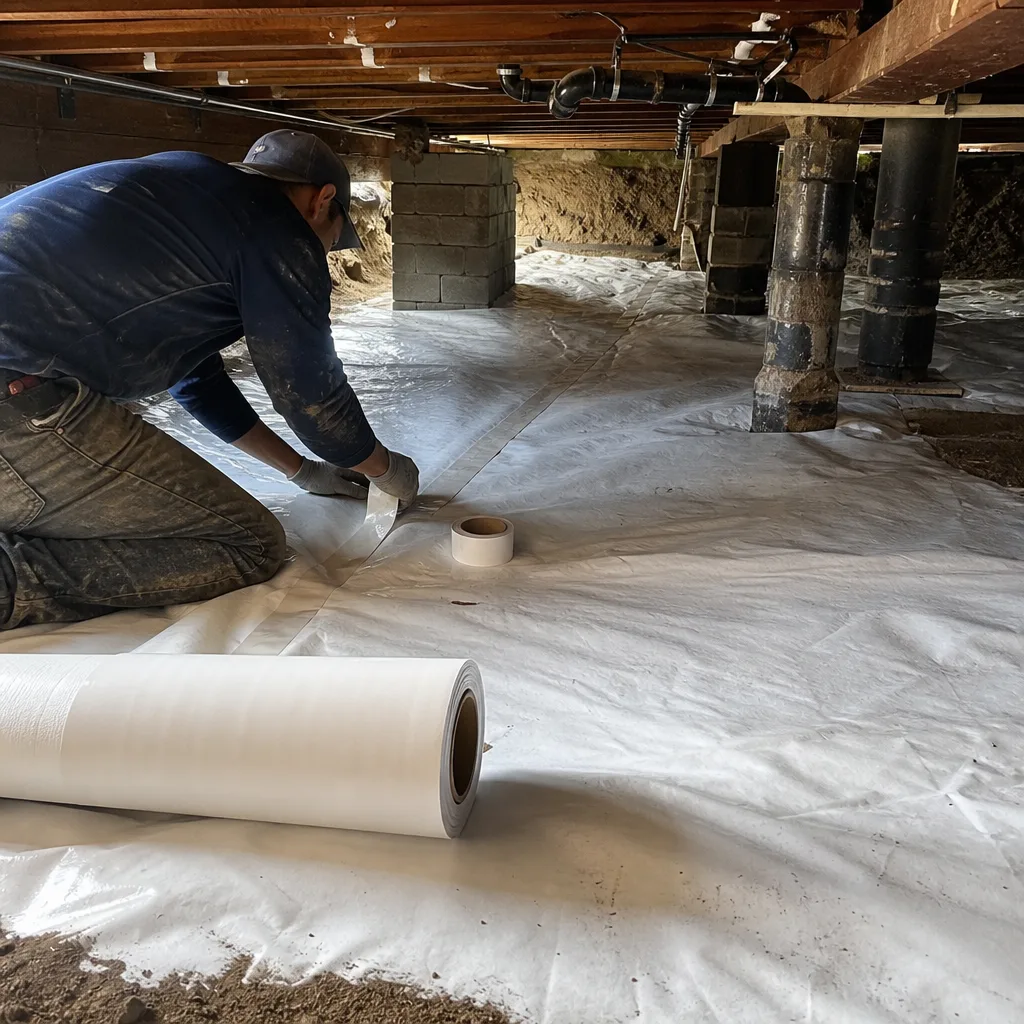
Call a professional when the work involves: spray foam of any type; combustion appliances in the conditioned space; attic work where bypasses are visible but their full extent is unknown; any project crossing the permit threshold; or any situation where you need documented performance for resale or insurance purposes.
Topside Attic Insulation Newport Beach offers free estimates in Newport Beach - call (657) 261-8265. Every estimate includes a written price before any work starts, and every job closes with a Documented Photo Record. On applicable jobs, you’ll receive before-and-after blower-door readings so you can verify the air-sealing result yourself.
Frequently Asked Questions
Most attic insulation jobs in a 1,200-2,000 sq ft Newport Beach home run between $2,200 and $4,000, depending on whether air sealing is included, accessibility, and existing conditions. Blown cellulose with comprehensive air sealing typically falls at $2.50-3.50 per sq ft of attic floor. Call (657) 261-8265 for an exact quote - estimates are free, and we provide a Written Price Before Any Work Starts.
Yes, if you’re not increasing the R-value by more than one category - for example, topping R-30 to R-38. R-19 to R-30 requires a permit. However, legal and advisable are different questions; blowing insulation over unsealed bypasses, even when permitted, reduces effectiveness by 30-50% based on our local blower-door data.
Repair - spot-adding to damaged areas - is cheaper upfront but rarely cost-effective. Damaged insulation (compressed, moisture-stained, or rodent-compromised) indicates an underlying condition that spot repair won’t fix. Full removal and replacement with air sealing typically delivers 40-60% better performance and includes documentation for resale. For a Free Second Opinion on Any Written Estimate, bring us a competing quote; we will read it with you.
Signs include: dust streaks on insulation (air is moving through it), cold drafts from outlets or switches on exterior walls, ice dams in rare freeze events, or energy bills above $0.12 per sq ft annually for a single-story home. The definitive test is a blower-door test - a pressurization reading that shows, in one number, how much air your building envelope is losing. We include this baseline on every applicable job.
Cellulose and fiberglass work well in attics with proper air sealing and ventilation. Rockwool excels in damp crawlspaces and fire-separation applications. Closed-cell spray foam (Demilec or similar) is appropriate for tight spaces needing vapor control and structural rigidity. Open-cell spray foam (Icynene or similar) works in above-grade walls where vapor permeability is desired. We source from Owens Corning, Johns Manville, Knauf, Rockwool, CertainTeed, Icynene, Demilec, and GreenFiber - no proprietary product lock-in means we specify what’s right for the condition, not what we need to move.
We don’t treat insulation as emergency work - it’s building science, not ambulance service. But we do answer calls with a live person 24/7, and we can typically schedule an assessment within 48 hours for comfort or moisture concerns. If you’re experiencing sudden water intrusion or structural damage, that’s a remediation contractor first, insulation second. Call (657) 261-8265 and we’ll direct you appropriately.
Keep: the written scope and written warranty (Haven Standard Clause 1); before-and-after blower-door readings if applicable; photos of sealed bypasses; product specifications with manufacturer and installed R-value; and any permits and inspection sign-offs. This packet is what you’ll hand to a future buyer or contractor. Our Documented Photo Record on Every Visit provides this automatically - included on every job, not available on request.
The Bottom Line
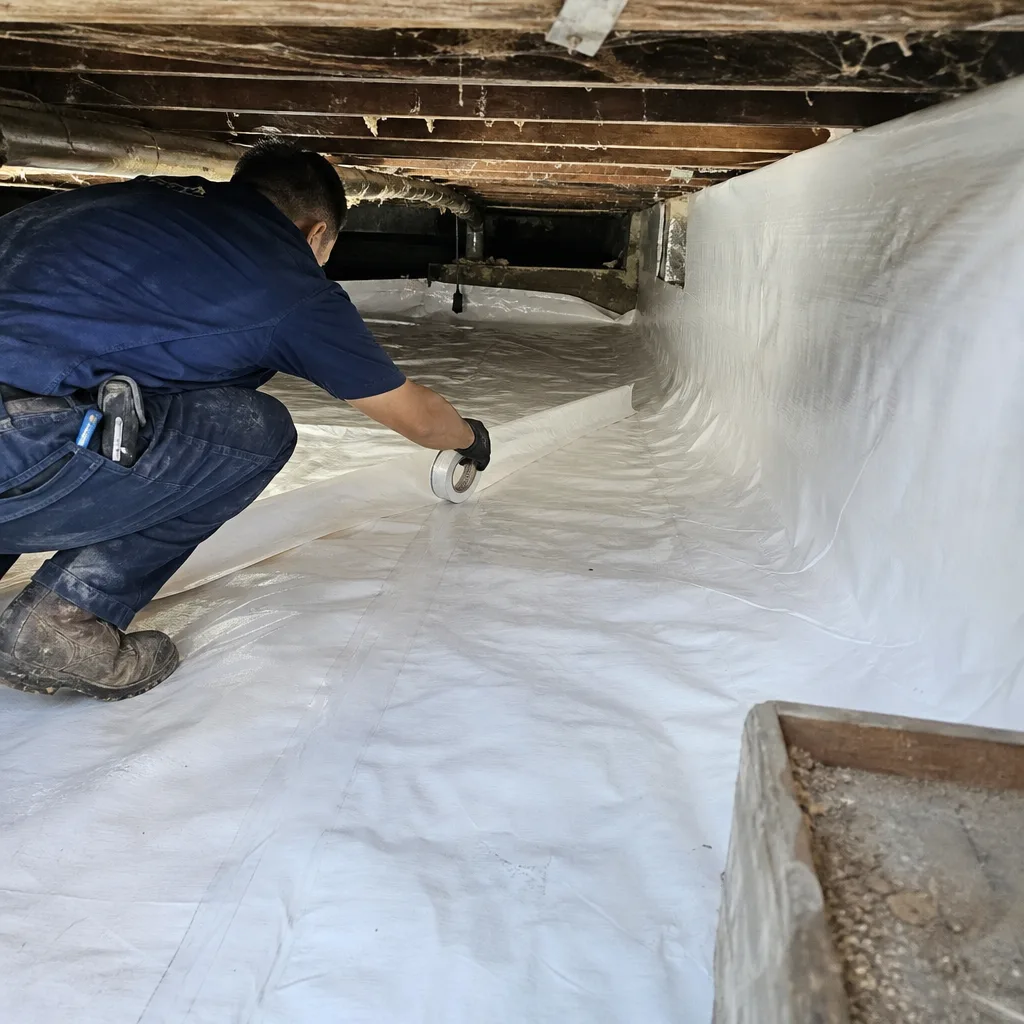
The DIY-vs-professional question in Newport Beach isn’t about whether you can rent equipment or handle fiberglass. It’s about whether you can identify and seal every thermal bypass, verify combustion safety, document performance for resale, and assume liability if something goes wrong. Three tasks - hatch weatherstripping, rim joist batts in conditioned crawlspaces, and recessed light covers - genuinely fit the careful homeowner. Everything else carries risk that typically exceeds labor savings when measured over the building’s lifecycle. Topside Attic Insulation Newport Beach home provides the documentation, the sequencing, and the verified performance that DIY cannot replicate.
Written by Wes Okafor, Owner at Topside Attic Insulation Newport Beach, serving Newport Beach since 2016.