
Last updated September 24, 2026
Insulation Warning Signs: A Newport Beach Homeowner’s Reference Guide
A 12% year-over-year increase in summer cooling costs in a Newport Beach home with no change in occupancy or thermostat setting is a statistically reliable early signal of insulation settlement or air-sealing failure - more reliable, in fact, than waiting for a visible damp spot on the ceiling. Most insulation problems in coastal Orange County homes develop silently in spaces homeowners rarely enter: the attic plane above the ceiling, the crawl space below the floor, and the wall cavities that connect them. In this guide, you’ll learn to read the five utility bill patterns that predict specific failure modes, interpret thermal imaging results yourself, inspect the three highest-failure locations in a Newport Beach attic, and document what you find so a contractor can scope a repair instead of selling you a full replacement. For a broader overview, see our Complete Guide to Insulation in Newport Beach.
Quick Answer
The warning signs of failing insulation in a Newport Beach home typically appear first in utility data and indoor comfort patterns, not in visible damage. A cooling bill that jumps 10-15% year-over-year with unchanged usage, rooms that won’t hold temperature within 3°F of the thermostat setting, and indoor humidity that tracks outdoor coastal moisture rather than staying controlled are the three most reliable early indicators. By the time you see ceiling staining or feel drafts at outlets, the insulation has often been compromised for two or more cooling seasons.
Table of Contents
- The Five Utility Bill Patterns That Predict Insulation Failure
- What Thermal Imaging Reveals That Visual Inspection Misses
- The Three Highest-Failure Locations in a Newport Beach Attic
- Distinguishing Normal Aging from Functional Failure
- Documenting Warning Signs: What to Record Before Calling a Contractor
- Newport Beach Coastal Climate Factors That Accelerate Insulation Problems
- Common Mistakes to Avoid
- When to Call a Professional
- Frequently Asked Questions
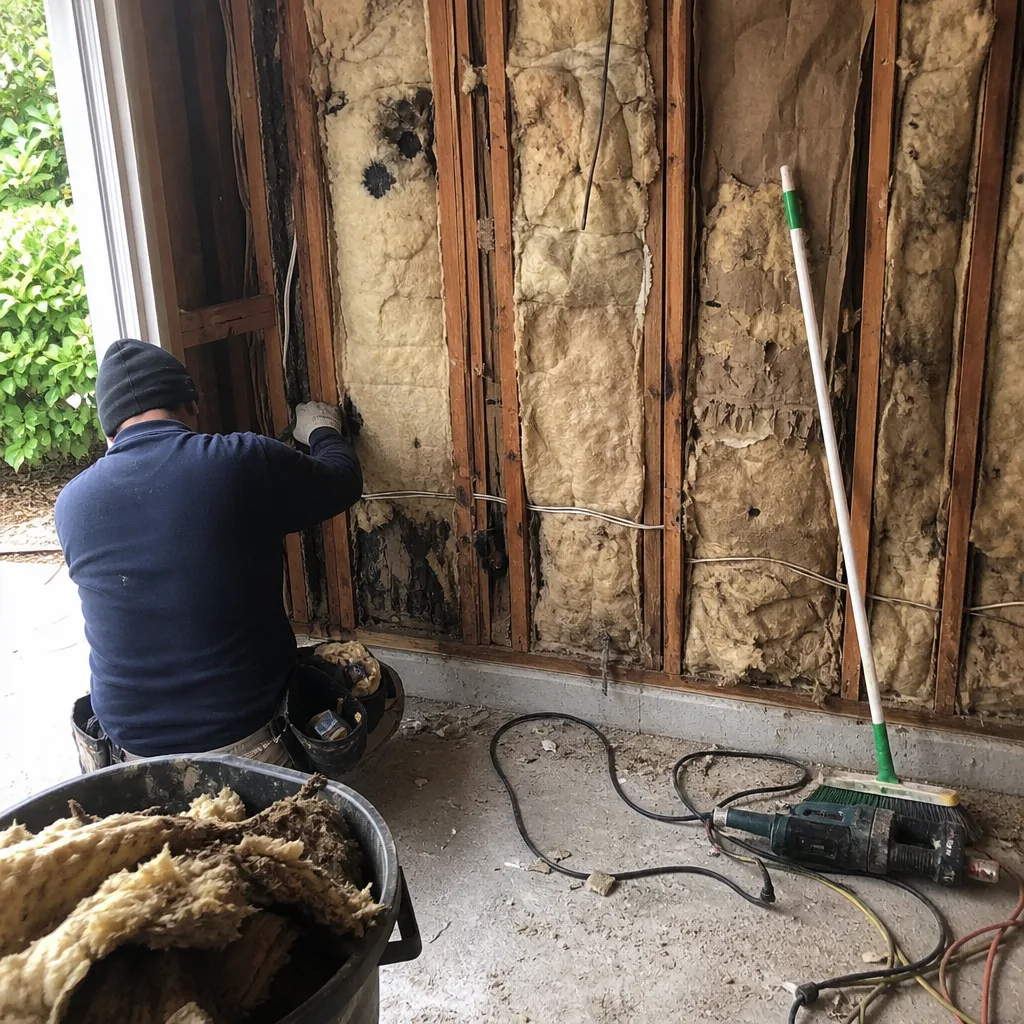 Before
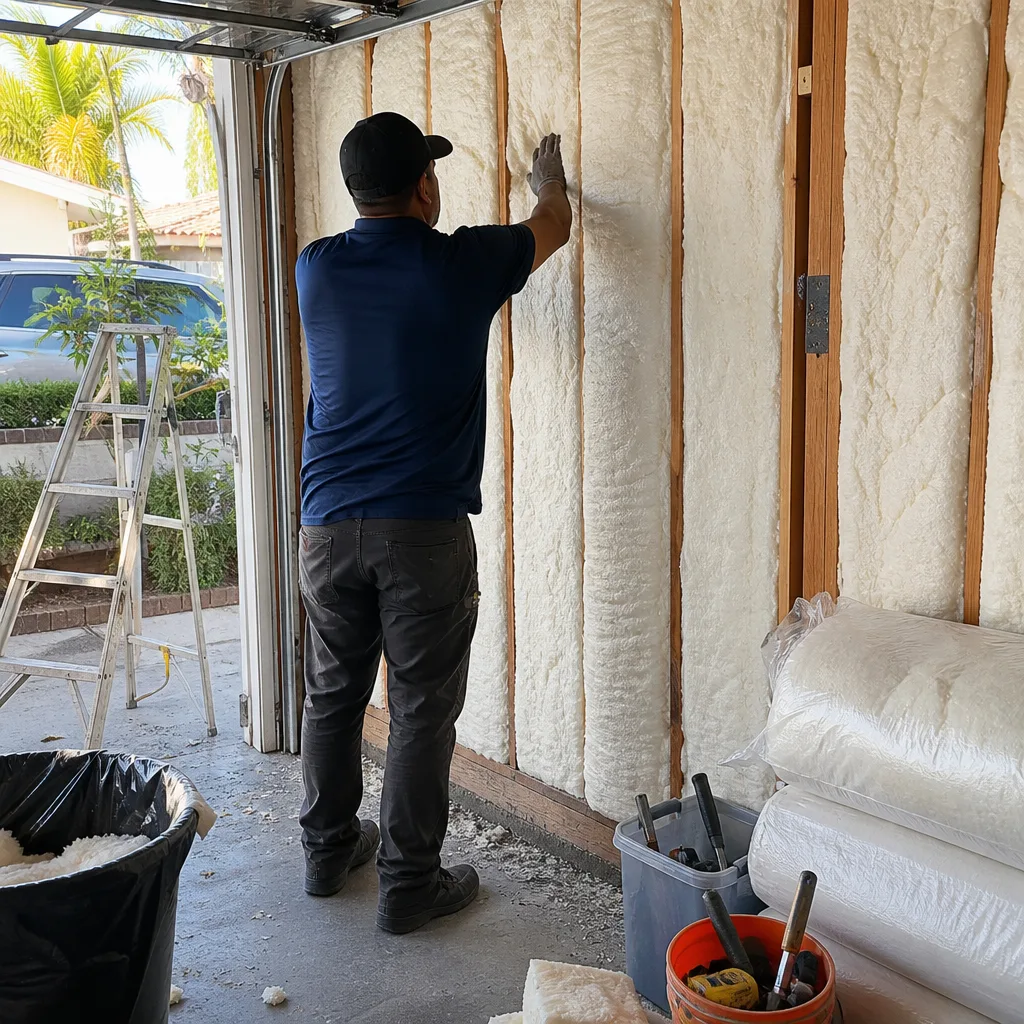 After
AfterThe Five Utility Bill Patterns That Predict Insulation Failure
Utility data is the earliest and most honest diagnostic tool for insulation performance. In our experience across more than 9,000 homes sealed and insulated since 2016, the pattern in your bill history predicts the location and type of failure more accurately than any single visual inspection. Here are the five patterns we see most often in Newport Beach and what each one means.
Pattern 1: Flat Winter, Spiking Summer
Heating costs stay reasonable through January and February, but cooling costs jump 15-25% year-over-year starting in May. This pattern points to attic insulation settlement or air-sealing failure at the attic plane. Newport Beach’s mild winters don’t stress attic insulation heavily, but summer solar gain on dark roofing materials can push attic temperatures above 140°F. When insulation has settled below R-38 or top plates and can lights leak conditioned air, the HVAC system runs continuously to overcome the heat gain. We regularly see this in Corona del Mar and Lido Isle homes with original 1980s fiberglass batts that have compressed to 60% of labeled thickness.
Pattern 2: High Bills Year-Round
Both heating and cooling costs run 20% or more above similar-sized homes in your neighborhood. This pattern indicates wall cavity insulation failure or floor insulation gaps, particularly in homes built before 1990 with uninsulated or poorly insulated perimeter walls. In Newport Beach’s Balboa Peninsula and Balboa Island neighborhoods, where many homes were built as seasonal residences with minimal thermal envelope consideration, we find empty wall cavities or degraded urea-formaldehyde foam that has shrunk away from studs. The HVAC system never catches a season of rest.
Pattern 3: Bills That Track Humidity, Not Temperature
Your energy use spikes on humid days even when the temperature is moderate, 68-72°F. This is the signature of vapor management failure - insulation that has absorbed moisture and lost its thermal resistance, or a missing or compromised vapor barrier. Newport Beach’s marine layer can push outdoor relative humidity above 85% for days at a time, and if that moisture reaches fiberglass or cellulose in a crawl space or attic, the material becomes a thermal bridge instead of a thermal barrier. We’ve measured attic insulation in Harbor View homes that was holding 18% moisture by weight, rendering it effectively R-11 despite a labeled R-30 rating.
Pattern 4: Sudden Step-Change After a Specific Month
Bills were stable for years, then jumped abruptly and stayed high. This pattern suggests a discrete event: a roof leak that wet insulation, a rodent infestation that compressed or displaced material, or a contractor who disturbed the attic plane during HVAC or solar installation and failed to restore it. The key diagnostic is the date. Cross-reference with any roof work, pest control visits, or equipment upgrades. We find this frequently in Newport Beach homes where solar installers removed attic decking for conduit runs and never resealed the penetrations.
Pattern 5: One Room or Zone Runs Excessive Costs
Your overall bill is reasonable, but one room’s mini-split or duct run accounts for disproportionate energy use. This is localized insulation failure - a settled batt above a bathroom, a disconnected duct in a hot attic, or a missing insulation patch where a prior repair was made. In Newport Beach’s hillside neighborhoods like Newport Coast, where room additions often have different construction eras and insulation types within the same envelope, this pattern is common. The solution is targeted, not whole-house.
| Bill Pattern | Most Likely Failure Location | Typical Cause |
|---|---|---|
| Flat winter, spiking summer | Attic plane | Settlement below R-38, air sealing failure at top plates/can lights |
| High bills year-round | Wall cavities or floor | Empty/shrunken cavity fill, uninsulated perimeter |
| Humidity-driven spikes | Crawl space or attic with vapor failure | Moisture absorption, missing vapor barrier |
| Sudden step-change | Event-specific location | Roof leak, pest damage, contractor disturbance |
| Single zone excessive use | Localized attic or wall section | Settled batt, disconnected duct, repair patch |
What Thermal Imaging Reveals That Visual Inspection Misses
A thermal imaging camera - properly called an infrared thermography camera - measures surface temperature differences and displays them as color gradients. During a mild Newport Beach evening, when outdoor temperatures drop to 60-65°F and the HVAC system has been off for several hours, the camera reveals insulation defects that neither a visual inspection nor a depth measurement will catch.
Why Evening Timing Matters
Thermal imaging works on temperature differential. Midday, with attic temperatures at 120°F and indoor temperatures at 72°F, the camera shows extreme contrast everywhere and masks subtle defects. At 8 PM on a 62°F evening in Newport Beach, when the attic has begun to cool but the mass of the insulation and framing retains heat at different rates, the camera reveals:
- Thermal bridging at framing members: Wood studs and rafters conduct heat differently than insulation. In a properly insulated wall, they appear as predictable, evenly spaced warm lines. When cavity insulation has settled or shrunk, the studs become dramatically hotter or colder than surrounding areas, creating “striping” that is visible in the camera but invisible to the eye.
- Air leakage paths: Conditioned air escaping through gaps around electrical boxes, top plates, or plumbing penetrations creates distinctive plume patterns - wispy, irregular shapes that track the airflow path. These are often 10-15°F different from surrounding surfaces and indicate active energy loss, not just missing insulation.
- Moisture accumulation: Wet insulation has higher thermal conductivity than dry insulation. In a thermal image, moisture-darkened areas appear as cold spots during cooling load conditions or warm spots during heating load conditions, depending on the season and the camera’s perspective. The pattern is diffuse and blotchy, unlike the sharp geometry of missing batts.
How to Interpret a Thermal Scan Yourself
If you hire an energy auditor or insulation contractor who provides thermal imaging - and we provide it on every home energy audit we perform in Newport Beach - ask for the raw images, not just the annotated report. Here’s what to look for:
- Check the temperature scale. The camera assigns colors to temperature ranges. A narrow scale (5°F span) exaggerates minor differences; a wide scale (20°F span) compresses them. Ask what scale was used. For residential insulation assessment, 10-15°F span is appropriate.
- Look for asymmetry. In a properly insulated building, left and right walls of the same room should show nearly identical patterns. Asymmetry - one wall showing more striping, more plumes, or larger cold spots - indicates localized failure, often from a single construction defect or repair that was never properly insulated.
- Correlate with the blower-door test. A thermal image alone shows temperature; it doesn’t distinguish between conduction loss (through insulation) and convection loss (air leakage). The blower-door test - a pressurization reading that shows, in one number, how much air your building envelope is losing - provides that context. We publish before-and-after blower-door numbers on every applicable job so homeowners can see the air-sealing result they paid for. A thermal image with a pre-sealing blower-door reading of 3,500 CFM50 and a post-sealing reading of 1,800 CFM50 tells a complete story that neither measurement alone can.
In Newport Beach specifically, thermal imaging during marine layer events - when outdoor humidity is high but temperature is moderate - can reveal vapor barrier failures that disappear in dry conditions. We schedule follow-up imaging during these weather patterns when initial scans suggest moisture-related performance issues.
The Three Highest-Failure Locations in a Newport Beach Attic
Most homeowners who venture into their attic look at the insulation depth in the center of the space, between joists, and conclude the insulation is fine. For a systematic approach, follow our Attic Insulation Maintenance Checklist for Newport Beach Homeowners. The failures that drive utility bills and comfort problems are almost never in the center. They’re at the boundaries and penetrations, where construction is more complex and inspection is more difficult.
Location 1: The HVAC Plenum Connections
The plenum is the large duct that connects your air handler or furnace to the main trunk lines. In Newport Beach homes, particularly those with attic-mounted HVAC systems common in the 1970s-1990s construction, the plenum passes through the attic plane and connects to conditioned space below. The connection point - where the metal plenum meets the drywall ceiling or a framed chase - is rarely sealed properly. Conditioned air leaks into the attic at 20-30% of total system airflow in the typical home we measure. The insulation around this penetration is often displaced by maintenance work or compressed by technicians kneeling on it. Look for:
- Fiberglass batts that have been pushed aside or torn at the plenum base
- Dust streaks on the plenum surface, indicating air movement
- Temperature differences: the plenum surface should be near indoor temperature when the system is off; if it’s attic temperature, the insulation barrier is compromised
In our work across Newport Beach, from the older homes near Newport Boulevard to the hillside construction above Pacific Coast Highway, this single location accounts for more hidden energy loss than any other attic defect.
Location 2: The Perimeter Where Rafters Meet the Top Plate
The top plate is the horizontal framing member at the top of a wall, where wall studs meet the ceiling joists and roof rafters. In standard platform framing, this is a dimensional lumber member - 2×4 or 2×6 - that creates a continuous thermal bridge around the entire perimeter of the attic. Worse, the joint between the top plate and the drywall ceiling below is rarely sealed with caulk or foam; it’s a gap that allows conditioned air to escape into the wall cavity and then into the attic.
In Newport Beach’s coastal climate, this perimeter is also where moist marine air enters the attic. The temperature differential between conditioned space and attic creates a slight pressure gradient that pulls air through these gaps. Over years, the insulation at the eaves - the sloped portion where the roof meets the walls - becomes moisture-stained and compressed. We’ve removed insulation in Corona del Mar homes where the eave batts were holding moisture at 22% by weight, with visible mold on the roof sheathing above.
To inspect this location, move to the attic perimeter and look along the eaves with a flashlight. Healthy insulation maintains its original color and loft. Failed insulation at this location is darkened, compressed to less than half original thickness, and may smell musty.
Location 3: The Attic Hatch Frame
The attic hatch is the most frequently disturbed penetration in the attic plane, and it’s almost never insulated and sealed to the same standard as the surrounding ceiling. In Newport Beach homes, where attics are accessed for HVAC filter changes, pest inspections, and storage retrieval, the hatch frame develops gaps from repeated opening and closing. The insulation batt on top of the hatch - if there is one - is often displaced and never replaced properly.
The diagnostic is simple but rarely performed: on a warm day, stand below the closed hatch with the HVAC running and feel for temperature difference. Or, more precisely, use an infrared thermometer or thermal camera to measure the hatch surface versus the surrounding ceiling. A properly insulated and sealed hatch should be within 2°F of the ceiling surface. We routinely measure 15-20°F differences, indicating R-3 or less effective insulation where R-38 should exist. This single 2-3 square foot defect, multiplied across hundreds of hours of cooling season, drives meaningful energy loss.
For homeowners considering attic insulation in Newport Beach, these three locations should be inspected before any new insulation is added. Blowing new material over unsealed plenums, top plates, or hatch frames is exactly what we refuse to do at Envelope Insulation Co. - air sealing is completed first, always, under The Haven Standard.
Distinguishing Normal Aging from Functional Failure
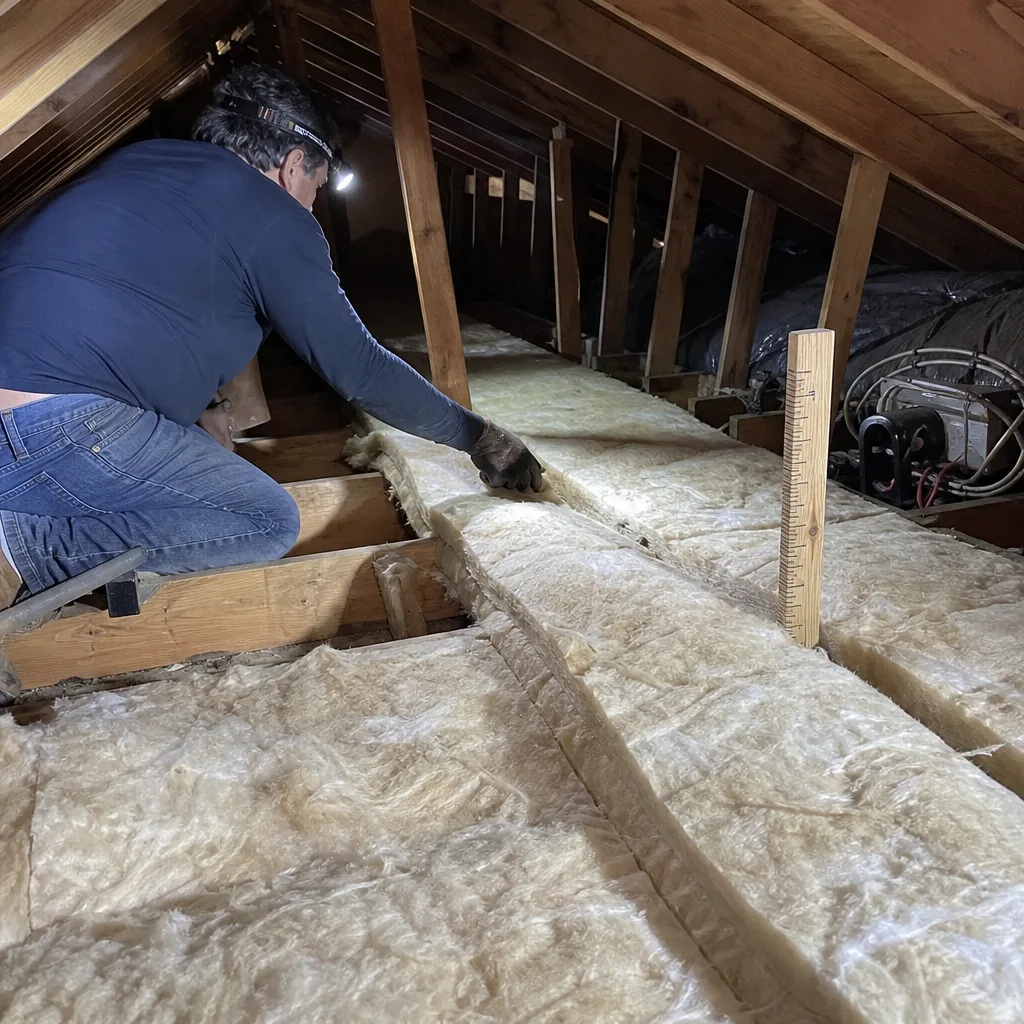
Fiberglass batt insulation does not have an expiration date. It can maintain thermal performance for decades if protected from moisture, compression, and pest disturbance. But “protected from” is doing significant work in that sentence. In real Newport Beach attics, fiberglass faces three aging stressors that produce visually similar but functionally different conditions.
Normal Aging: Yellowing and Minor Compression
Fiberglass yellows over time due to oxidation of the binder that holds the glass fibers together and from slow accumulation of household dust that has filtered up through the ceiling. This yellowing is cosmetic. Minor compression - 10-15% reduction from labeled thickness - occurs from foot traffic during maintenance and from the slow settling of loose-fill products. A batt labeled R-30 at 9.5 inches that has compressed to 8 inches still performs at approximately R-25, which is within acceptable range for most Newport Beach attic applications given our mild heating season.
Normal aging does not require replacement. It may warrant supplemental insulation if the total assembly R-value has fallen below current Title 24 standards for your climate zone, but the existing material remains functional.
Functional Failure: The Three Critical Thresholds
Functional failure occurs when insulation can no longer perform its design R-value due to physical or chemical degradation. We use three measurable criteria:
- Greater than 20% settled depth loss. A batt or loose-fill product that has compressed to less than 80% of original labeled thickness has lost proportionate R-value. More critically, deep compression indicates sustained loading - from storage, pest nesting, or moisture weight - that has crushed the air pockets that provide insulation. We measure depth at multiple points and average; single-point measurements can be misleading if a technician kneeled there once.
- Moisture darkening. Fiberglass that has been wetted and dried repeatedly develops a gray or brown discoloration that is distinct from surface yellowing. The discoloration penetrates the full batt thickness, not just the surface. More importantly, wetting collapses the fiber structure and can deposit salts or mold that further reduce performance. In Newport Beach’s coastal environment, moisture-darkened insulation is common near roof leaks, bathroom vent discharges, and the eave perimeters described above. This material must be removed, not covered.
- Pest compression at the eaves. Rodents compress insulation for nesting material and travel paths, creating tunnels and bare spots. The compression is localized but severe - often 100% displacement in 3-6 inch diameter runs. In Newport Beach, roof rats are the primary pest, and their activity concentrates at eaves where attic access is easiest. The compressed areas are thermal bridges; the displaced insulation, piled elsewhere, is ineffective. We include attic cleaning and rodent proofing as part of our service line because we will not install new insulation over evidence of active pest infestation.
Materials from quality manufacturers like Knauf, Rockwool, and CertainTeed are engineered to resist these failure modes when properly installed and protected. The failure is almost always in the installation detail or the building envelope condition, not the material itself.
Documenting Warning Signs: What to Record Before Calling a Contractor
The quality of the estimate you receive - and whether that estimate scopes a repair or defaults to a full replacement - depends heavily on the information you provide. Under Haven Standard Clause 1, we deliver a written price, written scope, and written warranty before any work starts. The precision of that scope improves when the homeowner has documented what they’ve observed. Here’s the protocol we recommend.
Photograph in Sequence
- Wide context shot. Stand back and photograph the full attic or crawl space area, showing the general insulation condition, any storage items, and the access point. This establishes scale and context.
- Close-up of the specific defect. If you’ve found moisture staining, compression, or pest damage, photograph it from 12-18 inches with a ruler or known object for scale. Include a note on when you first noticed it.
- The surrounding area. Photograph 2-3 feet around the defect to show whether it’s isolated or part of a larger pattern. A single wet spot near a bathroom vent is a different scope than widespread moisture across the attic plane.
- The attic hatch or access point. Photograph how the hatch is insulated and sealed. This is often diagnostic of the overall installation quality.
Record in Writing
Create a simple log with dates and observations:
- Date range of utility bill increase, with specific dollar amounts or percentage change
- Rooms or zones with temperature or humidity complaints, and the dates these began
- Any contractor work in the attic or roof in the past 3 years - HVAC, electrical, solar, roofing, pest control - with company names if available
- Any visible roof leaks, bathroom fan discharge locations, or plumbing vents that terminate in the attic
What a Contractor Needs to Scope a Repair
With this documentation, a qualified contractor can often determine whether you’re facing a localized repair - targeted air sealing, spot insulation replacement, moisture source correction - or whether the assembly requires full removal and replacement. The key information is:
- Insulation type, approximate age, and measured depth
- Evidence of moisture: staining, odor, or humidity readings
- Air leakage indicators: dust streaks, cobwebs in unusual locations, temperature differences at penetrations
- Pest evidence: droppings, compressed tunnels, nesting material
At Envelope Insulation Co., we provide a Free Second Opinion on any written estimate. Bring us your documentation and a competing contractor’s scope; we will read it with you and identify where the scope is repair-appropriate versus replacement-driven. Every job we complete includes a Documented Photo Record, so you have a dated, geotagged record of what was found and what was done.
Newport Beach Coastal Climate Factors That Accelerate Insulation Problems
Newport Beach’s location on the Pacific coast creates specific conditions that differ from inland Orange County and from national insulation guidance. See our Seasonal Insulation Care for Newport Beach: Year-Round Homeowner’s Guide for maintenance timing. Understanding these local factors helps interpret warning signs correctly.
Marine Layer Moisture Cycling
From May through August, the marine layer pushes inland overnight, bringing relative humidity above 85% and temperatures in the 60s. By midday, this burns off to dry, sunny conditions. This daily moisture cycle affects attics that are not properly ventilated or sealed. Attic ventilation that is balanced - equal intake at the eaves and exhaust at the ridge - can manage this moisture. But many Newport Beach homes have inadequate or blocked eave vents, or power vents that were incorrectly installed and create negative pressure that pulls conditioned air upward. The result is insulation that absorbs moisture overnight and dries slowly, accelerating binder degradation and supporting mold growth on organic dust accumulation.
Solar Gain on Dark Roofing
Even with mild ambient temperatures, dark asphalt shingles or concrete tile roofs in Newport Beach can reach 160°F surface temperature in summer sun. The attic below becomes a radiant oven. If insulation has settled below R-38 or if radiant barrier foil has degraded, the ceiling plane becomes a heat source rather than a heat shield. Rooms below feel “radiant warm” - the discomfort is from infrared radiation through the ceiling, not from air temperature - and the HVAC system runs extended cycles without satisfying the thermostat. This is why attic insulation failure shows first in summer cooling costs, even in a climate with minimal heating demand.
Salt Air Corrosion of Metal Components
Within 2 miles of the coast, salt air corrodes metal fasteners, HVAC ductwork, and radiant barrier attachments. Corroded ductwork in the attic leaks conditioned air; corroded fasteners allow radiant barrier to sag or detach. In Newport Beach neighborhoods from the Peninsula to Newport Coast, we inspect metal components for corrosion as part of every attic assessment. Failed metalwork is both an insulation problem and a potential structural or safety issue.
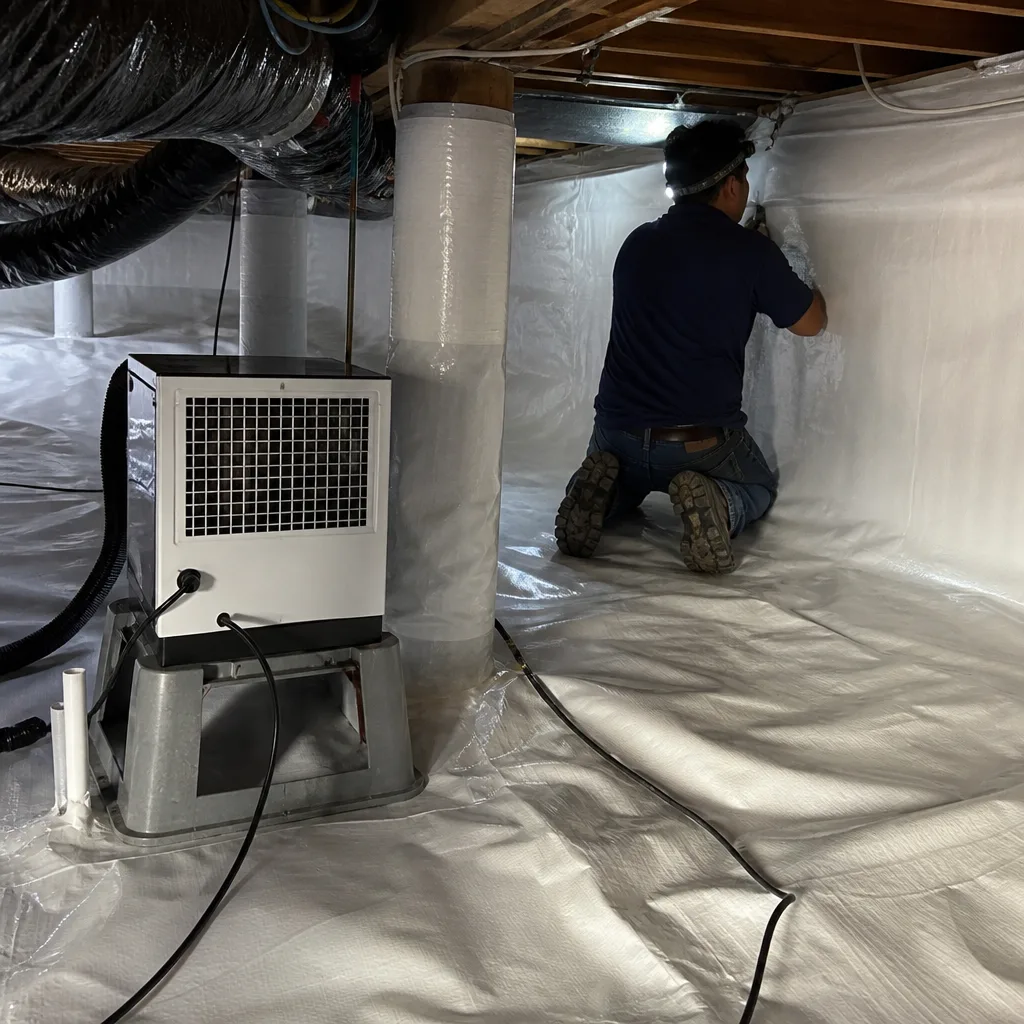
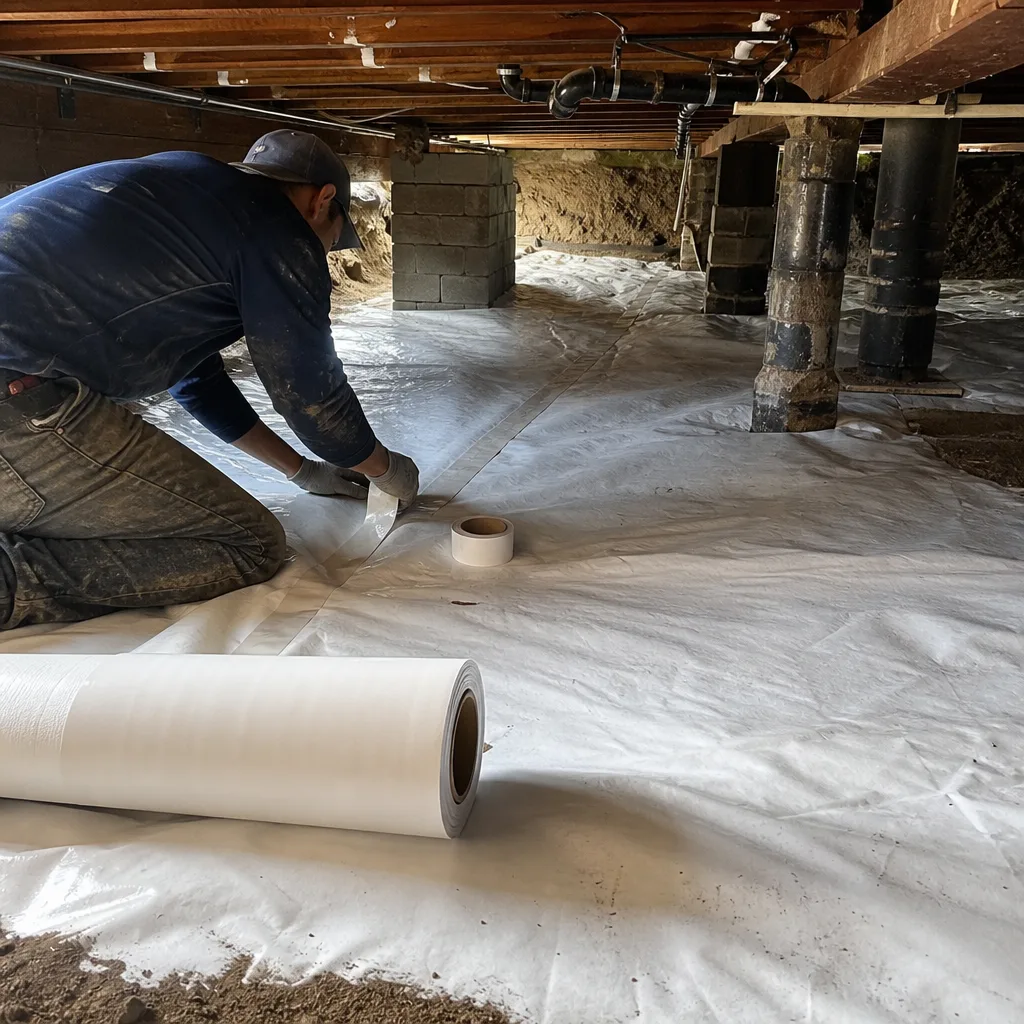
For homes in these coastal conditions, crawl space encapsulation and vapor barrier in Newport Beach is often as important as attic work. The crawl space is where marine layer moisture enters from below, and unsealed earth floors can drive humidity into wall cavities and floor insulation.
Common Mistakes to Avoid
- Adding new insulation over old without inspection. In Newport Beach, we regularly find moisture-darkened or pest-compromised insulation beneath a fresh layer. The new material masks the problem for a season, then the moisture migrates upward and both layers fail. Always inspect and, if necessary, remove compromised material first.
- Assuming more insulation is always better. Attic insulation can be over-compressed or improperly layered, reducing effectiveness. Beyond R-38 to R-49 in our climate zone, additional insulation yields diminishing returns; air sealing typically provides better performance improvement per dollar.
- Ignoring the hatch. Homeowners invest in premium insulation across the attic plane, then leave the hatch unsealed and uninsulated. This is like installing a high-efficiency HVAC system and leaving a window open. The hatch should be weatherstripped, insulated to match the ceiling R-value, and fitted with latch hardware that maintains compression when closed.
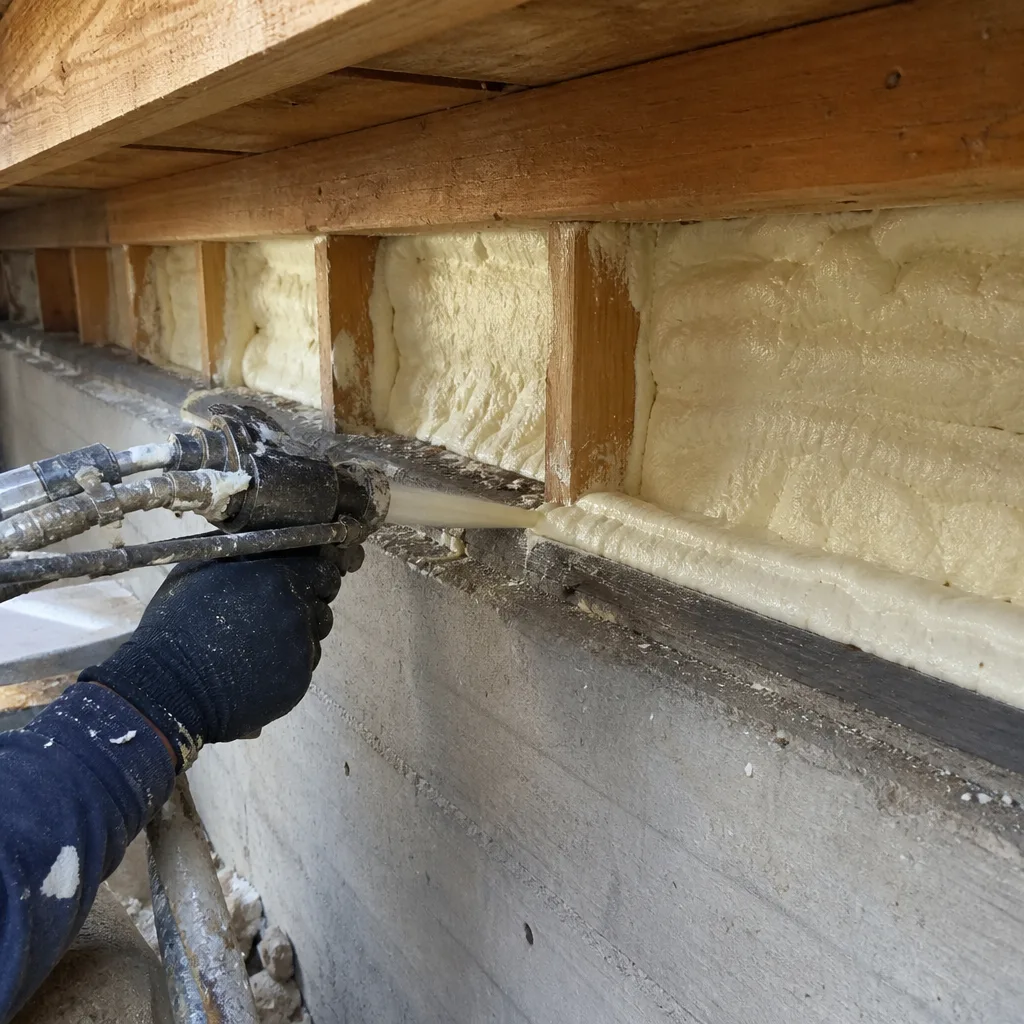
- DIY spray foam in confined attics. Spray foam insulation - whether open-cell products like Icynene or closed-cell alternatives - requires precise temperature, humidity, and mixing conditions. Improper application produces off-gassing, poor adhesion, and reduced R-value. In Newport Beach’s variable humidity, DIY spray foam fails at rates we measure in follow-up inspections. Spray foam insulation in Newport Beach should be installed by technicians trained in the specific product being applied.
- Neglecting to verify contractor documentation. Any insulation contractor should provide a written scope, written warranty, and photo documentation. If they do not, you have no recourse if the work fails. Under The Haven Standard, we deliver all three before work starts, every time.
- Treating a symptom as the cause. A damp spot on the ceiling may indicate a roof leak, but it may also indicate condensation from air leakage at a can light or bathroom vent. Replacing the ceiling drywall without fixing the air leak guarantees recurrence. We use blower-door directed air sealing to locate the actual source before any repair is scoped.
- Waiting for visible damage. By the time insulation failure is visible from the living space - ceiling staining, wall sweating, mold odor - the problem has typically progressed for 2-4 years. The earliest and cheapest intervention is at the utility bill pattern stage, before structural or health consequences develop.
When to Call a Professional
Call a qualified insulation and air-sealing contractor when you observe any of the following: a 10% or greater year-over-year increase in cooling costs with unchanged occupancy and thermostat settings; rooms that consistently run 3°F or more above or below the thermostat setting; indoor humidity above 60% when the HVAC is running; any moisture staining, musty odor, or visible mold in the attic or crawl space; or pest evidence including droppings, compressed insulation tunnels, or audible activity.
In Newport Beach specifically, call when your home is within 2 miles of the coast and has not had a building envelope assessment in the past 5 years. Salt air, marine layer moisture, and solar gain create accelerated aging that standard national guidance does not address.
Topside Attic Insulation Newport Beach offers free estimates in Newport Beach. Explore our more guides & resources for additional homeowner information. Every estimate includes a written scope and written price before any work is discussed. Call (657) 261-8265 to schedule. We also provide a Free Second Opinion on any written estimate from another contractor - bring us the scope and we will review it with you, no obligation.
Frequently Asked Questions
Most attic insulation removal and replacement jobs in a Newport Beach home of 1,800-2,400 square feet run between $3,200 and $5,800, depending on access difficulty, contamination level, and the R-value being installed. Air sealing, which we complete before any insulation is added, typically adds $800-$1,500. We deliver a written price before any work starts, always, under Haven Standard Clause 1. Call (657) 261-8265 for an exact quote - estimates are free.
You can, if the existing insulation is dry, uncompressed, and free of pest contamination. In our Newport Beach inspections, we find that fewer than 30% of attics with insulation older than 15 years meet all three conditions. Adding new material over compromised old insulation traps moisture, masks pest activity, and wastes the investment. We inspect first, then recommend either supplemental insulation over sound existing material, or removal and replacement when the substrate has failed.
Start with the pattern. HVAC mechanical failure typically produces sudden, dramatic changes - a compressor that won’t start, a furnace that blows cold. Insulation failure produces gradual, seasonal drift that you notice when comparing year-over-year bills. If your HVAC technician reports normal pressures and temperatures but the system runs excessively long cycles, the problem is likely envelope performance, not equipment. We perform blower-door testing to quantify air leakage and distinguish envelope from equipment issues.
Current Title 24 standards for Orange County climate zone require R-38 minimum for attic insulation in new construction and major renovations. Many existing Newport Beach homes, particularly those built before 1990, have R-19 or less. We target R-38 to R-49 for attic retrofits, with the specific value determined by attic geometry, access, and whether a radiant barrier is present. Higher R-values yield diminishing returns in our mild climate; air sealing typically provides greater comfort improvement per dollar than exceeding R-49.
Open-cell spray foam like Icynene provides both insulation and air sealing in one application, which can be cost-effective in complex attic geometries with many penetrations - common in Newport Beach’s varied architectural styles from mid-century modern to Mediterranean revival. Closed-cell foam adds structural rigidity and moisture resistance but at significantly higher cost. For most Newport Beach attics with accessible joist bays, blown-in fiberglass or cellulose over comprehensive air sealing provides comparable performance at lower cost. We recommend spray foam for specific applications: vaulted ceilings with limited depth, conditioned attic conversions, or severe moisture management challenges.
Properly installed and protected fiberglass or mineral wool insulation can maintain performance for 50+ years. In Newport Beach’s coastal environment, the limiting factor is rarely the insulation material itself; it’s the building envelope conditions around it. Moisture from roof leaks, air leakage carrying humidity into the attic, and pest disturbance are the primary failure modes. With proper air sealing, ventilation, and moisture management, insulation installed today should outlast the roofing material above it. Without those protections, we’ve seen functional failure in 10-15 years.
The Bottom Line
Insulation failure in a Newport Beach home announces itself first in data - utility bills, humidity readings, temperature differentials - and only later in visible damage. The homeowner who learns to read these early signals avoids the far more expensive interventions that follow: mold remediation, HVAC replacement, and structural repair. Inspect the three high-failure locations in your attic, document what you find with photographs and written notes, and demand that any contractor provide a written scope, written price, and documented evidence of results. At Envelope Insulation Co., we’ve sealed and insulated more than 9,000 homes since 2016, every one with a written price before work started and a documented record when the crew left. The 365-Day Done Right Promise applies to all completed work. If you’re seeing warning signs, don’t wait for the ceiling stain.
Written by Wes Okafor, Owner at Topside Attic Insulation Newport Beach, serving Newport Beach since 2016.