
Last updated September 24, 2026
Insulation Permits, Codes & Inspections in CA: What You Need to Know
Newport Beach sits in CEC Climate Zone 8, and here’s the detail that changes everything: a contractor quoting R-30 attic insulation may be technically legal for a repair job but 23% below the R-38 minimum required when that same insulation is installed as part of an alteration that triggers Title 24 compliance. That line gets crossed more often than homeowners realize, usually because the permit status of the job was never clarified at the estimate. In this guide, we’ll walk through exactly which insulation scopes need a building permit in Newport Beach, how Climate Zone 8 changes your minimum R-values, what inspectors actually measure in the field, and why the Certificate of Insulation you receive matters for your home’s resale disclosure. For Insulation Warning Signs: A Newport Beach Homeowner’s Reference Guide, see our companion resource.
Quick Answer
Most new insulation installations and alterations in California require a building permit under Title 24 Part 6, with specific minimum R-values set by your climate zone. In Newport Beach (Climate Zone 8), permitted attic insulation typically requires R-38 minimum, and the work must pass inspection for depth, installation quality, and air-barrier continuity. Homeowners should retain their Certificate of Insulation for future resale disclosures.
Table of Contents
- When Is a Building Permit Required for Insulation Work?
- Newport Beach Permit Thresholds vs. Exemptions
- Climate Zone 8 R-Values: What Newport Beach Homes Actually Need
- What Inspectors Actually Check During Insulation Inspections
- The Certificate of Insulation and Why You Keep the Original
- How Unpermitted Work Affects Your CLUE Report and Home Sale
- Air Sealing, Blower-Door Testing, and Title 24 Compliance
- Hiring a Contractor: Documentation You Should Demand
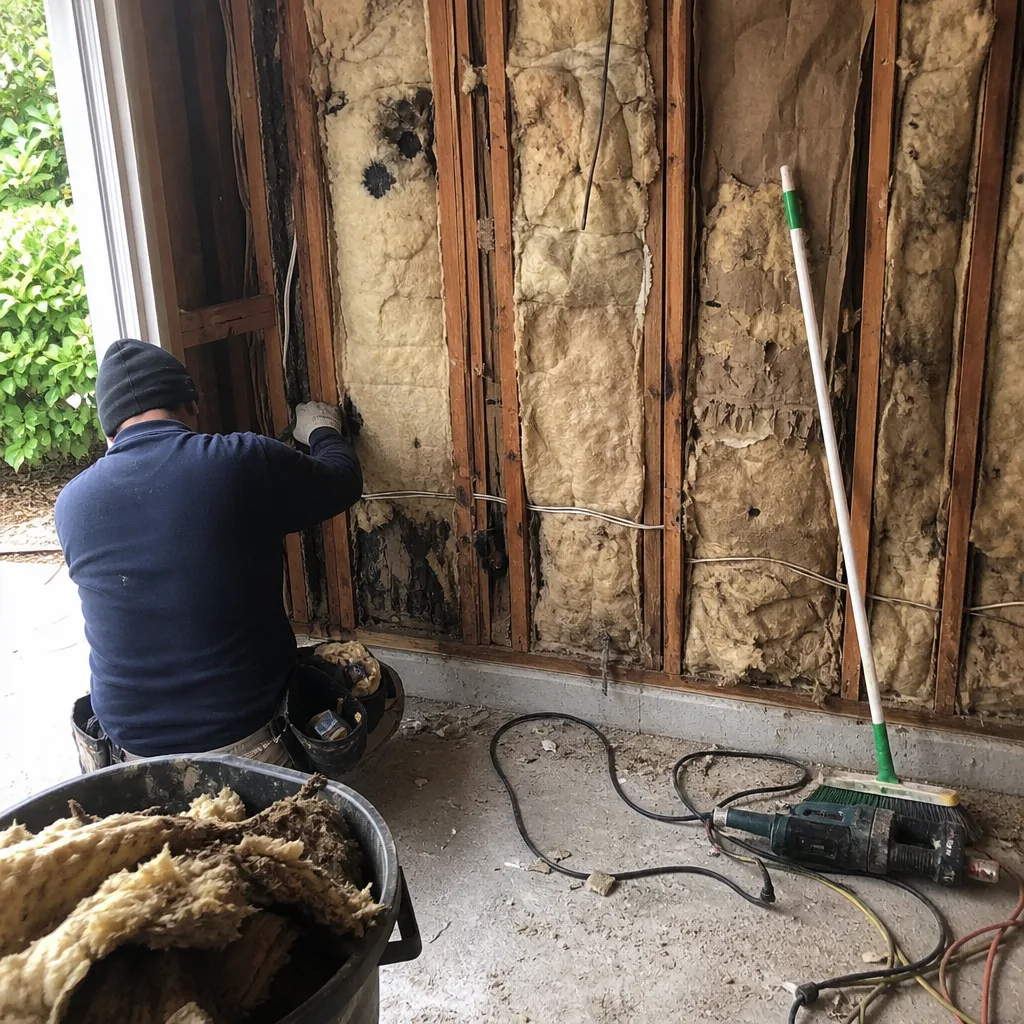 Before
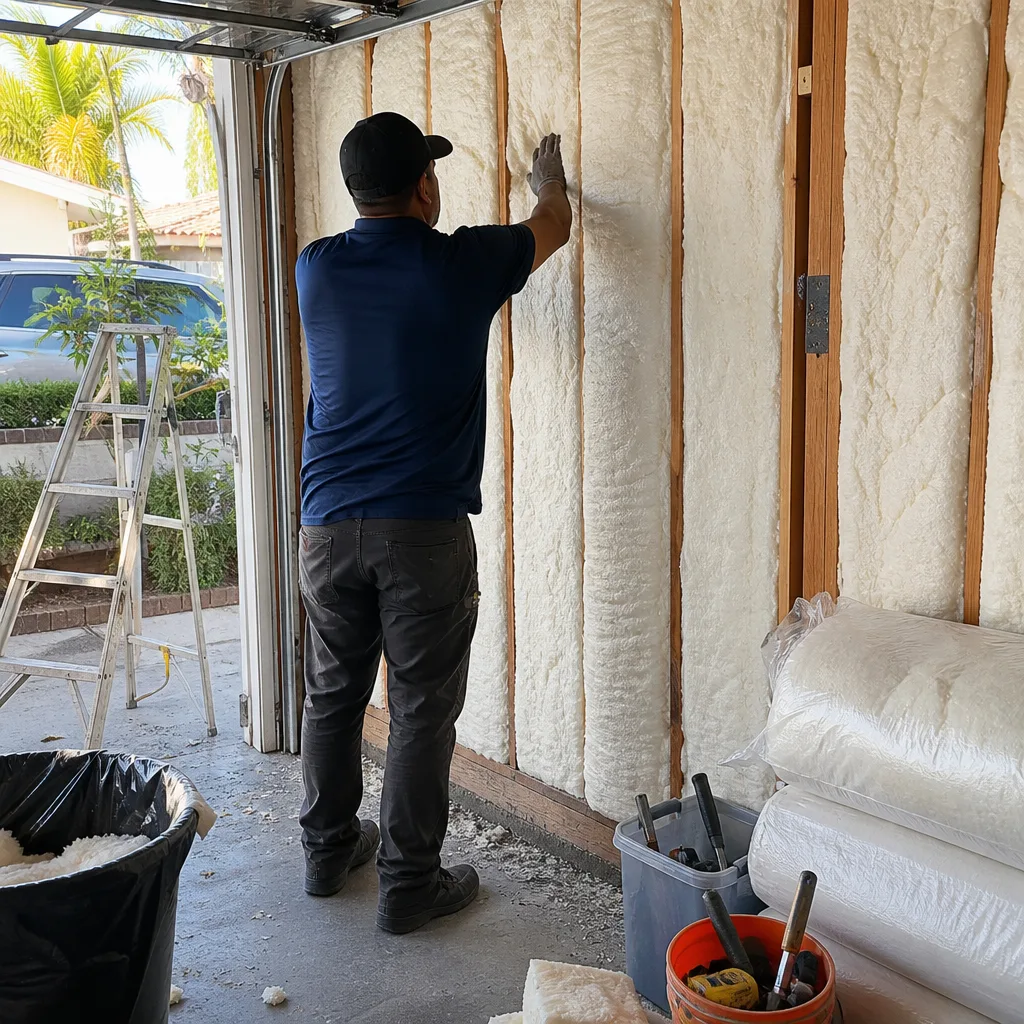 After
AfterWhen Is a Building Permit Required for Insulation Work?
California’s Title 24, Part 6 - the California Energy Code - governs all energy-related building alterations. The trigger for permitting isn’t the word “insulation” on your invoice. It’s whether the work constitutes an “alteration” to the building envelope or mechanical systems.
Under the 2022 Energy Code, an alteration includes any construction or renovation to an existing structure that requires a permit. For insulation specifically, this means:
- New installations in previously uninsulated spaces (attics, walls, floors, crawl spaces)
- Replacement or substantial modification of existing insulation where more than 50% of the surface area in a conditioned space is affected
- Work performed in conjunction with other alterations - roof replacement, HVAC changeouts, room additions - where the insulation scope becomes part of the permitted envelope
- Crawl space encapsulation where vapor barriers and conditioned-space conversion alter the thermal boundary
Repair and maintenance work occupies a narrower exemption. The California Building Standards Code allows limited repair without permit if the work doesn’t affect the building’s structural, electrical, or energy performance. Replacing a water-damaged batt in a single stud bay? Likely exempt. Blowing new material across an entire attic floor? That’s an alteration.
Here’s where homeowners get tripped up. A contractor might frame your job as a “repair” to avoid permit costs and inspection timelines. But if the scope crosses into alteration territory and the permit isn’t pulled, you assume the liability. In Newport Beach, where median home values sit well above regional averages, that liability extends to resale complications and potential code-compliance orders.
We’ve seen this scenario repeatedly: a homeowner in the Newport Heights area has insulation added during a roof replacement. The roofing contractor handles the permit for the roof but never includes the insulation scope. Two years later, during a pre-listing inspection, the missing Certificate of Insurance surfaces as a disclosure issue. The fix costs more than the original permit would have.
The permit process itself isn’t burdensome when handled correctly. For most residential insulation scopes in Newport Beach, the City of Newport Beach Building Division requires:
- A completed permit application with property owner authorization
- Construction documents showing the scope, R-values, and installation methods
- Energy compliance documentation (CF-1R or equivalent) prepared by a certified energy analyst or the contractor
- Payment of permit fees based on project valuation
- Scheduling of rough and final inspections
The CF-1R form deserves specific attention. This is the Certificate of Compliance that demonstrates your project meets Title 24 requirements. It’s generated through approved compliance software and must match the installed conditions exactly. A contractor who can’t produce a CF-1R before work begins isn’t prepared to permit the job properly.
Newport Beach Permit Thresholds vs. Exemptions
The City of Newport Beach Building Division operates under the California Building Standards Code with local amendments published in Title 15 of the Newport Beach Municipal Code. For insulation work, the critical distinction lies in Section 105.2 of the California Building Code, which lists work exempt from permit - and the narrowness of those exemptions for energy-related work.
Exempt work in Newport Beach includes:
- Minor repairs to existing insulation in limited areas (typically under 10 square feet or 10% of the surface, whichever is less)
- Insulation installed in non-conditioned accessory structures under 120 square feet
- Surface application of radiant barriers without alteration of the thermal envelope
Everything else requires a permit. Specifically, the following scopes do trigger permitting in Newport Beach:
- Attic insulation replacement or new installation exceeding repair thresholds
- Wall insulation in any exterior wall, including dense-pack retrofit
- Floor insulation over unconditioned spaces, including garage ceilings and cantilevered floors
- Crawl space insulation and vapor barrier installation
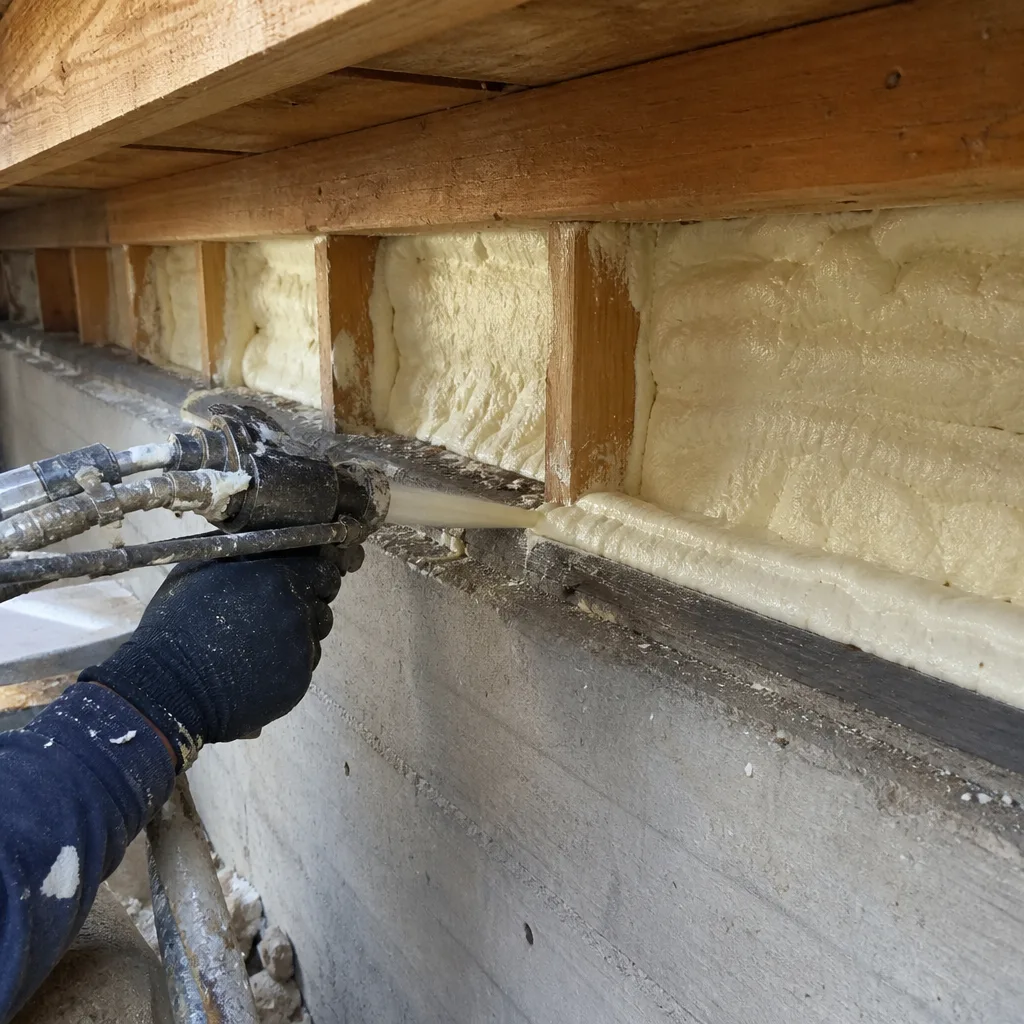
- Spray foam insulation in any application, due to fire-resistance and ignition-barrier requirements
- Insulation removal and replacement where hazardous conditions (rodent infestation, water damage, fire damage) necessitate full replacement
Newport Beach’s coastal location adds a layer of complexity. The city enforces additional moisture-protection requirements for envelope work, reflecting the marine climate’s impact on building durability. Inspectors pay particular attention to vapor-barrier placement - whether the barrier faces the conditioned space or the exterior - because incorrect placement in a humid coastal environment traps moisture in wall cavities and accelerates degradation.
The permit fee structure in Newport Beach is valuation-based. For a typical residential attic insulation scope in the $3,000-$7,000 range, permit fees generally run $200-$450, with plan check fees adding $150-$300 if the project requires document review. These costs are modest relative to the project value but significant enough that some contractors attempt to bypass them.
Homeowners should verify permit status through the City’s online permit portal before final payment. A legitimate contractor has no objection to providing the permit number and inspection sign-off documentation. Under Haven Standard: Have it in writing - we deliver the permit number, inspection results, and Certificate of Compliance as part of every job’s closing documentation.
Climate Zone 8 R-Values: What Newport Beach Homes Actually Need
The California Energy Commission divides the state into 16 climate zones. Newport Beach occupies Climate Zone 8, a coastal zone characterized by mild winters, moderate summers, and significant marine influence. This designation matters because R-value requirements vary by zone, and using statewide defaults instead of zone-specific values leads to underperformance. Our Seasonal Insulation Care for Newport Beach: Year-Round Homeowner’s Guide explains how to maintain these standards through changing conditions.
The 2022 Title 24, Part 6 prescriptive requirements for Climate Zone 8 are found in Table 150.1-A of the Residential Compliance Manual. For wood-framed construction - the dominant type in Newport Beach’s housing stock - the minimum installed R-values are:
| Component | Climate Zone 8 Minimum R-Value | Common Misquote |
|---|---|---|
| Attic (ceiling, vented) | R-38 | R-30 (repair exemption or outdated code) |
| Attic (cathedral/rafter) | R-30 | R-19 or R-21 |
| Wood-framed wall | R-19 or R-13 + R-5 continuous | R-13 only |
| Floor over unconditioned space | R-19 | R-13 or uninsulated |
| Crawl space wall | R-19 | R-13 or uninsulated |
| Slab edge (heated slab) | R-5 | Omitted entirely |
The R-38 attic requirement deserves emphasis. We’ve encountered contractors in the Newport Beach market quoting R-30 for full attic replacements, citing “code compliance” based on older standards or repair exemptions. R-30 is permissible only for limited repair scopes - replacing insulation in less than 50% of the attic area. A complete attic insulation job in Newport Beach requires R-38 installed value, which accounts for thermal bridging and settling.
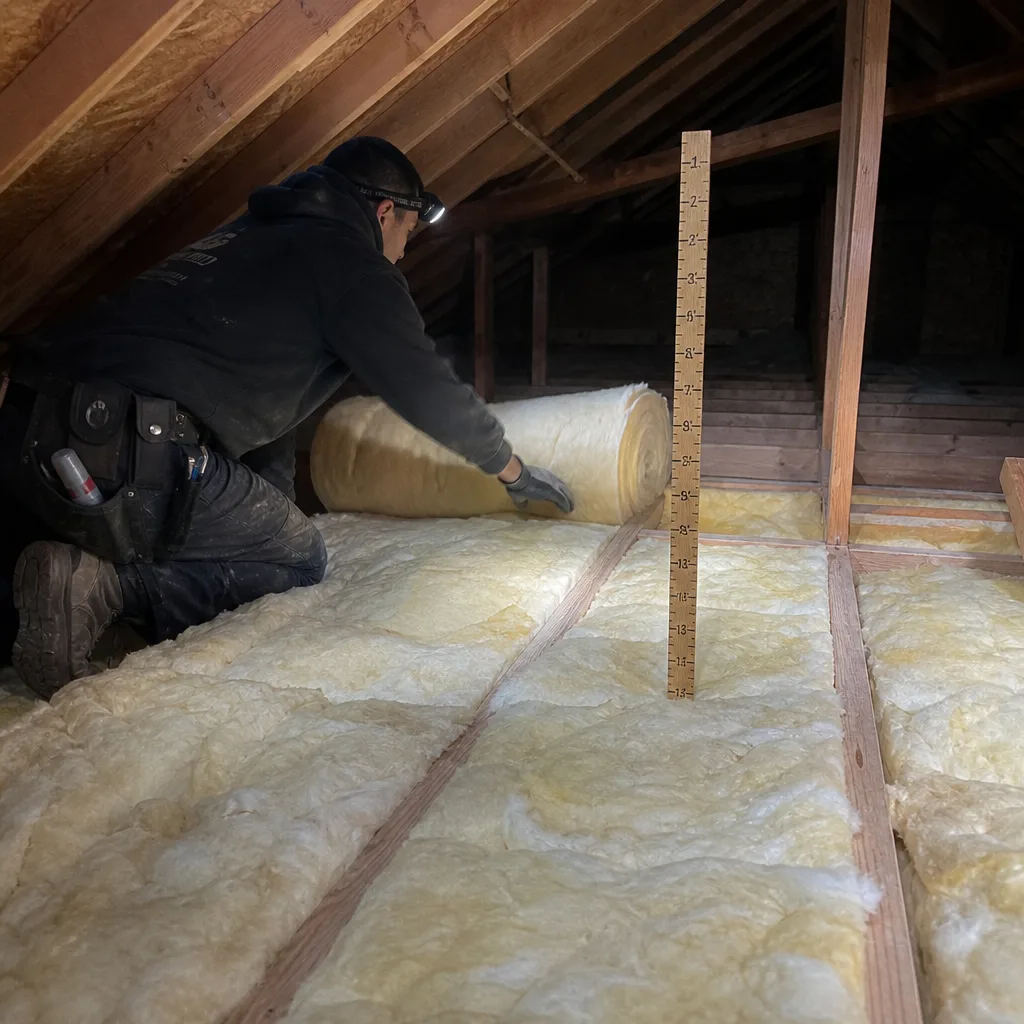
Installed value differs from labeled R-value. Blown cellulose or fiberglass settles 10-20% over time. Title 24 requires that the installed thickness achieves the labeled R-value at settled density. For loose-fill fiberglass at R-38, this typically means 14-16 inches at installation, settling to 12-14 inches. Depth rulers - cardboard or plastic markers placed every 300 square feet - verify compliance at inspection.
Wall insulation in Newport Beach presents distinct challenges. The city’s older housing stock, particularly in the Balboa Peninsula and Lido Isle areas, includes uninsulated 2×4 walls with limited cavity depth. Achieving R-19 in a 3.5-inch cavity requires high-density fiberglass, mineral wool like Rockwool R-23, or spray foam. Retrofit options include dense-pack cellulose, injection foam, or exterior insulation with CertainTeed rigid board. Each approach has permit and inspection implications.
For homeowners considering spray foam insulation in Newport Beach, Climate Zone 8 allows both open-cell and closed-cell products, but fire-resistance requirements are stringent. Spray foam in attics and crawl spaces requires an ignition barrier or thermal barrier depending on accessibility, and this triggers additional inspection points that batt or blown products don’t face.
What Inspectors Actually Check During Insulation Inspections
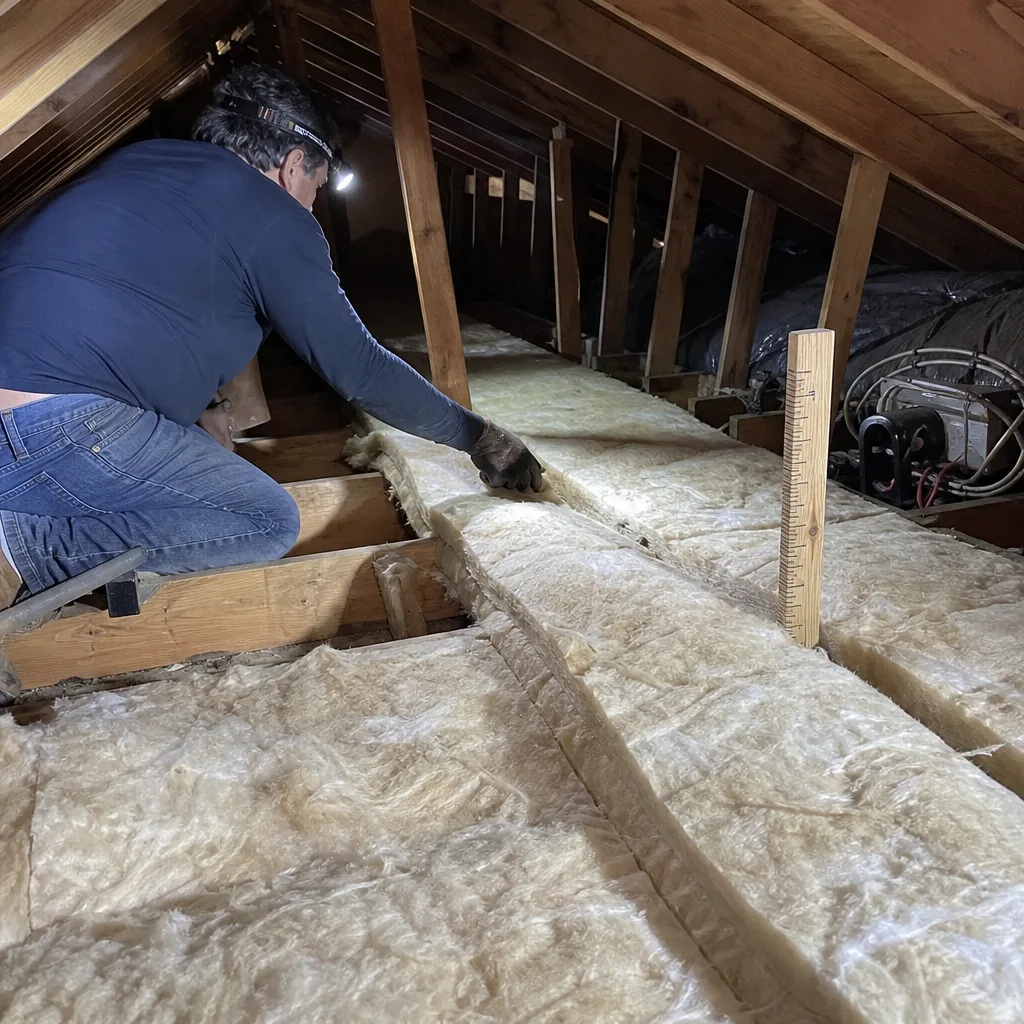
Field inspections for insulation work follow a standardized protocol, but the details vary by jurisdiction and inspector experience. In Newport Beach, the Building Division typically conducts two inspections for permitted insulation work: a rough inspection (if the thermal envelope is altered before insulation is covered) and a final inspection after installation is complete.
For most residential attic and crawl space work, only a final inspection is required. Use our Attic Insulation Maintenance Checklist for Newport Beach Homeowners to prepare, and here’s what the inspector actually evaluates:
- Depth verification with installed rulers. The inspector looks for depth markers manufactured by the insulation producer, placed according to the product’s coverage chart. For blown fiberglass, rulers must show minimum settled thickness corresponding to the labeled R-value. We install Owens Corning, Johns Manville, Knauf, and GreenFiber products with manufacturer-specific rulers - generic rulers are rejected.
- Uniform coverage without voids or compression. The inspector scans for gaps around chimneys, flues, recessed lighting, and attic hatches. Compressed batts lose R-value; a batt squeezed into a 2×6 space designed for 2×8 performs at the compressed thickness, not the labeled value. In Newport Beach’s coastal climate, inspectors are particularly vigilant about wind-washing zones where eave vents create channels in blown product.
- Air-barrier continuity at bypasses. This is where many installations fail. Top plates where walls meet ceilings, plumbing and electrical penetrations, and dropped soffits must be sealed before insulation covers them. The inspector may probe with a flashlight or request that specific areas be exposed. We’ve found that jobs where air sealing was skipped - insulation blown directly over unsealed top plates - fail inspection at this point.
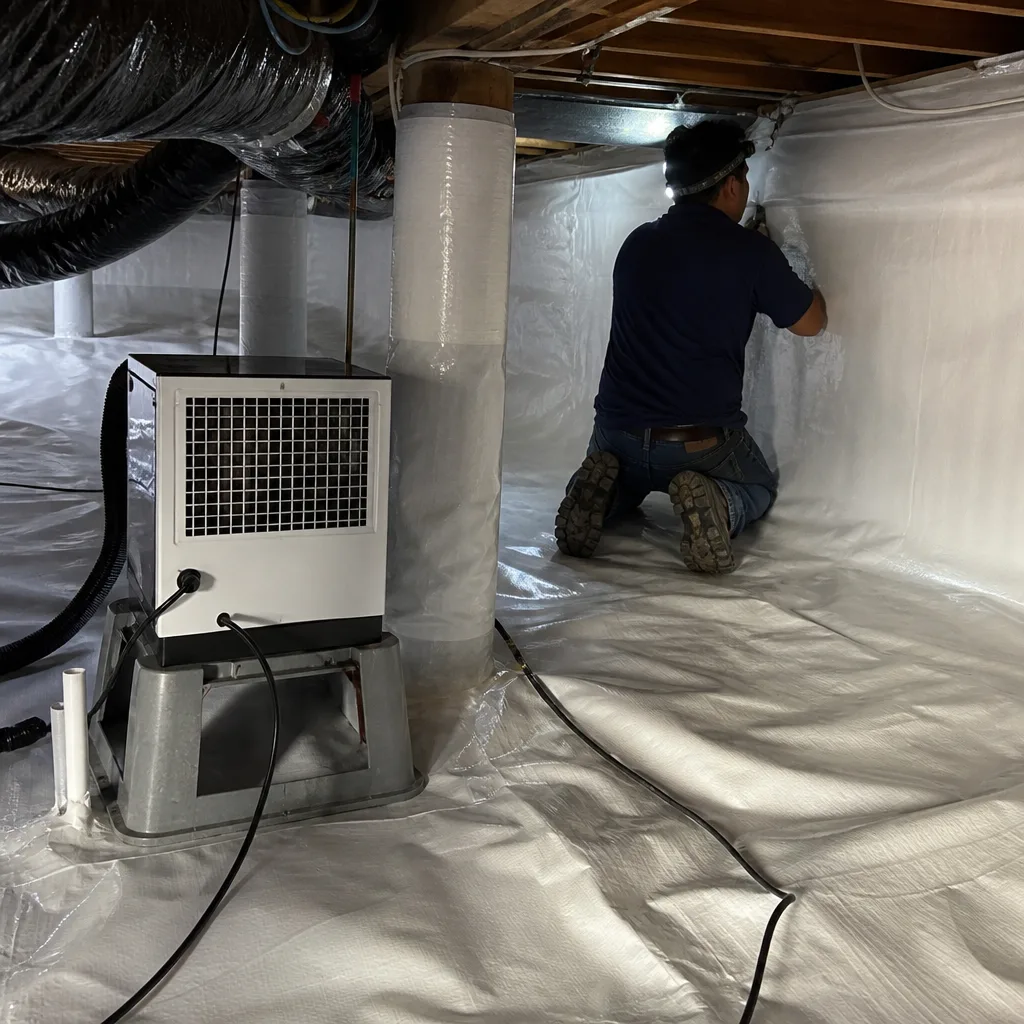
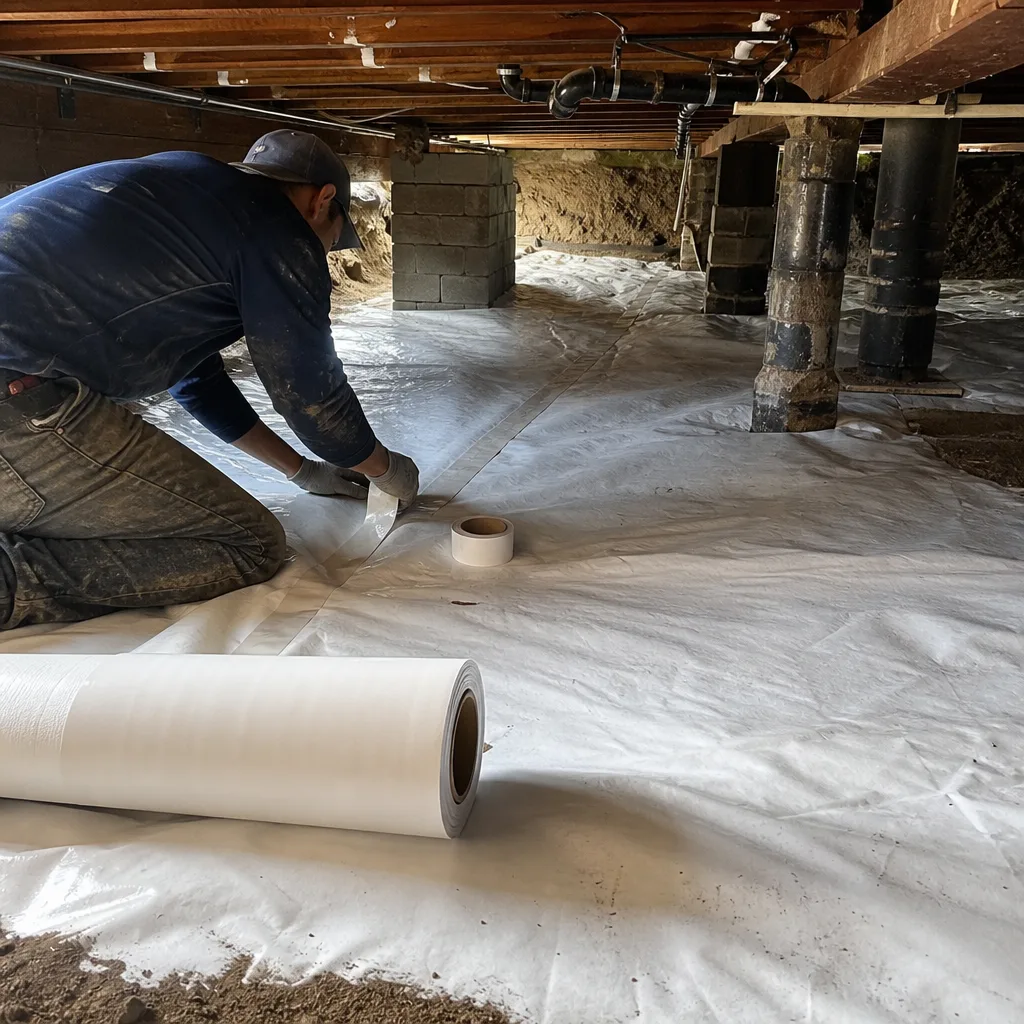
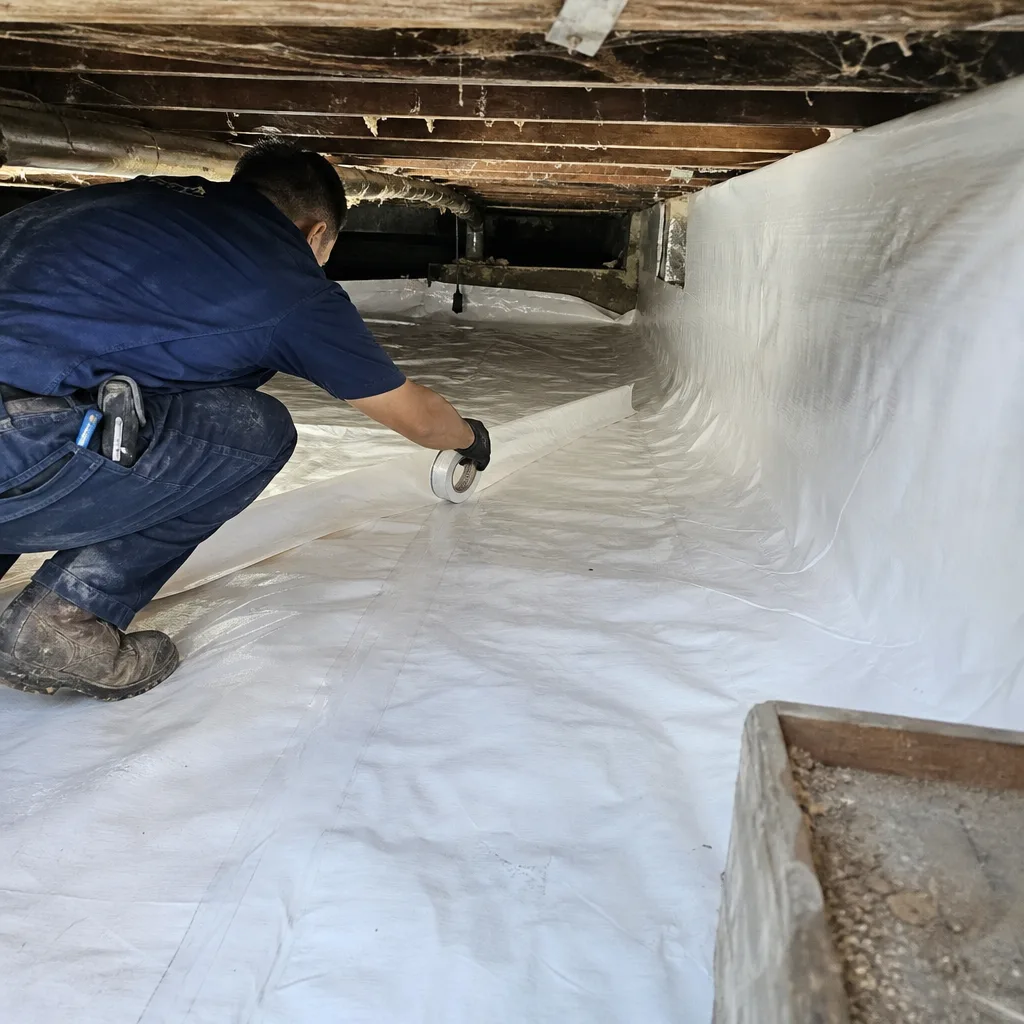
- Vapor-barrier placement and condition. In Climate Zone 8, vapor barriers face the conditioned side in heating-dominated applications. For Newport Beach’s mixed climate, the inspector verifies that crawl space vapor barriers (6-mil polyethylene minimum) are properly lapped, sealed, and extended to foundation walls. Crawl space encapsulation in Newport Beach requires particular attention to wall sealing and drainage plane continuity.
- Spray foam ignition barriers and thermal barriers. For spray foam applications, the inspector verifies that the required barrier - 1/2-inch gypsum, intumescent coating, or equivalent - is installed per the foam manufacturer’s ICC-ESR report. Each spray foam product, including Icynene and Demilec formulations, has specific barrier requirements that must match the installed product exactly.
- Accessibility and safety clearances. Insulation must not block combustion air vents, recessed light housings (unless rated for contact), or attic ventilation paths. Newport Beach enforces California’s wildfire-urban interface requirements in designated zones, which may affect vent screening and insulation proximity to heat sources.
The inspection outcome is recorded as approved, approved with corrections, or rejected. A rejection requires re-inspection after corrections, with additional fees. Contractors who’ve skipped permit steps leave homeowners holding this bag - the permit is in the owner’s name, and the correction order attaches to the property record.
Our crews document every inspection with photographs of the installed rulers, sealed bypasses, and barrier installations. This Documented Photo Record, included on every job, provides evidence of compliance that outlasts the inspector’s field notes.
The Certificate of Insulation and Why You Keep the Original
Title 24, Section 110.8(a) requires that a Certificate of Insulation be completed and posted at the building for all new construction and alterations involving insulation. For homeowners, this certificate serves as the primary documentation of code-compliant installation - and it’s your responsibility to retain it, not the contractor’s.
The Certificate of Insulation includes:
- Property address and APN (Assessor’s Parcel Number)
- Permit number and inspection sign-off date
- Installed R-values by component (attic, wall, floor, etc.)
- Insulation manufacturer and product identification
- Installation area in square feet
- Certification that installed values meet or exceed Title 24 requirements
- Contractor license number and signature
The certificate must be posted in a visible location - typically the electrical panel or water heater - until final inspection, after which the homeowner should retain the original. Copies in project files or with the contractor do not satisfy resale disclosure requirements.
Here’s why this matters for Newport Beach homeowners specifically. California Civil Code Section 1102 requires disclosure of unpermitted work and code violations in residential real estate transactions. A missing Certificate of Insulation doesn’t automatically constitute a violation, but it raises questions that sellers must answer. Did the work have a permit? If not, was it exempt? If exempt, can you prove it?
We’ve consulted with homeowners in the Harbor View Hills and East Bluff areas who discovered, during pre-listing preparation, that insulation work performed by prior owners lacked any documentation. The practical solution is often a retrospective inspection by a licensed contractor, which costs $400-$800 and may reveal deficiencies requiring correction. The original Certificate of Insulation, properly retained, prevents this entirely.
Under Haven Standard: Have it in writing - we provide the original Certificate of Insulation, the CF-1R compliance documentation, the permit sign-off, and our Documented Photo Record in a physical folder at job completion. Digital backups follow by email. You leave knowing exactly what documentation you have and where to find it.
How Unpermitted Work Affects Your CLUE Report and Home Sale
The Comprehensive Loss Underwriting Exchange (CLUE) report tracks insurance claims history on properties and individuals. While CLUE primarily records claims, not permit status, the connection between unpermitted work and insurance complications is direct - and increasingly relevant for Newport Beach homeowners in high-value markets where buyers conduct thorough due diligence.
Unpermitted insulation work affects your property record through several pathways:
- Insurance claim denials. If water damage, fire, or structural failure occurs in an area with unpermitted alterations, insurers may deny claims based on code violations. A roof leak in an attic where insulation was added without proper vapor-barrier placement - allowing moisture accumulation - becomes a coverage dispute.
- Appraisal and lending complications. Lenders in California increasingly require permit verification for alterations affecting square footage, energy systems, or structural components. Fannie Mae and Freddie Mac guidelines direct appraisers to flag unpermitted work that affects value or marketability. In Newport Beach’s $2M+ median market, appraisal conditions can delay or derail transactions.
- Buyer inspection findings. Professional home inspectors in Orange County routinely check attic and crawl space insulation for permit documentation, particularly in homes with recent roof or HVAC work. Missing permits trigger further investigation, cost estimates, and repair credits - or buyer withdrawal.
- Retroactive permitting costs. When unpermitted work is discovered, Newport Beach Building Division may require asbestos testing (for pre-1990 homes), full exposure of installed work for inspection, and correction of any deficiencies before permit issuance. The cost typically exceeds original permitting by 200-400%.
The CLUE report itself won’t show “unpermitted insulation,” but related claims will appear. A water damage claim in an attic with unpermitted work, denied due to code violation, creates a CLUE entry that future insurers review. The combination of claim history and unpermitted work can push homeowners into surplus-line coverage at significantly higher premiums.
For Newport Beach homeowners planning to hold properties 5-10 years before sale, the documentation established today determines transaction smoothness tomorrow. The permit, inspection sign-off, Certificate of Insulation, and photo documentation we provide create a complete chain of compliance that satisfies any buyer’s due diligence.
Air Sealing, Blower-Door Testing, and Title 24 Compliance
Title 24’s 2022 update strengthened air-sealing requirements significantly. The code now recognizes that insulation without air sealing performs substantially below rated R-value - a reality we’ve documented across thousands of homes. In Newport Beach’s Climate Zone 8, where heating and cooling loads are moderate but consistent, air leakage represents a disproportionate share of energy waste.
The prescriptive path for compliance requires specific air-sealing measures:
- Sealing of all penetrations between conditioned and unconditioned spaces
- Top plate sealing at attic-floor junctions
- Damming around chimneys and flues to prevent insulation contact
- Sealed attic hatches with minimum R-19 value
- Caulking or gasket application at electrical boxes on exterior walls
The performance path offers an alternative: demonstrate compliance through whole-building energy modeling, with air leakage measured by blower-door test. This path allows trade-offs - higher air tightness with slightly lower insulation R-value, for example - but requires certified testing and modeling.
Our approach at Topside Attic Insulation Newport Beach home aligns with the performance path’s documentation standard even when we follow prescriptive compliance. Every applicable job receives before-and-after blower-door testing - a pressurization reading that shows, in one number, how much air your building envelope was losing. Typical pre-work readings in Newport Beach homes built 1960-1990 range from 3,500 to 6,000 CFM50 (cubic feet per minute at 50 Pascals depressurization). After air sealing and insulation, we regularly achieve 1,800-2,500 CFM50 - reductions of 40-60% that are visible in the data, not claimed in marketing language.
The blower-door test itself isn’t required by Title 24 for most retrofits, but it’s the only method that verifies air-sealing effectiveness. A visual inspection can confirm that caulk was applied; only a blower door confirms that the envelope actually performs. We publish these numbers on every applicable job because they’re the evidence that matters to the homeowners we serve - the 32-50 year-old buyers who read three-star reviews with equal attention to five-star ones.
For attic insulation in Newport Beach, the air-sealing sequence is critical. We seal first, then insulate - in that order. Blowing insulation over an unsealed attic floor buries bypasses under material that makes future access difficult and expensive. Our crews complete air sealing of top plates, can lights, and all penetrations before any insulation is added. The blower-door test confirms the result.
Hiring a Contractor: Documentation You Should Demand
The difference between a compliant insulation job and a future liability often lies in the documentation provided at completion. Before hiring any contractor for insulation work in Newport Beach, request and verify the following:
- Written price with scope specification. The estimate should identify each component (air sealing, insulation type, R-value, area), not a single lump sum. Under Haven Standard: Have it in writing - flat price, written scope, written warranty before anyone lifts a tool.
- Permit application or permit number before work begins. For alteration scopes, the permit should be posted or the application submitted. Verify status through the City of Newport Beach’s online portal using the property address.
- CF-1R or equivalent compliance documentation. This energy compliance form must match the installed scope. Ask to see the pre-installation version and confirm it will be updated to as-built conditions.
- Manufacturer product data sheets. Verify that the quoted product - whether Rockwool, CertainTeed, or another brand - matches what arrives on the truck. Substitution without notification is a common issue.
- Insurance and license verification. California requires C-2 (Warm-Air Heating, Ventilating and Air-Conditioning) or B (General Building) licensing for insulation work. Verify through the CSLB website. Request certificate of insurance naming you as additional insured for the project duration.
- Inspection scheduling commitment. The contractor should coordinate inspections, not leave this to you. Confirm the inspection timeline and your presence requirements.
- Completion documentation package. This should include the final inspection sign-off, Certificate of Insulation, as-built CF-1R, product warranties, and photo documentation. We deliver this as a physical folder plus digital backup on every job.
Our Free Second Opinion on Any Written Estimate applies specifically here. Bring us a competing quote; we will read it with you line by line. We’ve identified permit gaps, R-value shortfalls, and missing air-sealing scopes in estimates from other contractors - not to disparage competitors, but to ensure homeowners understand what they’re actually purchasing.
The 9,000+ homes we’ve sealed and insulated since 2016 - every one with a written price before work started and a documented record when the crew left - represent our track record. But the documentation on your specific job matters more than our aggregate history. That’s why Haven Standard Clause 1 applies to every project, without exception.
Common Mistakes to Avoid
- Accepting “repair” classification for full-replacement scope. A contractor who labels your complete attic insulation as “repair” to avoid permitting leaves you with unpermitted work and no Certificate of Insulation. Verify the classification against actual scope.
- Assuming R-30 meets current code in Newport Beach. Climate Zone 8 requires R-38 for attic alterations. R-30 is permissible only for limited repairs under 50% of surface area. Confirm the requirement before accepting any quote.
- Neglecting vapor-barrier placement in coastal climate. Incorrect vapor-barrier orientation in Newport Beach’s humid marine environment traps moisture in assemblies. The inspector checks this; you should verify it before installation covers the work.
- Failing to retain the original Certificate of Insulation. Contractors keep copies; homeowners need the original for resale disclosure. Request it at final walkthrough, not months later when files may be archived or lost.
- Skipping air sealing to reduce project cost. Insulation without air sealing performs 30-50% below rated value in real conditions. The modest savings disappear in energy costs and comfort complaints. Demand blower-door verification or detailed air-sealing scope documentation.
- Not verifying spray foam ignition-barrier compliance. Spray foam without proper thermal or ignition barrier fails inspection and creates fire hazards. Verify the specific barrier requirement for your product and confirm installation before enclosure.
- Ignoring permit status during home purchase. When buying in Newport Beach, verify permit status for recent insulation, roofing, or HVAC work. Unpermitted alterations become your liability at closing.
When to Call a Professional
Call a licensed insulation contractor when your scope crosses from maintenance into alteration - typically any new installation, replacement exceeding 50% of a surface area, or work performed with other permitted alterations. In Newport Beach, the specific triggers are permit requirements under Title 24, Climate Zone 8 R-value minimums, and the documentation needed for your property record. Explore more guides & resources for maintaining compliance.
Topside Attic Insulation Newport Beach offers free estimates in Newport Beach - call (657) 261-8265. Every estimate includes a written price, scope specification, and permit requirement assessment before any commitment. Our background-checked, uniformed technicians arrive on schedule with a text when they’re on the way, and a live person answers calls 24/7 - no voicemail loops, no callback windows measured in business days.
Frequently Asked Questions
Yes, if the work constitutes an alteration - new installation or replacement of more than 50% of the attic surface area. Limited repairs to existing insulation in small areas may qualify as exempt maintenance. Call (657) 261-8265 for a free estimate and we’ll assess your specific scope against Newport Beach Building Division requirements.
Climate Zone 8 requires R-38 minimum for attic alterations in wood-framed construction. R-30 is sometimes quoted for repair scopes but does not meet the alteration standard. The installed thickness must account for settling - typically 14-16 inches of loose-fill fiberglass at installation for R-38 settled performance.
The inspector verifies depth rulers for blown product, uniform coverage without voids, air-barrier continuity at bypasses, vapor-barrier placement, and required fire-resistance barriers for spray foam. In Newport Beach, moisture-protection details receive additional scrutiny due to the coastal climate.
The Certificate of Insulation is a Title 24 document certifying that installed R-values meet code requirements. You need the original for California resale disclosure requirements - it proves compliance and prevents pre-listing complications. We provide the original at job completion, not a copy.
Yes. Unpermitted alterations must be disclosed under California Civil Code Section 1102, and missing documentation triggers buyer inspection findings, appraisal conditions, and potential retroactive permitting costs of 200-400% above original permit fees. Proper documentation from installation prevents this entirely.
The prescriptive path requires specific air-sealing measures at penetrations, top plates, and envelope transitions. The performance path allows trade-offs verified by blower-door testing. We seal first, then insulate, and provide before-and-after blower-door numbers on every applicable job so you can verify the actual performance change.
The Bottom Line
California’s Title 24 energy code creates specific obligations for insulation work that many homeowners - and some contractors - overlook. In Newport Beach’s Climate Zone 8, the R-38 attic minimum, permit requirements for alterations, and Certificate of Insulation documentation aren’t bureaucratic details; they’re the difference between a compliant, documented job and a future liability. The inspector’s field verification of depth rulers, air-barrier continuity, and vapor-barrier placement ensures the work performs as designed. Retaining your documentation protects resale value. And air sealing before insulation - with blower-door verification - is the only approach that delivers the performance you’re paying for. Every job we’ve completed since 2016 has started with a written price and ended with a documented record. That’s not marketing language; it’s the Haven Standard, applied without exception.
Written by Wes Okafor, Owner at Topside Attic Insulation Newport Beach, serving Newport Beach since 2016.