
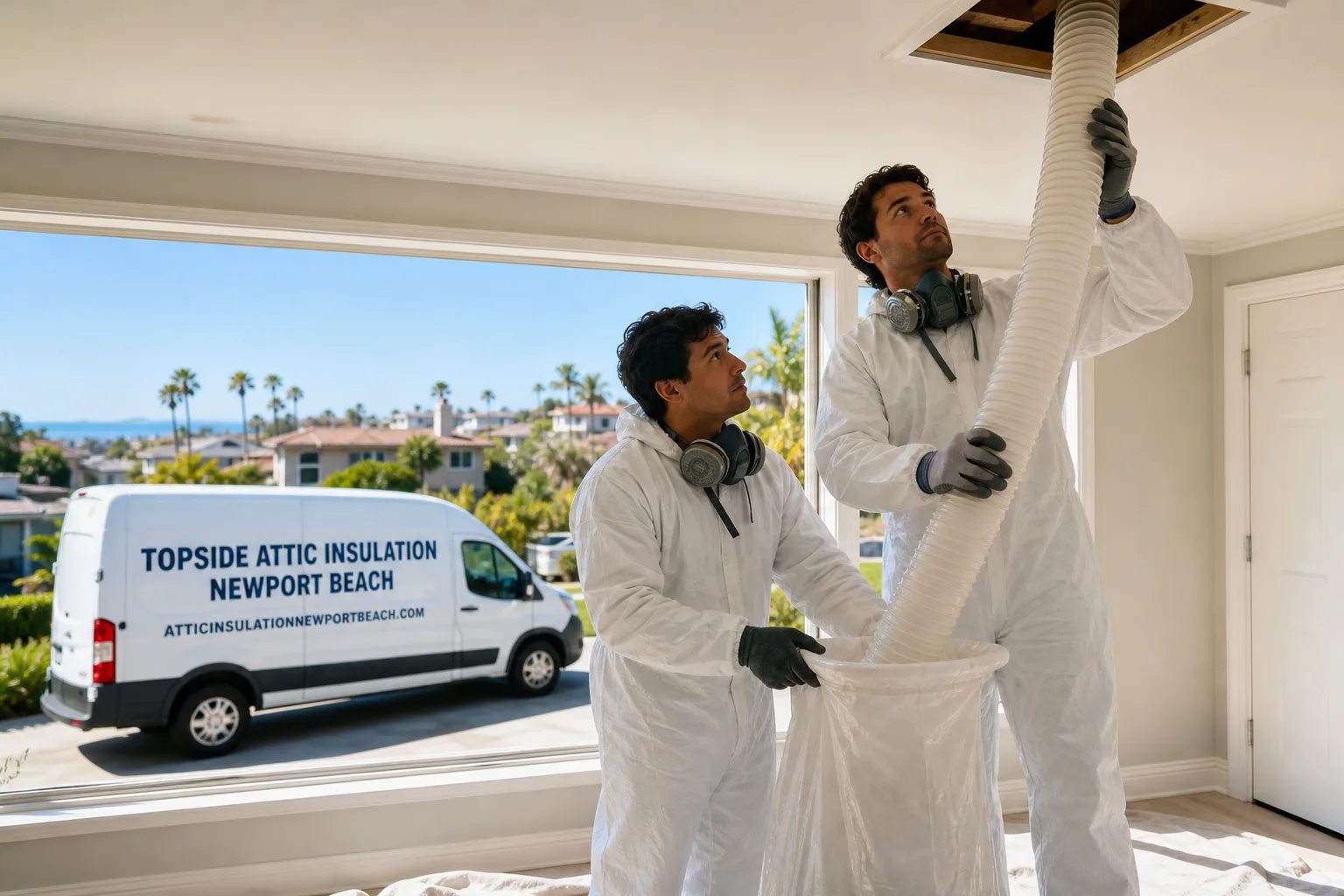
How Much Does Crawl Space Encapsulation & Vapor Barrier Cost in Newport Beach?
Crawl Space Encapsulation & Vapor Barrier services in Newport Beach typically cost between $3,800 and $8,500 for a standard single-family home, with most projects landing around $5,500 to $6,500 once labor, liner material, drainage mat, and seam tape are accounted for. A basic vapor barrier installation alone – without full encapsulation – runs closer to $1,200 to $2,800 depending on crawl space square footage and ground condition. Newport Beach’s coastal humidity and marine layer push moisture loads higher than inland markets, so what works in Riverside often isn’t enough here.
Crawl Space Encapsulation & Vapor Barrier Cost Breakdown (2026)
The table below reflects what homeowners in Newport Beach are actually paying in 2026, based on the coastal Southern California market. These are installed prices – materials plus labor – not material-only figures.
| Scope of Work | Typical Price Range | Notes |
|---|---|---|
| Basic vapor barrier only (6-mil poly sheeting) | $1,200 – $2,400 | Ground cover only, no wall liner, no tape sealing |
| Vapor barrier upgrade (12-mil reinforced liner) | $1,800 – $3,200 | Better puncture resistance, more appropriate for coastal soil |
| Full encapsulation – small crawl space (under 800 sq ft) | $3,800 – $5,200 | Liner on floor and walls, seam tape, vent covers typical |
| Full encapsulation – mid-size crawl space (800-1,500 sq ft) | $5,200 – $7,000 | Most common range for Newport Beach single-family homes |
| Full encapsulation – large crawl space (1,500+ sq ft) | $7,000 – $10,500 | Custom estates in Newport Coast, older Balboa Peninsula properties |
| Drainage matting (added to full encapsulation) | $400 – $900 | Allows water to move under liner instead of pooling; worthwhile near bay |
| Dehumidifier installation (crawl space rated) | $900 – $1,800 | Often recommended in Corona del Mar and areas close to the Back Bay |
| Crawl space vent sealing | $150 – $450 | Closing passive vents is part of a true sealed-crawl-space system |
| Old vapor barrier removal | $300 – $700 | Degraded poly must come out before new liner goes down |
| Mold remediation (if present before encapsulation) | $500 – $2,500+ | Priced separately; must be resolved before any liner is installed |
A few things push the total number up or down significantly. Crawl space height matters a great deal: a Newport Beach home with 18 inches of clearance takes longer to work in than one with 36 inches, and that extra labor time shows up in the invoice. Ground condition matters too. Some older properties in West Newport and near the Balboa Peninsula have damp, loose soil that requires prep work before a liner can lay flat and seal properly. If an existing vapor barrier – even a deteriorating one from the 1980s or 1990s – is already in place, it has to come out first. That removal adds cost but is not optional; encapsulating over degraded material traps whatever is already living in it.
The choice of liner thickness also shifts the price. A 6-mil poly sheet is inexpensive but tears easily around pier blocks and utility penetrations. A 20-mil reinforced liner costs more upfront and holds up considerably longer, especially in crawl spaces with irregular terrain. For most Newport Beach homeowners doing this once and expecting it to last 15 to 20 years, the 12-mil to 20-mil range is where the math makes sense.
Under the Haven Standard, Envelope Insulation Co. provides a written scope and flat price before any work starts – no surprise line items added once the crew is on-site. That written price includes the documented photo record of conditions before and after, so you have something concrete to reference for future home sales or insurance conversations.
What Affects Crawl Space Encapsulation & Vapor Barrier Pricing in Newport Beach
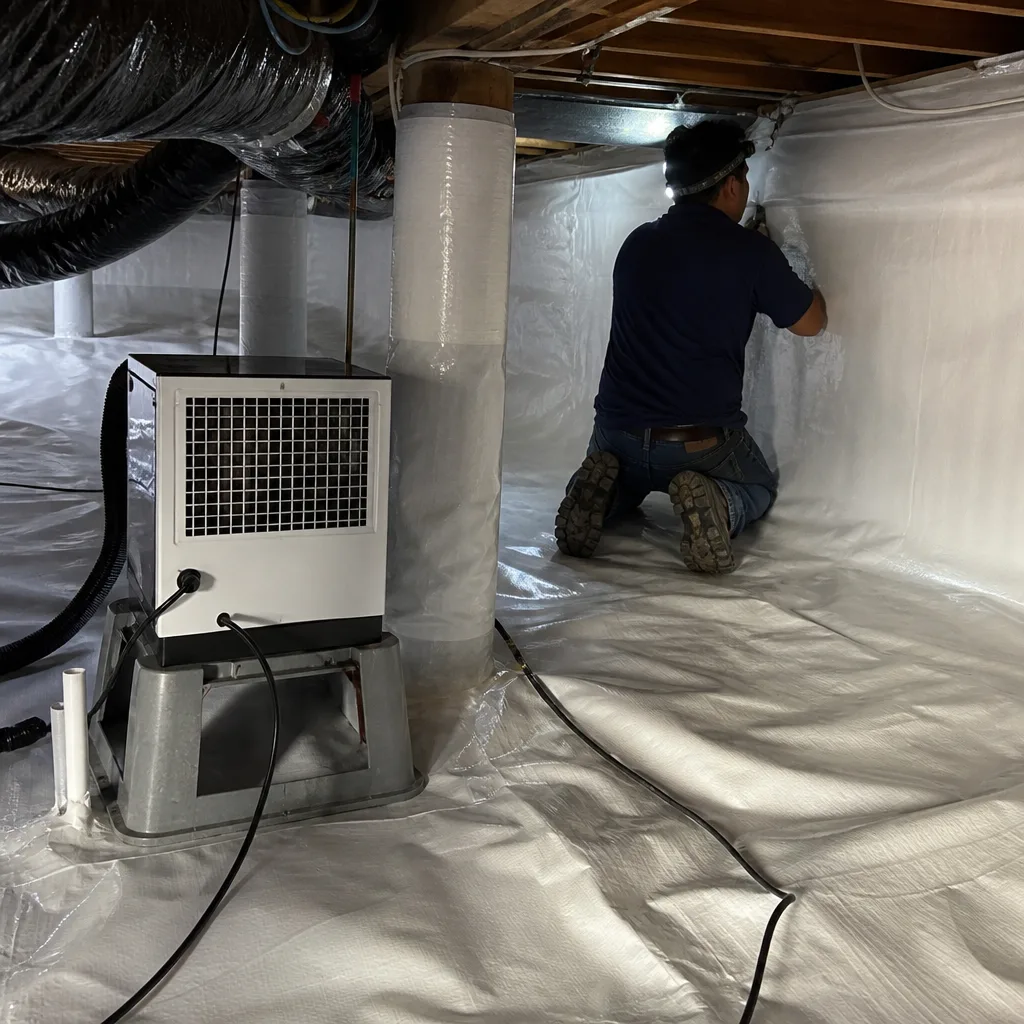
- Coastal humidity and marine layer exposure. Newport Beach sits directly on the Pacific, and neighborhoods like Corona del Mar, Balboa Island, and Newport Coast deal with nighttime marine layer that pushes relative humidity under homes far higher than 10 miles inland. That moisture load means standard thin-liner installs that might hold up fine in Irvine are undersized here. Contractors who quote Newport Beach jobs the same way they quote Anaheim Hills jobs are working from the wrong baseline.
- Crawl space square footage and access difficulty. The linear relationship between size and price is real, but access difficulty can outweigh raw square footage. Homes in the older sections of West Newport and parts of Lido Isle were built with low clearance and tight utility runs. Jobs that take 6 hours in a standard crawl space can take 10 hours in a tight one, and that labor difference lands directly in your quote.
- Existing conditions: mold, debris, standing water, or old liner. A crawl space that has never been encapsulated and has been collecting debris for 30 years is a different job than a clean dirt floor. Mold on joists requires professional remediation before a liner goes down, and that scope is priced separately. Standing water near properties adjacent to Newport Bay or the Back Bay Nature Preserve requires drainage solutions before encapsulation makes sense.
- Liner thickness and material grade. The range from 6-mil poly to a 20-mil reinforced, white-faced liner represents a meaningful cost difference but also a meaningful performance difference. In Newport Beach’s salt air environment, the lower end of liner thickness wears faster near crawl space vents and at ground contact points around pier blocks.
- Whether the crawl space vents will be sealed. A true encapsulated crawl space is a sealed, conditioned or semi-conditioned space, not an open one with a liner on the floor. Sealing the vents and treating the crawl space as part of the building envelope – rather than an exterior space – is the approach that actually controls moisture long-term. Sealing vents adds cost to the initial job but changes how the system performs over years.
- Dehumidifier requirement. In homes near the Back Bay or on Balboa Island where ground moisture and ambient humidity are consistently elevated, a crawl space dehumidifier is often the difference between a system that works and one that traps moisture inside a sealed space. A crawl-space-rated dehumidifier with a drain line adds $900 to $1,800 to the project, depending on unit capacity and drain routing.
- Local permit requirements in Newport Beach. Newport Beach building codes under the California Building Code do require permits for certain crawl space work, particularly when the work changes the ventilation classification of the space (from vented to unvented). Confirm with your contractor whether a permit is required for your specific scope. At Envelope Insulation Co., that conversation happens during the written-price phase, before work starts – not after.
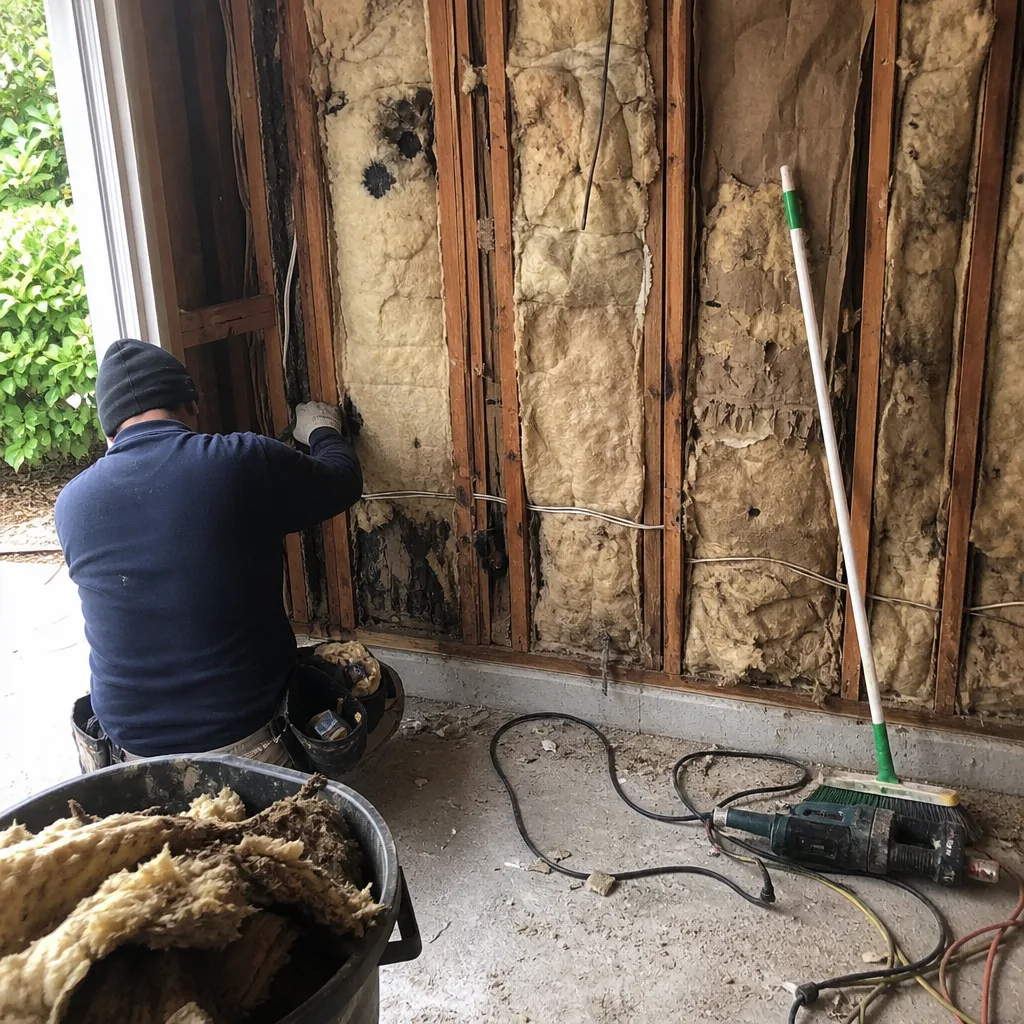 Before
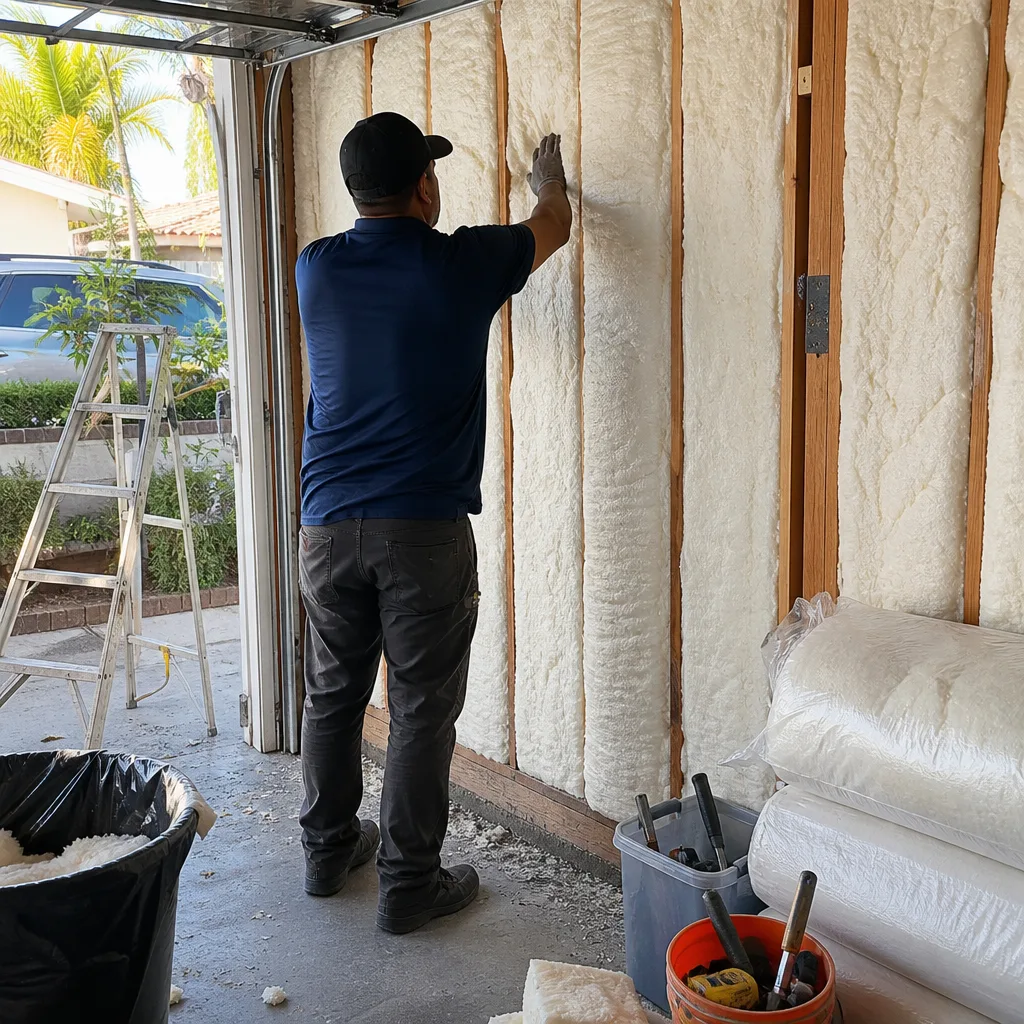 After
AfterHow to Save on Crawl Space Encapsulation & Vapor Barrier in Newport Beach
The most reliable way to avoid overpaying is to get a second opinion on any written estimate before you sign anything. That is not a vague suggestion – it is something Envelope Insulation Co. formalized as a standing offer: bring us any written competing estimate and we will read it with you, line by line, and tell you what the numbers mean. No charge, no pressure. A quote that looks low sometimes omits liner wall coverage, seam taping, or vent sealing – items that determine whether the system actually works.
A few other approaches that genuinely reduce cost:
- Do the prep work yourself if your contractor allows it. Removing old debris, stored items, and degraded vapor barrier material from your crawl space yourself – if you can safely access it – can reduce labor time. Ask your contractor specifically what prep work would reduce your total cost, and get confirmation in writing before assuming any credit applies.
- Combine projects. If you are already planning crawl space encapsulation, scheduling Crawl Space Encapsulation & Vapor Barrier in Newport Beach at the same time as insulation work in the floor system above the crawl space can reduce mobilization costs. Two separate crew visits to the same home cost more than one combined scope.
- Choose the right liner thickness for your conditions rather than the cheapest option. A 6-mil liner that fails in 5 years in a coastal environment costs more over 20 years than a 12-mil liner installed once. The upfront number matters, but so does the replacement cycle.
- Ask about utility rebates. Southern California Edison and SoCalGas periodically offer rebates on qualifying building-envelope improvements. The eligibility rules change, but it is worth verifying what is active before your project closes. Your contractor should be able to point you toward current programs, though the application is typically the homeowner’s responsibility.
- Get the free estimate before deciding anything. On a job in this price range, a free on-site assessment – with a written scope included – gives you real numbers for your specific crawl space rather than phone-estimate ranges. Call (657) 261-8265 and we will schedule that visit.
One thing that rarely saves money: choosing a contractor based on a phone estimate alone. Crawl space conditions in Newport Beach vary enough – salt air, soil type, clearance height, existing moisture damage – that a quote given without a site visit is almost always revised upward once someone actually looks. The written price Envelope Insulation Co. gives you is based on what we found in your crawl space, not on a size estimate from a conversation.
Newport Beach Crawl Space Conditions: What We See on the Ground
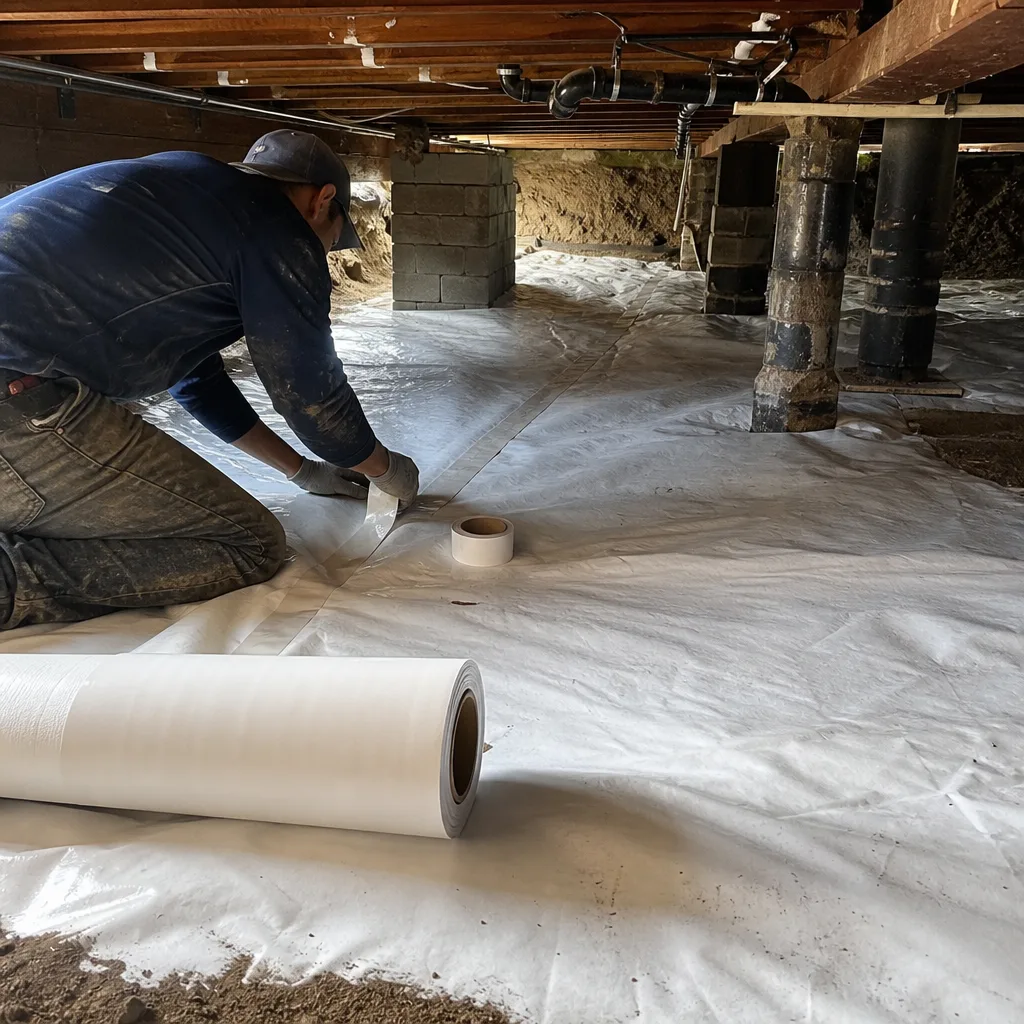
Newport Beach is not a uniform market. The conditions under a 1960s ranch home in West Newport are different from a newer estate in Newport Coast, and both are different from a postwar bungalow on Balboa Island. Knowing the neighborhood tells us something before we even arrive.
On Balboa Island and in areas immediately adjacent to Newport Bay, we regularly see evidence of moisture intrusion in crawl spaces that have never been encapsulated – damp soil, surface efflorescence on foundation walls, and in some cases, wood rot beginning in the lowest joists. The island’s geography puts groundwater relatively close to the surface, and the tidal influence on soil moisture is real. A basic vapor barrier is rarely enough here; drainage matting under the liner and a dehumidifier in the sealed space are typically part of any system that holds up.
In Corona del Mar, the hillside topography creates crawl spaces that slope, sometimes significantly. Sloped crawl spaces are harder to work in and require more careful liner overlap and seaming to prevent water from channeling under the barrier rather than over it. The cost for these jobs tends to run toward the higher end of the mid-size range even when the square footage is modest.
Newport Coast homes, many of them built in the late 1990s and 2000s, often have larger and more accessible crawl spaces. The good news is the access is easier; the consideration is that the square footage is larger and the liner and labor costs scale accordingly. Some Newport Coast homes were originally built with vented crawl spaces and inadequate vapor barriers that are now 20 to 25 years old and degrading.
In Eastbluff and the Bonita Canyon area, we see a mix: some homes with clean, accessible crawl spaces that are straightforward encapsulation jobs, and others where the prior owner installed a partial barrier years ago that now sits in sections, trapping moisture underneath. Removing partial, degraded liner before installing a full system is almost always the right call, even though it adds to the initial cost.
Wes Okafor has been overseeing encapsulation work across Newport Beach since Envelope Insulation Co. was founded in 2016, and the consistent pattern is that coastal moisture is underestimated by homeowners and occasionally by contractors who price jobs the same way they would 15 miles inland. The starting question for any Newport Beach crawl space is not “what size liner do I need” – it is “what is the moisture load in this specific space and what system will actually control it.”
Full Encapsulation vs. Vapor Barrier Only: Which One Does Newport Beach Need?
This is the question that comes up on almost every estimate in Newport Beach, and the honest answer is: most coastal homes need more than a vapor barrier alone.
A vapor barrier – a sheet of poly laid on the ground – slows moisture from rising out of the soil. It does not stop moisture that enters through foundation walls, through vented crawl space openings, or through condensation forming when warm coastal air meets the cooler interior of a crawl space. In a climate with Newport Beach’s marine layer, those secondary sources are significant.
Full encapsulation addresses all of it. The liner covers the ground and the walls, vents are sealed, seams are taped rather than overlapped, and the space is treated as part of the building envelope rather than an exterior zone. In a sealed crawl space, a dehumidifier can then maintain a controlled relative humidity – typically below 60% – year-round. That is the condition under which wood stays healthy, insulation performs as rated, and mold does not establish.
The cost difference between the two approaches can be $2,000 to $4,000 on a typical Newport Beach home. For homeowners on a hard budget, a quality vapor barrier with sealed seams is better than no barrier. But for a home that will be on the market in the next 5 to 10 years, or for a homeowner dealing with musty odors or allergy symptoms that correlate with the home’s air quality, the full encapsulation is the system that actually resolves the problem rather than managing it.
Under the Haven Standard that guides every Envelope Insulation Co. job, Wes Okafor requires that the written scope clearly distinguishes between the two approaches, with the long-term trade-offs documented so the homeowner is making an informed decision rather than a blind one.
What the Job Looks Like: Start to Finish
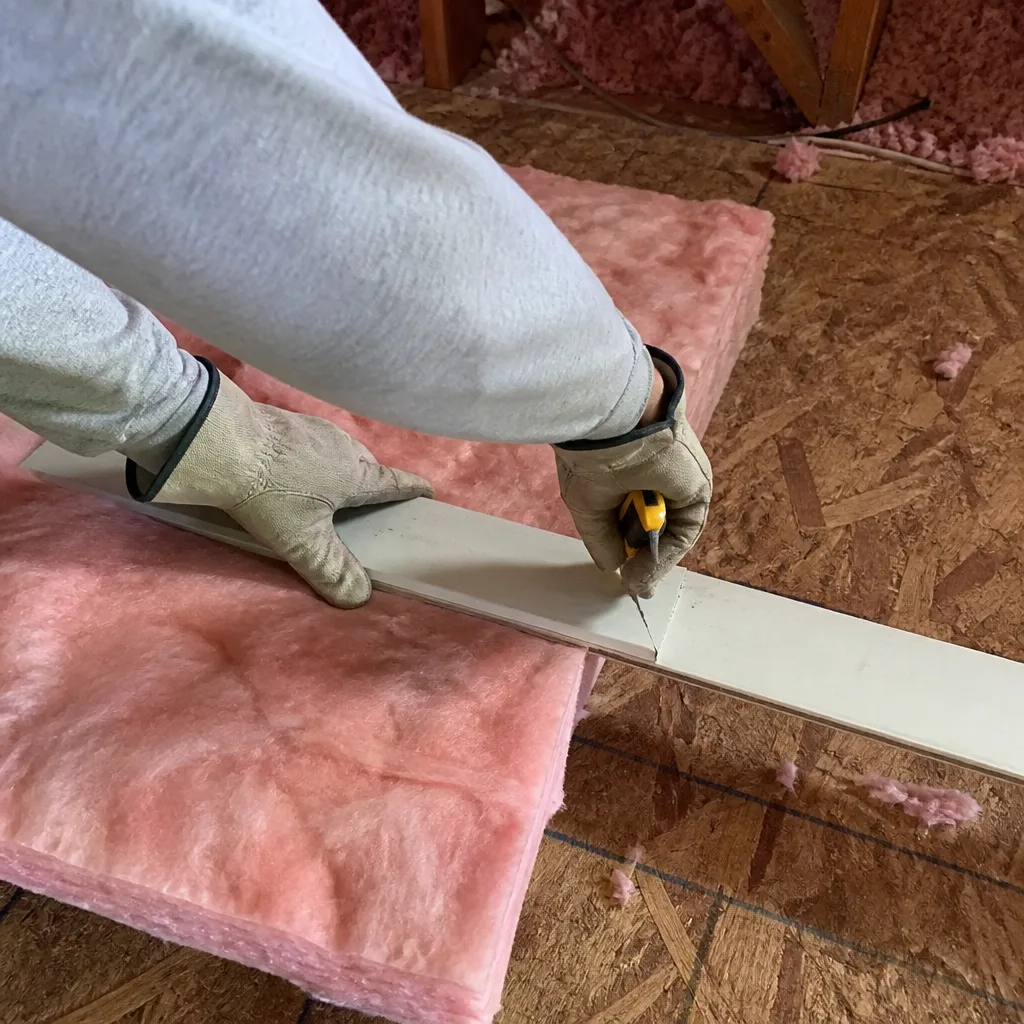
Before any material goes into your crawl space, an Envelope Insulation Co. technician visits, assesses the conditions, measures the space, evaluates access points, checks existing moisture damage, and photographs everything. That visit produces a written scope and a flat price. No work starts without your signature on that document – Haven Standard Clause 1, no exceptions.
On installation day, the crew clears any debris or old liner first. Then the ground liner is laid in sections, overlapped and taped at seams, and wrapped up foundation walls to the sill plate. Vent covers go on passive crawl space vents. If a dehumidifier is in scope, it is installed with a drain line routed to an appropriate discharge point. When the crew leaves, you receive a documented photo record of the finished space – not available on request, included on every visit.
On applicable jobs, the air-sealing component connects back to the building envelope picture at the floor system level. Envelope Insulation Co. is structured around the principle that air sealing happens before insulation is added – not as an afterthought. In a crawl space context, that means sealing penetrations and addressing the transition between the conditioned home and the crawl space before any Crawl Space Insulation is installed in the floor above. The result is a system that performs as a whole rather than a collection of independently-priced line items that don’t quite work together.
The 365-Day Done Right Promise covers the completed work. If something isn’t right in the first year – a seam tape failure, a vent cover that didn’t hold, any workmanship issue – we make it right. That promise is written into the scope document before work starts, not described verbally after the fact.
If you’re comparing our written estimate to another contractor’s quote, use our Free Second Opinion offer. Bring the other quote and we’ll read it with you. That is a specific, standing offer – not a sales tactic. It exists because written estimates for crawl space work vary enormously in what they actually include, and a homeowner without trade knowledge can’t always tell the difference between a $4,200 quote that includes everything and a $4,200 quote that omits wall liner, seam taping, and vent sealing.
For homeowners researching from the home page through to a final decision, the pattern we see is the same: the more specific the information a contractor gives upfront, the more the finished job matches expectations. That is exactly why we put the price on the page and the scope in writing before anyone starts.
FAQs – Crawl Space Encapsulation & Vapor Barrier Cost in Newport Beach
How much does crawl space encapsulation cost in Newport Beach, CA?
Full crawl space encapsulation in Newport Beach costs between $3,800 and $10,500 depending on square footage, crawl space height, existing conditions, and whether a dehumidifier is included. Most single-family homes in Newport Beach fall in the $5,200 to $7,000 range for a complete sealed-crawl-space system. Call (657) 261-8265 for a free on-site estimate with a written price before any work starts.
Is a vapor barrier enough for a Newport Beach home, or do I need full encapsulation?
A Crawl Space Vapor Barrier alone – typically $1,200 to $3,200 installed – slows ground moisture but does not address the marine layer humidity and wall moisture that affect coastal Newport Beach properties. Full encapsulation, which includes wall liner coverage, sealed vents, taped seams, and often a dehumidifier, is the system most Newport Beach crawl spaces need to stay dry year-round. The additional cost is typically $2,000 to $4,000, and it resolves the moisture problem rather than managing it partially.
Does crawl space encapsulation require a permit in Newport Beach?
Newport Beach enforces the California Building Code, and certain crawl space work – particularly projects that change the ventilation classification of the space from vented to unvented – may require a permit. The permit question is addressed during the written-scope phase at Envelope Insulation Co., before any work starts. The requirement depends on the specific scope and your home’s existing classification, so a site visit is the only way to give you a definitive answer. Call (657) 261-8265 to schedule that assessment at no charge.
How long does crawl space encapsulation last?
A properly installed encapsulation system using a 12-mil to 20-mil reinforced liner with fully taped seams typically lasts 15 to 25 years in coastal Southern California conditions. Thinner liners in Newport Beach’s salt-air environment tend toward the shorter end of that range, particularly at stress points around pier blocks and penetrations. The dehumidifier component, if installed, has a separate service life of 8 to 15 years depending on unit quality and maintenance. A documented photo record of the installation, which Envelope Insulation Co. provides on every job, gives you a baseline for future inspections.
Can I install a vapor barrier myself to save money?
DIY vapor barrier installation is physically possible on a clean, accessible crawl space, but the common errors – inadequate seam overlap, no wall coverage, no vent sealing, incorrect liner weight for coastal soil conditions – leave the underlying moisture problem partially or completely unaddressed. In Newport Beach’s coastal environment, a system that is 80% right still allows enough moisture intrusion to support mold growth and wood degradation over time. The professional installation cost of $1,800 to $3,200 for a quality liner system buys precision in seaming and sealing that genuinely changes the outcome. If budget is the concern, call (657) 261-8265 and we’ll scope the minimum system that actually works for your specific space, at a written price, before you commit to anything.
How much does it cost to remove an old vapor barrier before installing a new one?
Old vapor barrier removal in Newport Beach typically costs $300 to $700 and is almost always required before a new encapsulation system is installed. Degraded poly or partially intact old liner cannot be encapsulated over – it traps whatever moisture, debris, or biological material is already underneath. The removal cost is a line item in the written scope Envelope Insulation Co. provides upfront, so there are no surprises once the crew is on-site.
Written by Wes Okafor, Owner at Envelope Insulation Co., serving Newport Beach since 2016.
Pricing reflects the Newport Beach market as of 2026. Topside Attic Insulation Newport Beach offers free estimates – call (657) 261-8265.
What Our Customers Say
"Fixed price, clean work, and they hauled the old material away as agreed."
- Todd M."They photographed rodent damage in the old insulation that we had no idea about, and priced the exclusion work separately so we could decide."
- Harriet N."The winter gas bill dropped by about a third. They had estimated a quarter, so they under-promised."
- Genevieve R.