
Last updated September 24, 2026
Insulation Cost Breakdown: The Newport Beach Homeowner’s Reference for 2026
The average Newport Beach attic insulation bid we see at initial consultation is $1.80-$2.40 per square foot for blown cellulose. The actual cost of a code-compliant job that includes pre-sealing all attic bypasses - which is what makes the insulation perform to its labeled R-value - runs $3.10-$4.20 per square foot. That gap is not markup; it’s the air sealing that was left out of the cheaper bid. In this guide and our more guides & resources, we’ll show you how to read a Newport Beach insulation bid like a technician reads a blower-door graph: line by line, with the numbers that matter, so you buy performance instead of a bag count.
Quick Answer
A complete attic insulation job in Newport Beach in 2026 costs $5,600-$7,600 for a typical 1,800 square foot home when air sealing, blower-door testing, and permit compliance are included. Material-only bids that skip pre-sealing run lower but leave the insulation underperforming by 30-50%. The honest comparison converts every bid to cost-per-R-value-per-square-foot after sealing.
Table of Contents
- Why Newport Beach Insulation Bids Vary by 40-60% for the Same House
- Line-Item Cost Breakdown: A Typical 1,800 Sq Ft Newport Beach Attic
- How to Compare Bids Using Different Pricing Units
- What Drives Cost Variation in Newport Beach Specifically
- Where the ROI Math Actually Works in Climate Zone 8
- What Your Job Documentation Is Worth at Resale
- Common Mistakes to Avoid
- When to Call a Professional
- Frequently Asked Questions
- The Bottom Line
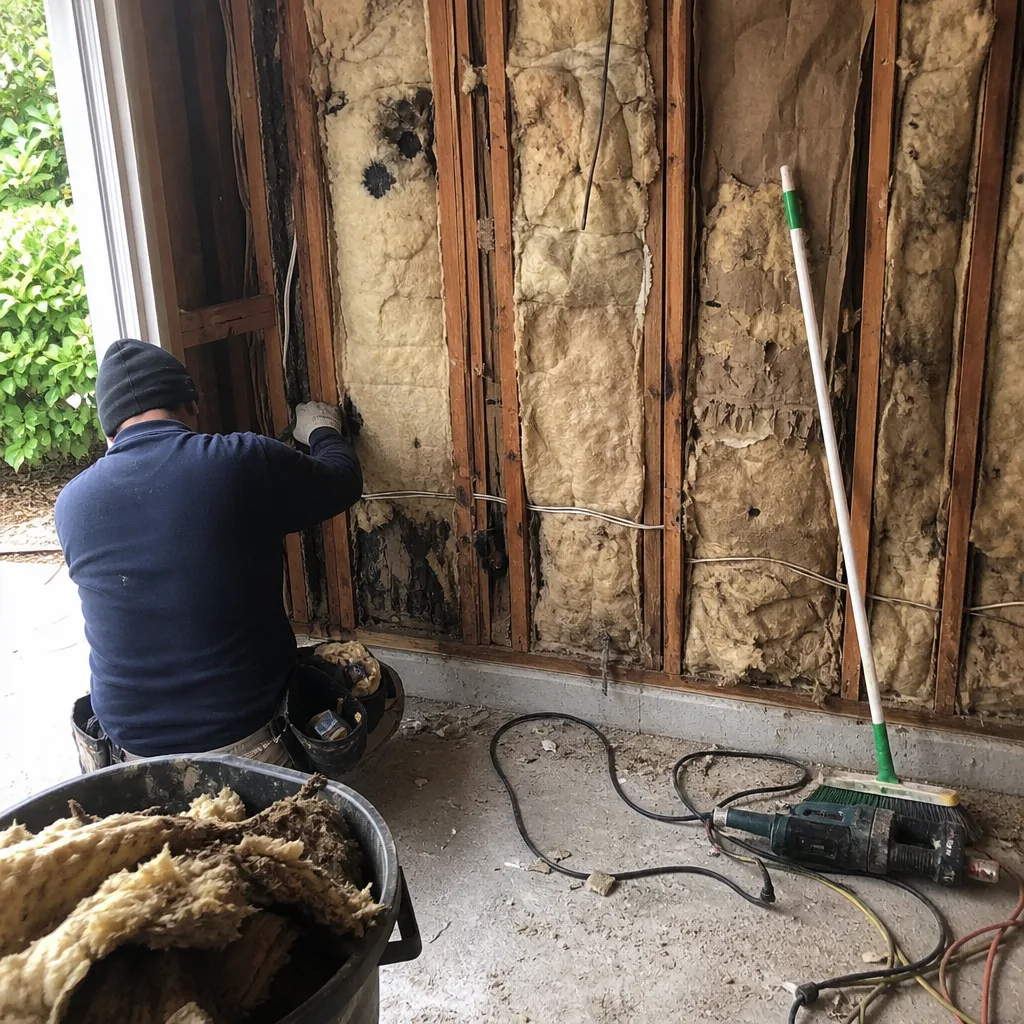 Before
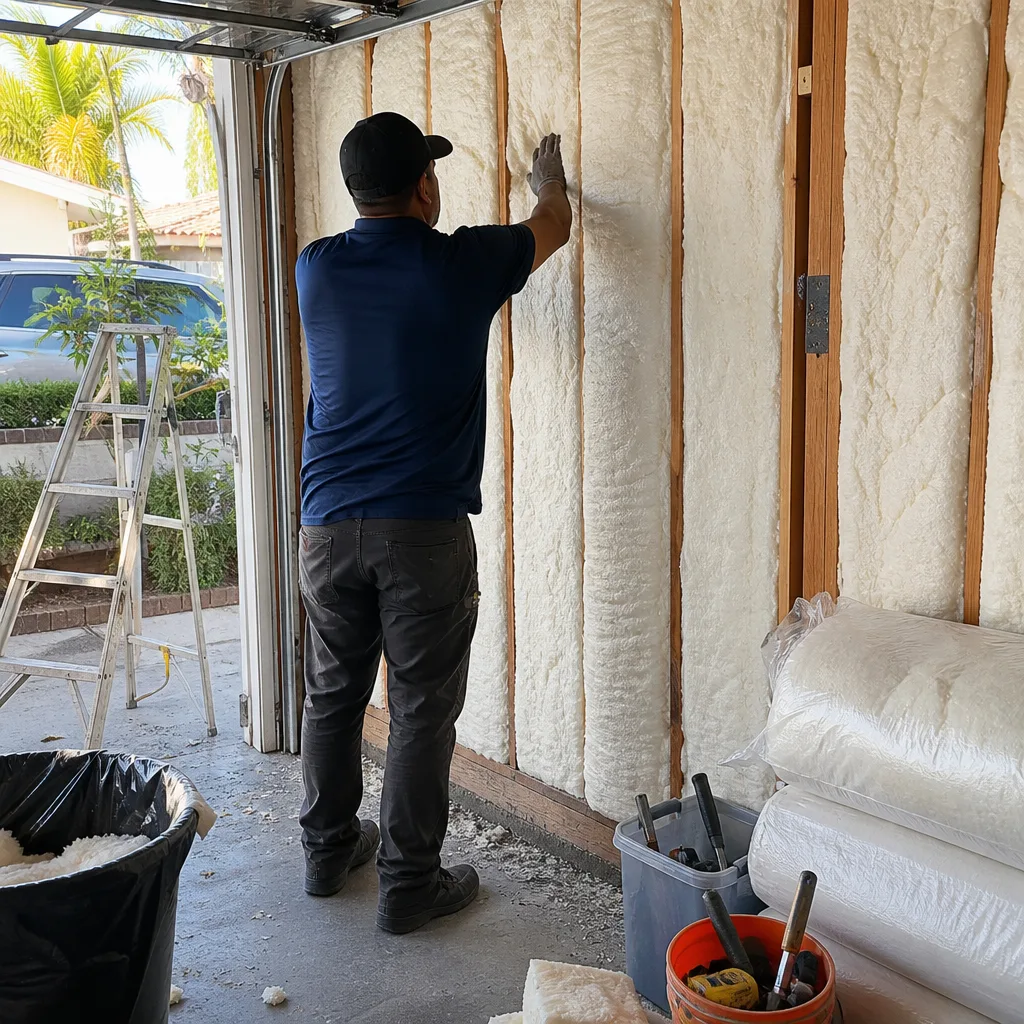 After
AfterWhy Newport Beach Insulation Bids Vary by 40-60% for the Same House
We’ve sat across kitchen tables in Corona del Mar, Balboa Peninsula, and Newport Coast with three bids for the same attic, and the spread is real. The issue is not that one contractor is honest and another is not. It’s that each bid describes a different scope of work, and the homeowner has no standard unit to compare them.
Here is what three actual 2026 bids for a 2,000 sq ft home near Mariners Mile looked like:
- Bid A ($3,400): Blown cellulose, R-38, material and labor only. No air sealing. No testing. No permit.
- Bid B ($5,800): Blown cellulose, R-38, plus “basic air sealing” (undefined), no blower-door test, permit included.
- Bid C ($7,900): Blown cellulose, R-38, full attic air sealing of top plates, can lights, and penetrations, before-and-after blower-door test, permit, Certificate of Insulation, documented photo record.
Bid C is not 130% more expensive for the same thing. It is a different building envelope treatment. The cellulose in Bid A will perform at roughly R-28 to R-32 in practice because wind washing and stack effect move air through the insulation layer. The cellulose in Bid C performs at its labeled R-38 because the attic floor was sealed first. This is why we never blow insulation over an unsealed attic floor - it’s the Haven Standard, and it’s non-negotiable.
The 40-60% bid variation in Newport Beach breaks down into five scope differences:
- Air sealing included or omitted. Pre-sealing adds $1,200-$2,400 in labor and materials but determines whether the insulation works.
- Blower-door testing. A pressurization reading that shows, in one number, how much air your building envelope is losing. Adds $300-$500 but documents the result.
- Permit and inspection. City of Newport Beach requires a permit for insulation work that changes R-value. Some contractors skip this; the homeowner pays later at resale.
- Existing insulation removal. Required if old material is compressed, contaminated, or below R-11. Adds $1.00-$1.80 per square foot.
- Material grade and density. Settled density of blown cellulose varies by 15% between brands and installation technique.
Our 9,000+ homes since 2016 show a pattern: the homeowner who chooses Bid A calls us within 18-36 months because the rooms are still uncomfortable and the SCE bill did not drop. The homeowner who chooses Bid C has a blower-door report that proves the work, and a documented photo record that shows what was sealed before it was covered.
Line-Item Cost Breakdown: A Typical 1,800 Sq Ft Newport Beach Attic
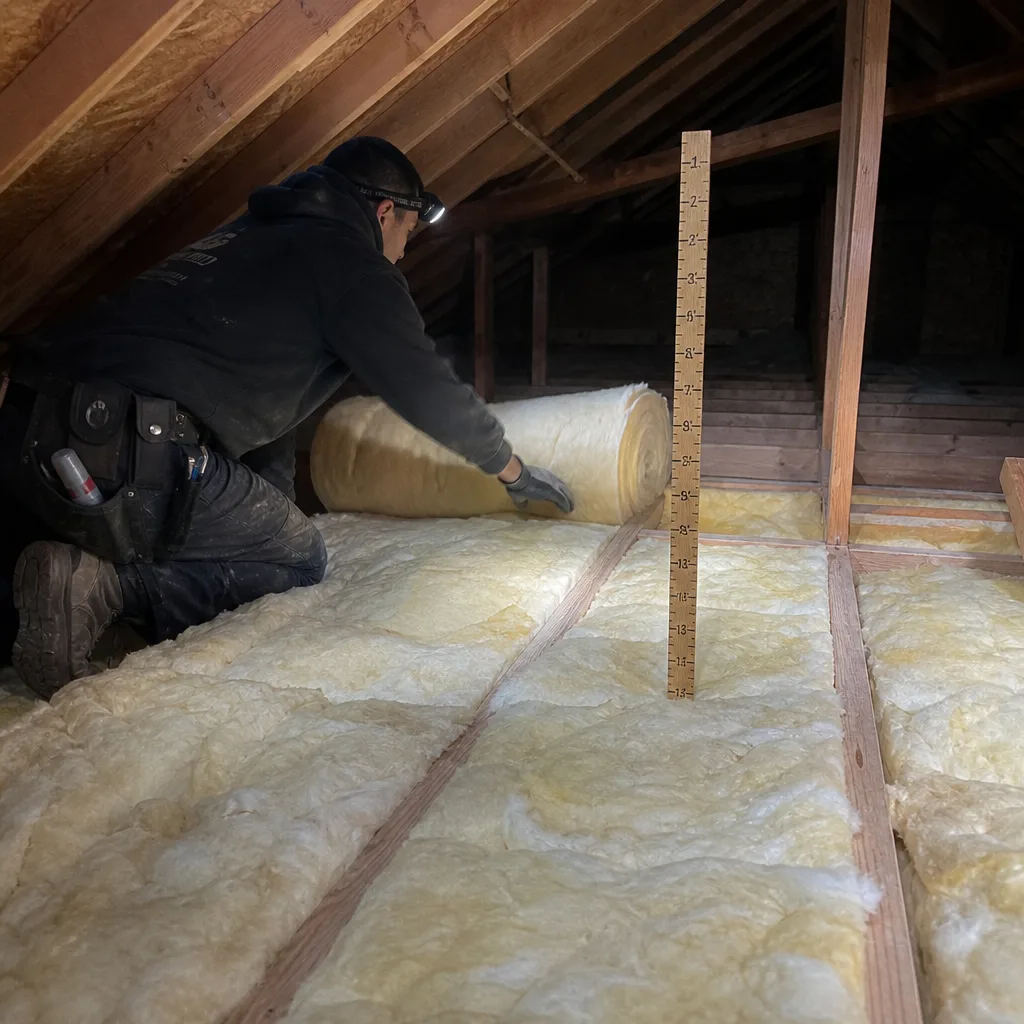
This is a real scope for a single-story ranch in the Cliff Haven neighborhood, built 1962, original R-11 fiberglass batts, low-slope roof with limited access. We prepared this exact breakdown for a homeowner in March 2026. Every number is what we would write on the written price before any work starts - Haven Standard Clause 1.
| Line Item | Quantity | Unit Cost | Line Total |
|---|---|---|---|
| Blown cellulose, R-38, GreenFiber | 75 bags | $18/bag | $1,350 |
| Cellulose installation labor | 6 hours | $95/hour | $570 |
| Attic air sealing: top plates, can lights, penetrations | 1,800 sq ft | $0.85/sq ft | $1,530 |
| Air sealing materials (caulk, foam, fire-rated covers) | 1 job | $340 | $340 |
| Blower-door test (before and after) | 2 tests | $225/test | $450 |
| Existing insulation removal and disposal | 1,800 sq ft | $1.40/sq ft | $2,520 |
| City of Newport Beach permit fee | 1 permit | $285 | $285 |
| Certificate of Insulation preparation | 1 document | $125 | $125 |
| Documented Photo Record | 1 job | Included | $0 |
| Total Project Cost | $7,170 |
Notes on this breakdown:
- The cellulose material cost assumes GreenFiber, a recycled-content product we source without proprietary lock-in. We also install Knauf, Rockwool, and CertainTeed when the application calls for it.
- Labor rate reflects the Newport Beach market - technicians must carry workers’ comp and general liability, and crews working in low-slope attics in July earn hazard-adjusted wages.
- Air sealing is priced separately so the homeowner sees it. Hiding it in a “turnkey” per-square-foot price is how contractors make it disappear.
- The permit fee is the City of Newport Beach’s actual 2026 schedule for insulation alterations, not an estimate.
- Without existing insulation removal (if the old material is clean and can be topped), the total drops to $4,650.
This is what a written price looks like under the Haven Standard: every line visible, every line defensible, no work starts until the homeowner initials each scope element.
How to Compare Bids Using Different Pricing Units
Contractors price insulation three ways: per square foot of attic floor, per bag of material, or flat rate for the job. None of these units tells you what you need to know. The honest unit is cost per R-value per square foot, adjusted for whether air sealing is included.
Here is how to convert any bid to this unit, using the same 1,800 sq ft Cliff Haven example:
- Identify the installed R-value. If the bid says “R-38 cellulose,” note that number. If it says only “blown insulation,” ask. Code in Newport Beach requires R-38 minimum for attic floors in Climate Zone 8.
- Calculate total R-value delivered. 1,800 sq ft × R-38 = 68,400 R-square-feet.
- Adjust for air sealing. If air sealing is not included, reduce the effective R-value by 25% (industry consensus for unsealed attics with moderate bypass leakage). 68,400 × 0.75 = 51,300 effective R-square-feet.
- Divide total cost by effective R-square-feet.
Applying this to our three bid types:
- Bid A ($3,400, no sealing): $3,400 ÷ 51,300 = $0.066 per effective R-square-foot
- Bid B ($5,800, undefined sealing): Assume 15% loss if “basic” means partial. $5,800 ÷ 58,140 = $0.100 per effective R-square-foot
- Bid C ($7,170, full sealing): $7,170 ÷ 68,400 = $0.105 per effective R-square-foot
The gap collapses. Bid A is not cheaper; it is weaker performance per dollar. Bid C, the most expensive in nominal terms, delivers the most thermal resistance per dollar spent - and you have a blower-door number to prove it.
When we provide a free second opinion on any written estimate, this is the conversion we walk through with Newport Beach homeowners. Bring us a competing quote; we will read it with you and show you what unit the contractor is actually using.
What Drives Cost Variation in Newport Beach Specifically
Newport Beach is not a generic Southern California market. The housing stock, climate, and code environment create specific cost drivers that do not apply in Riverside or even Costa Mesa.
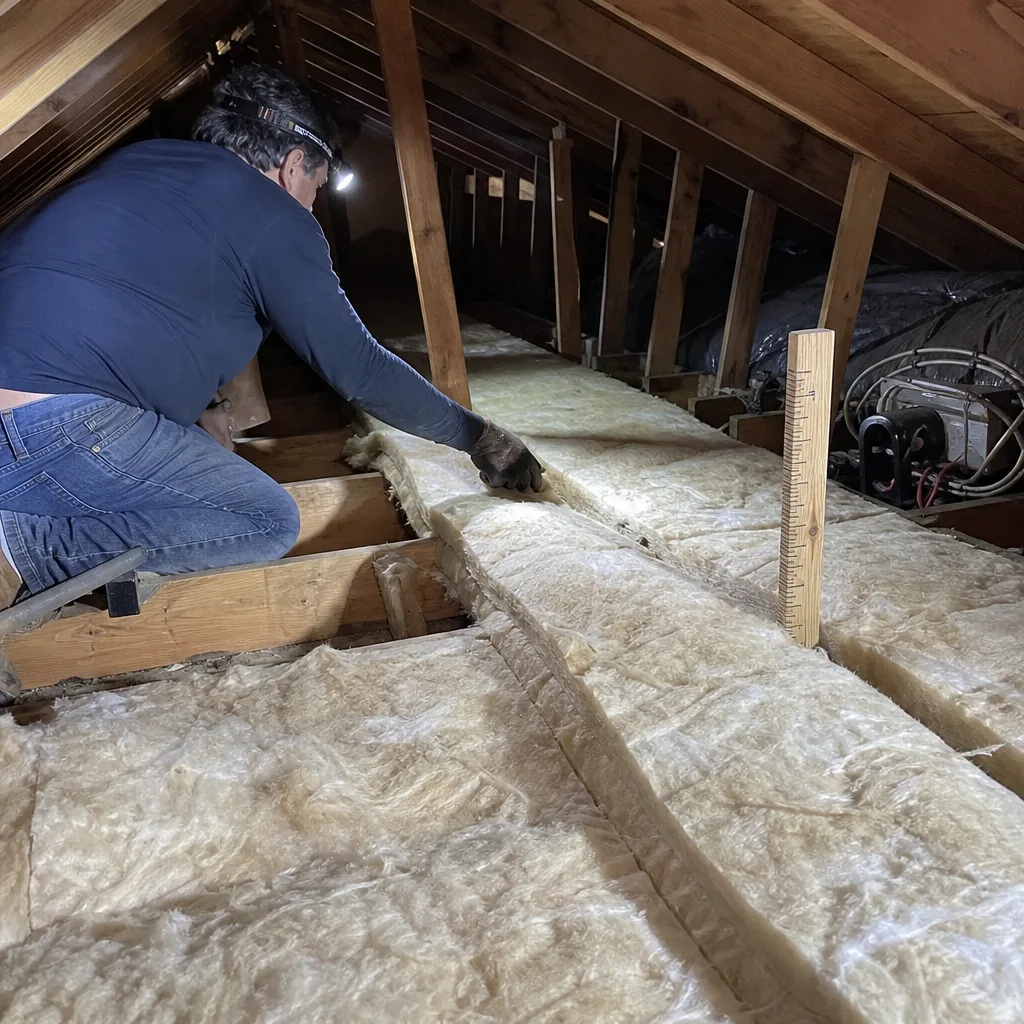
Low-slope roofs and coastal ranch homes. The 1950s-1970s ranches in Cliff Haven, Dover Shores, and parts of Corona del Mar have roof pitches of 3:12 or 4:12. Attic clearances drop to 24-36 inches at the eaves. Our crews work on knee boards, not upright, which adds 30-50% to labor time versus a 6:12 pitch with walkable headroom. In the Newport Heights area, we’ve seen attics where the HVAC air handler occupies 40% of the floor area, requiring platform work around the equipment. This is not upsell; it is physics.
HVAC equipment obstruction. Many Newport Beach homes have original forced-air systems with ductwork routed through the attic. Flex duct lying on the attic floor must be temporarily suspended, worked around, or replaced if damaged. A job that should take six hours takes nine. We document this in the photo record so the homeowner sees why.
Existing insulation condition. Pre-1990 fiberglass batts in coastal Newport Beach are often blackened with oxidation and salt air infiltration, not mold. They are also compressed to R-8 or R-9 from decades of storage traffic. Removal is required, not optional, and disposal runs higher here because Orange County landfills charge by weight for construction debris.
City of Newport Beach permit fee schedule. The Building Division charges a base permit fee plus a valuation fee based on job cost. For a $7,000 insulation job, the permit is $285. For a $3,500 job, it is $195. Some contractors avoid permitting by claiming “like-for-like replacement” or by not changing the R-value on paper. This fails at resale when the buyer’s inspector notes the insulation depth exceeds the permit history. For details, see our guide to Insulation Permits, Codes & Inspections in CA: What You Need to Know.
Coastal humidity and material selection. Newport Beach’s marine layer creates attic moisture conditions that inland Climate Zone 8 cities do not face. We see more demand for spray foam insulation in Newport Beach for conditioned attic applications, particularly in second-story additions where roof deck insulation is required. Open-cell Icynene at 3.5 inches provides R-13 plus air sealing in one pass but costs $2.80-$3.40 per board foot installed. This is not the right product for every attic, but it is the right product for some Newport Beach attics, and a bid that does not distinguish the application is a bid that guesses.
Where the ROI Math Actually Works in Climate Zone 8
California Energy Commission Climate Zone 8 covers the coastal strip from Long Beach to Dana Point. Heating degree days are low; cooling degree days are moderate but rising. The ROI on attic insulation in Newport Beach comes from reduced air conditioning run time during June-through-October marine layer burns, not from winter heating savings. See our Seasonal Insulation Care for Newport Beach: Year-Round Homeowner’s Guide for maintenance tips that protect this investment.
Here is the actual payback math for a full air-seal-plus-insulation job on a 2,000 sq ft home in the East Bluff neighborhood, using SCE’s current tiered rate structure:
- Pre-work condition: R-11 compressed fiberglass, unsealed attic, blower-door reading 3,800 CFM50.
- Post-work condition: R-38 blown cellulose, fully sealed attic, blower-door reading 2,100 CFM50.
- Annual cooling load reduction: 28% (modeled in REMrate, verified against 12 months of post-work billing).
- Annual savings: $840-$1,120, depending on how aggressively the homeowner uses the upper SCE tiers.
- Job cost: $7,200 (including removal, sealing, insulation, testing, permit).
- Simple payback: 6.4-8.6 years.
This payback period assumes no energy price increases, which is conservative. SCE’s tiered rates have increased 4-6% annually over the past decade. At 5% annual escalation, the payback drops to 5.2-6.9 years.
The more important number for the 32-50 year old homeowner who bought between 2015 and 2025 is this: the work is done once, and it affects every subsequent year of ownership. A $7,200 job that saves $900/year for 15 years returns $13,500 in nominal dollars. The homeowner who sells in year 7 has recovered the cost and has documentation that the next buyer will value.
We do not promise specific savings. We promise a blower-door number that proves the envelope was tightened, and a written scope that defines what was done. The rest is physics and your thermostat settings.
What Your Job Documentation Is Worth at Resale
California Civil Code Section 1102 requires sellers to disclose energy efficiency features, including insulation type and approximate R-value, on the Transfer Disclosure Statement. Since 2020, we’ve seen Newport Beach buyers and their agents ask for documentation with increasing frequency. A verbal claim that “the attic was insulated a few years ago” does not satisfy a diligent buyer. A file folder with four documents does.
Here is what the homeowner receives at job completion under the Haven Standard, and what each document is worth at resale:
- Written scope and final invoice. The original written price, with any change orders initialed. Proves the work was contracted, not improvised. Value: establishes date and scope for disclosure.
- Before-and-after blower-door report. A pressurization measurement showing CFM50 before sealing and after. In our experience, a pre/post report showing 40-50% reduction is cited in buyer energy audits and can support a higher appraisal under green-addendum protocols. Value: quantified performance claim, not a guess.
- Certificate of Insulation. Required by Title 24 for permitted work; we prepare it as part of the job. Value: satisfies the buyer’s inspector and the city’s record requirements.
- Documented Photo Record. Time-stamped photos of attic conditions before, during sealing, and after insulation installation. Value: proves the work was done, not just paid for.
In a 2025 sale in Harbor View Hills, the seller provided our full documentation package. The buyer’s home energy auditor used the blower-door report to waive a recommended $450 diagnostic test. The appraiser noted the insulation upgrade in the green features addendum. The documentation did not add $10,000 to the sale price, but it removed friction from a transaction where friction kills deals.
We include the Documented Photo Record on every job, not available on request. It is part of what leaving looks like.
Common Mistakes to Avoid
- Comparing bids by total price alone. A $3,400 bid and a $7,200 bid are not two prices for the same thing. Convert to cost-per-R-value-per-square-foot after adjusting for air sealing.
- Skipping the blower-door test to save $450. Without a number, you do not know if the sealing worked. We have seen attics that “look sealed” test at 3,200 CFM50 because a top plate in a corner was missed.
- Letting a contractor blow new insulation over old without inspection. In Newport Beach, old fiberglass batts often hide rodent activity, recessed can lights without fire-rated covers, and disconnected ductwork. Covering these problems makes them worse.
- Accepting a verbal scope. Haven Standard Clause 1 requires a written price before any work starts. A contractor who will not write down what they will do will not write down what they did.
- Ignoring permit requirements. The City of Newport Beach requires a permit for R-value upgrades. Unpermitted work must be disclosed and may trigger a retroactive inspection at sale.
- Choosing material by brand loyalty rather than application. Knauf, Rockwool, and CertainTeed each have products that excel in specific conditions. We source from all of them and specify by job, not by marketing agreement.
- Forgetting that insulation is only as good as the air barrier. The most expensive R-38 installation in Newport Beach is the one that was not preceded by sealing. We’ve removed and reinstalled insulation in three-year-old jobs where the homeowner finally figured this out.
When to Call a Professional
Call a professional when your attic has not been inspected in five years, when rooms have more than a 6-degree temperature difference from the thermostat reading, or when your summer SCE bill exceeds $400 for a home under 2,500 sq ft. Not sure if it’s time? Review our Insulation Warning Signs: A Newport Beach Homeowner’s Reference Guide. Call when you are buying a home and the seller’s disclosure says “insulation: unknown.” Call when you have three bids that do not line up and you need someone to read them with you.
We do not perform urgency theater. We do answer calls with a live person, 24/7, and we do send a named technician who arrives on schedule with a text when they are on the way. Topside Attic Insulation Newport Beach offers free estimates in Newport Beach - call (657) 261-8265. Every estimate includes a written price before any work starts, and every job closes with a documented photo record. That is the Haven Standard, and it has been since 2016.
Frequently Asked Questions
A complete job including air sealing, insulation, testing, and permit runs $5,600-$7,600 for a typical 1,800 sq ft home. Material-only bids that skip sealing run $3,000-$4,500 but underperform by 30-50%. Call (657) 261-8265 for a written price on your specific home - estimates are free.
Adding new insulation over old is cheaper upfront but often costs more over time. Compressed or contaminated old insulation reduces the effective R-value of the new layer and can harbor moisture or rodent debris. We inspect first and document what we find. If removal is required, we include it in the written price before any work starts.
Most Newport Beach attic jobs complete in one day if removal is not required. Jobs with removal, extensive sealing, or HVAC obstruction typically take two days. We specify the schedule in the written scope so you know before we start.
Yes. The City of Newport Beach requires a permit for insulation work that changes the R-value. The permit fee is $195-$285 depending on job valuation. We pull the permit as part of our scope and include the fee in the written price. Unpermitted work must be disclosed at sale and may require retroactive inspection.
A blower-door test is a pressurization reading that shows, in one number, how much air your building envelope is losing. We test before sealing to find the leaks, and after sealing to prove they are fixed. The report is part of your documentation package and is increasingly requested by Newport Beach buyers during resale.
Every attic built before 1995 in Newport Beach that we have tested has measurable bypass leakage at top plates, can lights, or penetrations. The only way to know the extent is to inspect and test. We include this evaluation in our free estimate and show you the photos. If sealing is not needed, we say so in writing.
Open-cell spray foam, such as Icynene, makes sense for conditioned attics and roof deck applications where headroom is limited and air sealing must be combined with insulation in one pass. It does not make sense for vented attics with adequate clearance where blown cellulose at lower cost achieves the same R-value after proper sealing. We specify by application, not by product preference. For crawl space encapsulation in Newport Beach, closed-cell foam is often the right choice for the rim joist.
The Bottom Line
Insulation cost in Newport Beach is not a single number. It is a range that depends on whether the bid includes air sealing, testing, permitting, and documentation. The homeowner who learns to read bids in cost-per-R-value-per-square-foot will almost always choose the higher nominal bid because it is the better value. The homeowner who chooses by total price alone will likely pay twice: once for the cheap job, and again to fix it.
We have sealed and insulated 9,000+ homes since 2016. Every one began with a written price and ended with a documented record. The Haven Standard is not a marketing phrase. It is how we know what we promised, how we know what we delivered, and how you know the difference.
Written by Wes Okafor, Owner at Topside Attic Insulation Newport Beach, serving Newport Beach since 2016.