
Last updated September 24, 2026
How to Hire a Insulation Contractor in Newport Beach: A Step-by-Step Guide
California requires every insulation contractor to provide a Certificate of Insulation at job completion, a document that lists installed material, coverage, and R-value. Ask ten Newport Beach bidders if they provide one; fewer than half will know what you’re referring to. That’s because the insulation industry has trained homeowners to shop on price per square foot and star ratings rather than the one criterion that predicts whether the job will actually perform: whether the contractor measures before and after, in writing. This guide walks you through the exact license to verify, the five questions that separate competent contractors from the rest, and how to read your Certificate of Insulation like a building inspector. For more guides & resources, see our blog.
Quick Answer
To hire an insulation contractor in Newport Beach, verify a C-2 Insulation and Acoustical license on CSLB’s online lookup, request a bid with linear feet of air-sealing locations and stated R-value targets, and confirm the contractor will provide a Certificate of Insulation at completion. The best contractors in this coastal climate perform blower-door testing before and after air sealing, document the results in writing, and never install insulation over an unsealed attic floor. Expect to pay $2.50 to $5.50 per square foot for most attic insulation jobs in Newport Beach, with spray foam running higher depending on thickness and access. See our Insulation Cost Breakdown: The Newport Beach Homeowner’s Reference for 2026 for detailed pricing factors.
Table of Contents
- Verify the License: C-2 or General Contractor?
- Five Questions to Send Every Bidder Before the Site Visit
- How to Read a Legitimate Bid Document
- Red Flags Specific to the Newport Beach Market
- Coastal Climate Considerations for Newport Beach Homes
- Reading Your Certificate of Insulation After the Job
- What Documentation You Should Walk Away With
- Common Mistakes to Avoid
- When to Call a Professional
- Frequently Asked Questions
- The Bottom Line
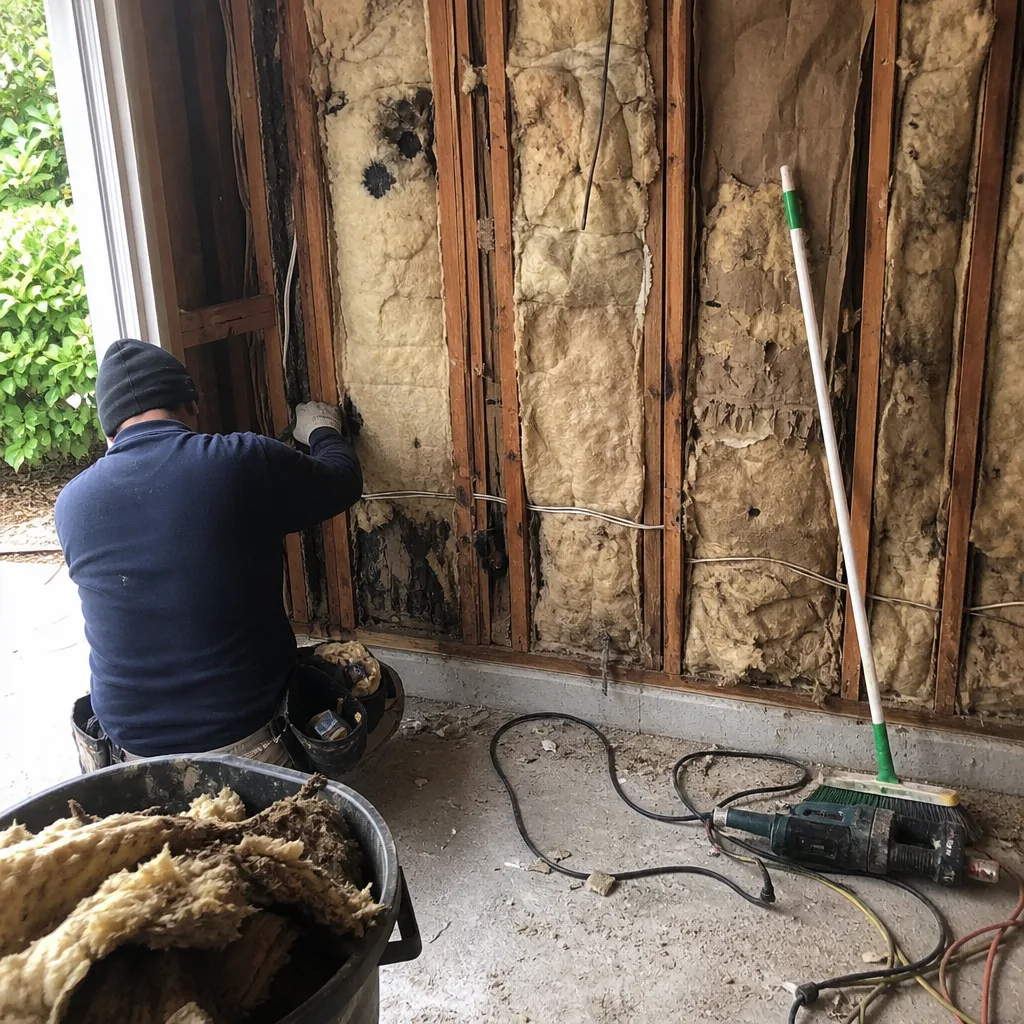 Before
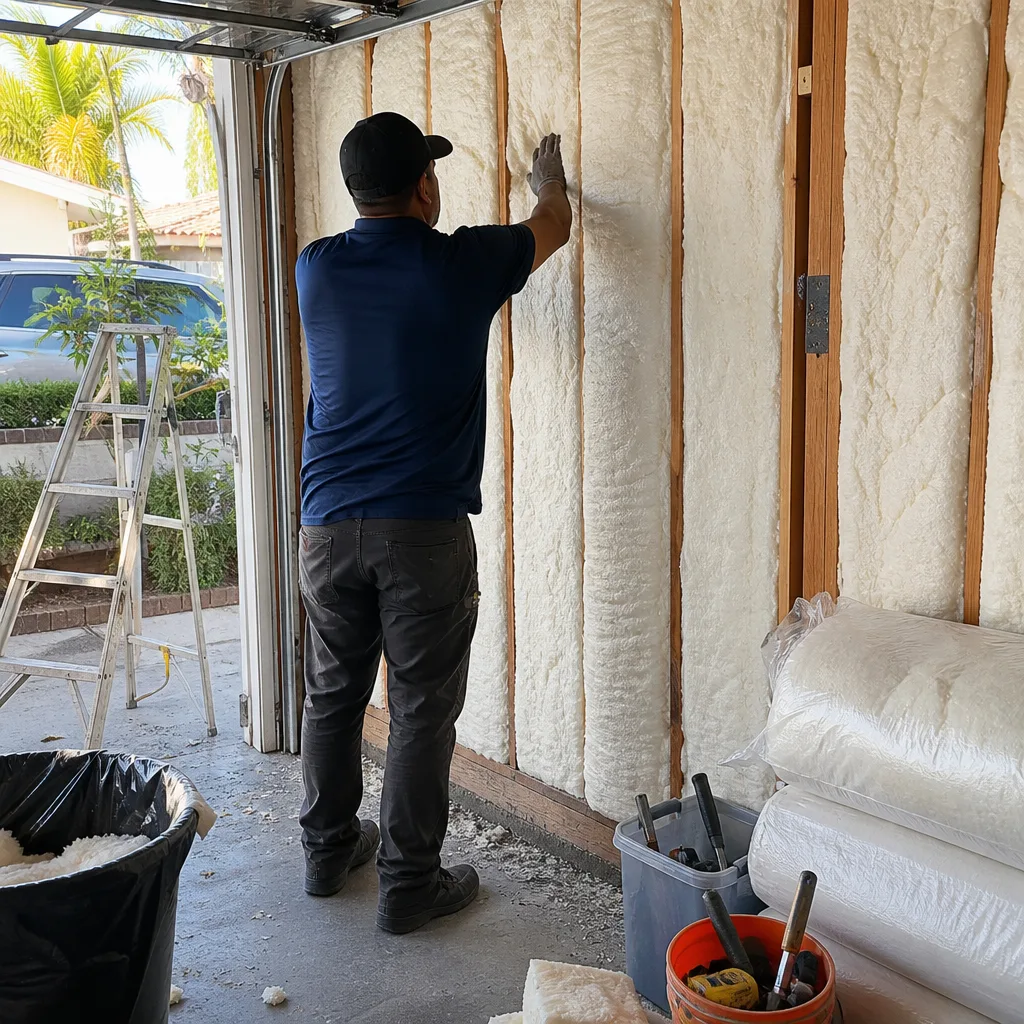 After
AfterVerify the License: C-2 or General Contractor?
California’s Contractors State License Board issues a specific classification for this trade: C-2 Insulation and Acoustical. This license authorizes the holder to install thermal and acoustic insulation, weather stripping, and firestopping. A general contractor with a B license can legally pull a permit for insulation work, but they cannot perform the work themselves unless they also hold the C-2 classification or subcontract to a C-2 holder.
Here’s what this means in practice for Newport Beach homeowners. When you look up a contractor on cslb.ca.gov, check the “Classification” field. If you see only “B – General Building Contractor,” ask who will actually be on your roof or in your crawl space. If the answer is a subcontractor, request that subcontractor’s license number and verify it independently. We’ve seen B-licensed firms in Orange County bid insulation jobs, then send crews with no specific insulation training. The C-2 exists because insulation done wrong creates moisture problems that don’t show up for two or three years.
The CSLB lookup also shows whether the license is active, bonded, and free of disciplinary actions. Look specifically for:
- License status: “Active” with current expiration date
- Workers’ compensation insurance: required if the contractor employs anyone
- Disciplinary history: any suspensions or revocations in the past ten years
- Project limits: some licenses carry monetary caps
A Newport Beach-specific note: many homes in the harbor-front neighborhoods and Corona del Mar area were built between 1950 and 1980 with original insulation that may contain asbestos or vermiculite. Only a C-2 contractor with hazardous materials certification should handle testing and abatement coordination. A B-licensed generalist who brushes past this question is a liability you don’t want in your attic.
Five Questions to Send Every Bidder Before the Site Visit
Email these five questions to every contractor before you schedule a site visit. The answers will tell you more than any portfolio photo.
- Do you perform a blower-door test before and after air sealing? The blower-door test is a pressurization reading that shows, in one number, how much air your building envelope is losing. A contractor who doesn’t measure before cannot prove improvement after. At Topside Attic Insulation Newport Beach home, we publish before-and-after blower-door numbers on every applicable job so homeowners can verify the air-sealing result they paid for.
- Will you provide a written scope with linear feet of air-sealing locations before work starts? Vague bids say “air seal attic.” Specific bids say “air seal 847 linear feet of top plates, 12 can light penetrations, and 6 duct boots.” The linear footage matters because it determines labor hours and material quantity. Without it, you cannot compare bids apples-to-apples.
- What R-value are you targeting, and how does it relate to CEC Table 150.1-A? The California Energy Code specifies minimum R-values by climate zone. Newport Beach sits in Climate Zone 6, which requires R-38 minimum in vented attles for new construction and R-30 for alterations. A contractor who doesn’t reference the code table is guessing, not engineering.
- Do you complete air sealing before installing insulation? This separates contractors who understand building science from those who sell commodity bags. Blowing fiberglass or cellulose over an unsealed attic floor is like pouring water into a bucket with holes. The insulation performs at a fraction of its rated value. Our crews seal first, then insulate, every time.
- Will you provide a Certificate of Insulation at completion, and what will it include? The certificate is legally required. The answer should list material name and brand, installed thickness, coverage rate in square feet, and achieved R-value. Anything less is non-compliant.
Score the answers on specificity. A one-sentence response to question one means they don’t own a blower door or don’t use it. A detailed breakdown with past numbers means they treat performance as measurable, not theoretical. We’ve been operating under The Haven Standard since 2016, and every job begins with a written price and ends with a documented record because we believe what gets measured gets done right.
How to Read a Legitimate Bid Document
A proper insulation bid is a technical document, not a marketing piece. Here’s what belongs in yours, line by line.
Air sealing scope: Look for linear feet of top plates, count of electrical and plumbing penetrations, count of recessed can lights, and linear feet of duct sealing. In Newport Beach, homes in the Balboa Peninsula and Lido Isle areas often have original knob-and-tube wiring still active in attics. A bid that doesn’t mention electrical safety evaluation before air sealing around live conductors is incomplete.
Material specification: The bid should name the product, not just the type. “Fiberglass batts” is insufficient. “Owens Corning EcoTouch R-38 batts, 24-inch o.c. width” is specific. For blown-in applications, look for brand (GreenFiber, Johns Manville, Knauf), product line, and coverage rate per bag at the stated thickness. Coverage rate matters because it determines how many bags the job requires, and bag count determines material cost.
Installed thickness and R-value target: Blown-in cellulose settles 10-20% after installation. A bid stating “12 inches of cellulose” without specifying settled thickness may achieve only R-36 instead of the intended R-38. The bid should read “12 inches installed, 10 inches settled, R-38 achieved.” This distinction protects both parties.
Price structure: Legitimate bids in Newport Beach break out labor, material, and any permit or disposal fees. A single lump-sum number with no line items makes comparison shopping impossible and dispute resolution difficult. Under Haven Standard Clause 1, every job gets a flat price, written scope, and written warranty before anyone lifts a tool.
Warranty terms: The bid should state warranty length, what it covers (settling, moisture damage, installation defects), and whether it’s backed by the contractor or a manufacturer’s program. Our 365-Day Done Right Promise applies to all completed work, with the written warranty delivered before work starts.
Red Flags Specific to the Newport Beach Market
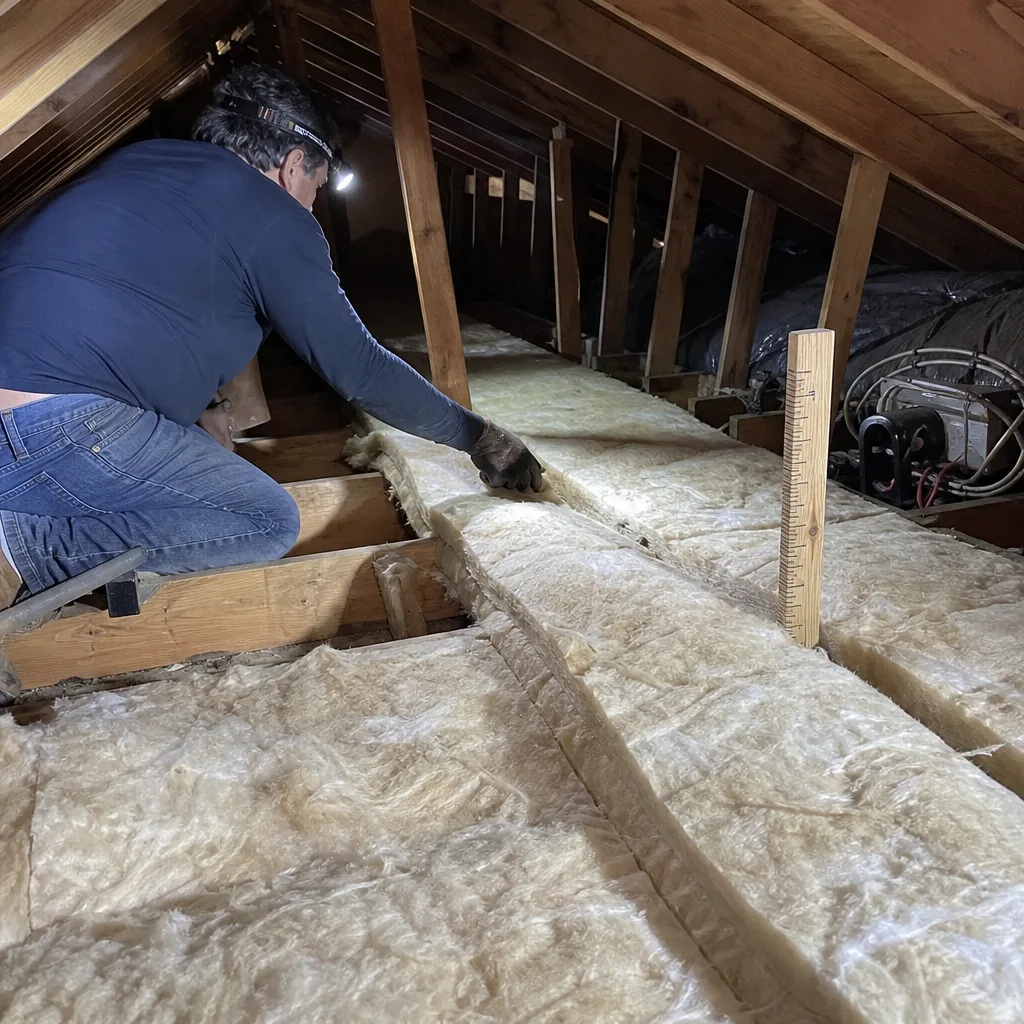
The Newport Beach insulation market has characteristics that create specific risks for homeowners. Watch for these four.
Pricing by the bag, not by the square foot. Some contractors quote “$X per bag of insulation” without stating coverage per bag. This is a shell game. A bag of loose-fill fiberglass covers 40 square feet at R-38; a bag of dense-pack cellulose covers 25 square feet at the same R-value. The per-bag price is meaningless without the coverage rate. Demand square-foot pricing with the R-value stated.
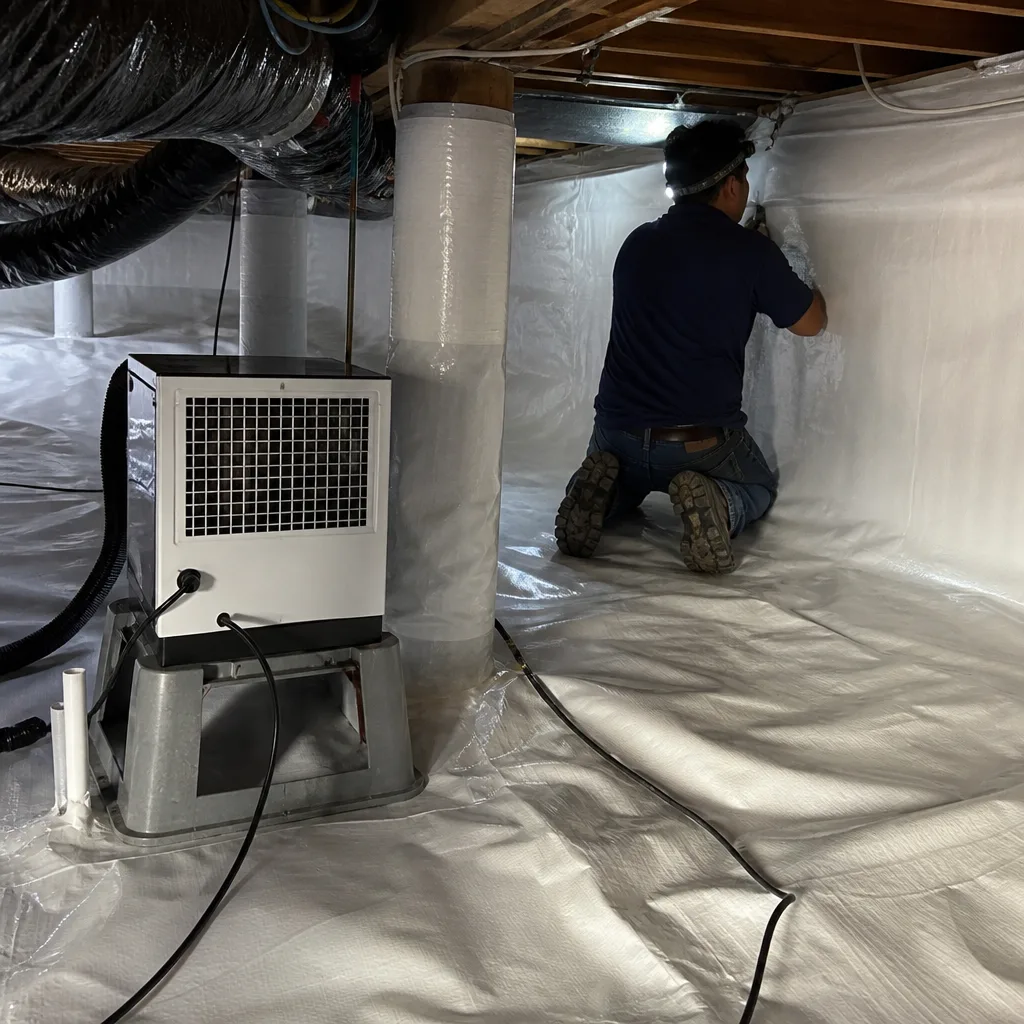
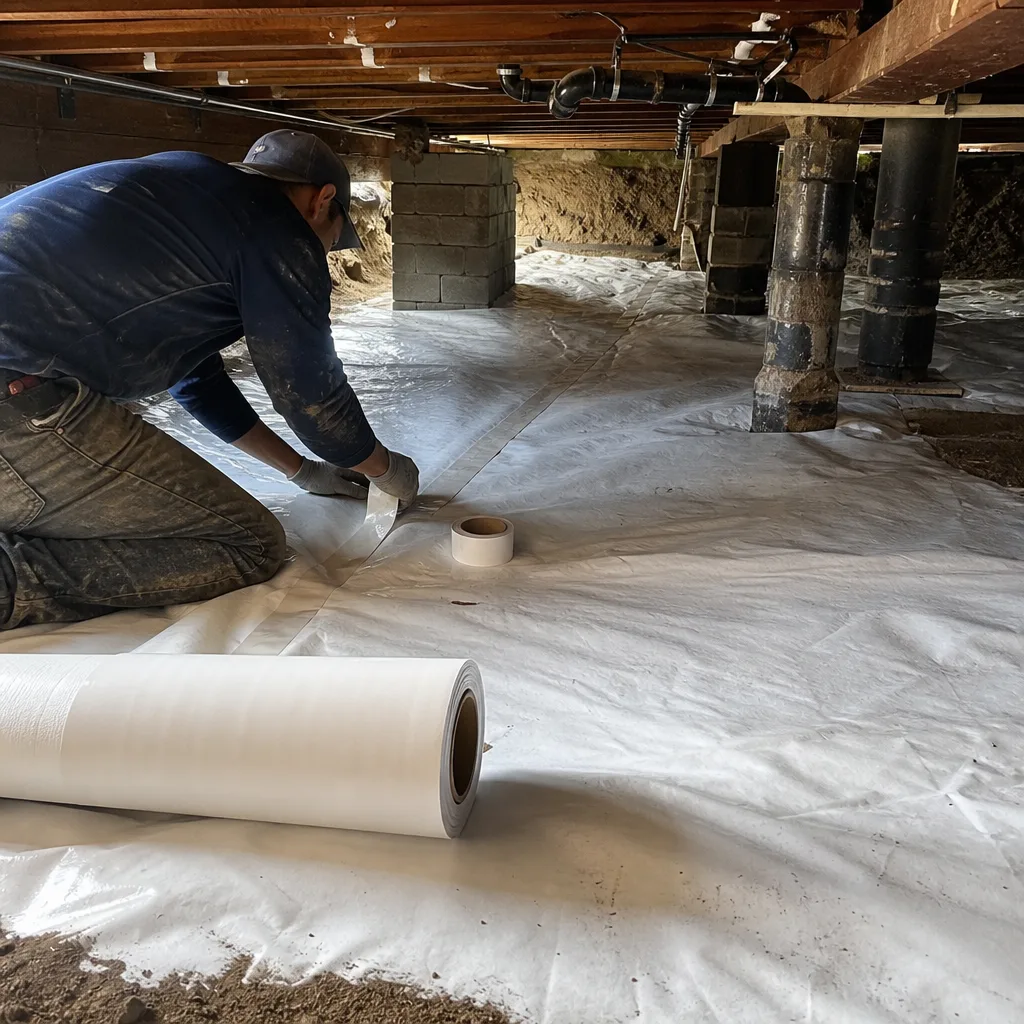
No mention of vapor management in a coastal zone. Newport Beach’s marine layer brings months of elevated humidity. Insulation installed without vapor barrier consideration in crawl spaces or against roof decks can accumulate moisture and support mold growth. Any bid for crawl space work should specify vapor barrier material and seam-sealing method. Our Crawl Space Encapsulation & Vapor Barrier in Newport Beach page details what proper vapor management looks like in this climate.
Verbal scope with no written follow-up. California law requires a written contract for home improvement jobs over $500. More importantly, a verbal scope cannot be verified at completion. If the salesperson says “we’ll air seal everything” but the crew shows up to blow insulation only, you have no recourse without documentation. Every Haven Standard job delivers a written scope before work starts and a Documented Photo Record when the crew leaves.
Pressure to decide during the first visit. The coastal Newport Beach market sees seasonal influxes of door-to-door sales crews, especially after winter storms. Legitimate contractors provide written estimates with a valid period (typically 30 days) and do not require immediate signatures. We offer a Free Second Opinion on any written estimate, bring us a competing quote and we will read it with you.
Coastal Climate Considerations for Newport Beach Homes
Newport Beach’s location on the Pacific Coast creates insulation challenges that inland Orange County doesn’t face. The marine layer persists from May through July, keeping relative humidity elevated even when temperatures stay moderate. This matters for material selection and installation sequencing.
Fiberglass batts perform poorly when installed against surfaces that experience condensation cycles. In attics with inadequate ventilation, the underside of roof decks can drop below dew point during marine layer mornings, wetting the insulation facing. Blown-in cellulose, treated with borate for fire and pest resistance, handles minor moisture cycling better but still requires vapor management.
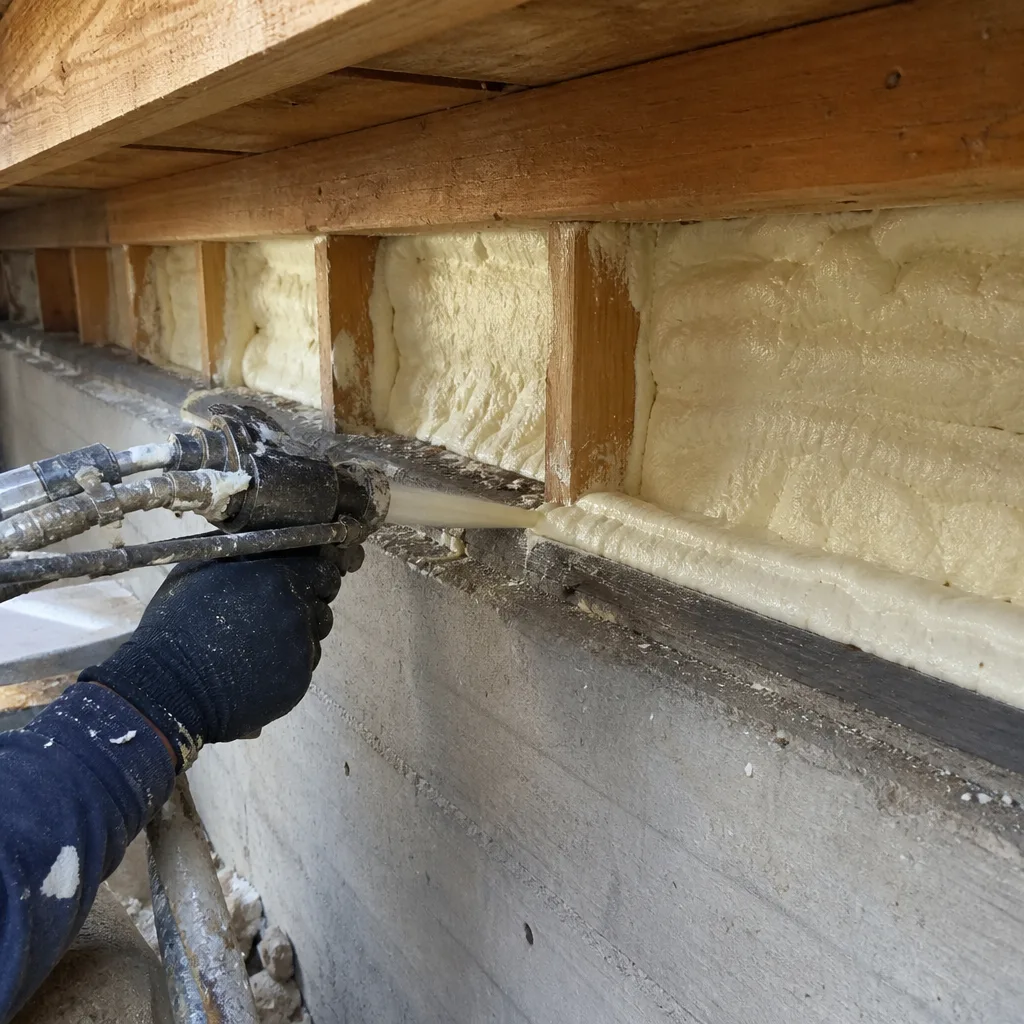
Spray foam insulation in Newport Beach addresses this directly by creating an air-impermeable layer that prevents warm, moist interior air from reaching cold surfaces. Closed-cell spray foam at 2 inches or more also functions as its own vapor retarder. In harbor-front homes with cathedral ceilings or limited attic space, spray foam is often the only practical path to code-compliant R-value without sacrificing headroom.
Neighborhood-specific considerations: homes in the Newport Heights area, built largely in the 1960s and 1970s, often have original R-19 or R-22 attic insulation well below current standards. The gentle slope of many Newport Heights roofs limits blown-in depth without blocking soffit vents. A contractor who doesn’t inspect attic ventilation before quoting insulation depth is planning to create a moisture problem.
Similarly, the older homes on Balboa Island and Little Balboa Island have crawl spaces that flood during king tides. Standard insulation installation in these crawl spaces without elevation assessment and vapor barrier installation will fail within two to three years. Ask specifically about tide history and moisture mitigation.
Reading Your Certificate of Insulation After the Job
The Certificate of Insulation is your proof of compliance and your warranty baseline. California requires it; competent contractors treat it as a quality control document.
Here’s what the certificate must contain, and how to verify each element against your pre-job bid:
- Installed material name and brand: Cross-check against the bid specification. If the bid said Owens Corning and the certificate says a different manufacturer, that’s a material substitution that requires your prior written approval.
- Coverage in square feet: Measure your attic floor area yourself, or compare against the bid’s stated coverage. Significant discrepancies suggest under-application or area exclusion without discussion.
- Installed thickness: For blown-in materials, this should match the bid’s “installed” figure, not the “settled” figure. Settling happens after; the certificate records what went in.
- Achieved R-value: This is calculated from material type, thickness, and coverage rate. It should meet or exceed the bid’s stated target and CEC Table 150.1-A requirements for Climate Zone 6.
- Contractor license number and signature: Verifies accountability. The certificate without a license number is legally non-compliant.
We’ve reviewed competitor certificates in Newport Beach that list “R-38 equivalent” without stating thickness, or that omit brand entirely. These are warning signs of either sloppiness or intentional obfuscation. At completion of every job, we provide the Certificate of Insulation plus our Documented Photo Record showing before, during, and after conditions.
What Documentation You Should Walk Away With
The hiring decision isn’t complete when you sign the contract. It’s complete when you have a file folder (digital or physical) containing these documents:
- Written scope of work: Signed by both parties before work starts. Under Haven Standard, this includes the flat price, material specifications, R-value targets, and warranty terms.
- Blower-door test results: Before air sealing, after air sealing, and after insulation installation if the job includes both. The numbers should show measurable improvement. Our crews publish these on every applicable job.
- Documented Photo Record: Date-stamped photos of attic or crawl space conditions before work, during critical steps (air sealing of top plates, can light covers, duct boots), and completed installation. This is included on every job, not available on request.
- Certificate of Insulation: As detailed above, legally required and your warranty baseline.
- Written warranty: The 365-Day Done Right Promise, with specific coverage terms and contact information for claims.
A contractor who cannot describe what documentation you’ll receive at completion is a contractor who hasn’t thought through quality control. Ask before you hire, not after the crew leaves.
Common Mistakes to Avoid
- Hiring based on price per square foot alone. A $2.00 per square foot bid that skips air sealing performs worse than a $3.50 bid that seals first. The metric that matters is cost per unit of measured performance improvement, and only blower-door testing provides that.
- Accepting a verbal estimate. California requires written contracts over $500. More practically, a verbal estimate cannot be enforced or compared. Every Haven Standard job begins with a Written Price Before Any Work Starts.
- Ignoring attic ventilation. Adding insulation without verifying soffit and ridge vent function creates moisture accumulation. In Newport Beach’s humid marine climate, this is particularly risky. A proper bid inspects ventilation before specifying insulation depth.
- Assuming all fiberglass is the same. Density, binder content, and recycled content vary significantly between manufacturers. Low-density fiberglass at R-38 requires more depth than high-density products and is more susceptible to wind washing in vented attics.
- Neglecting to verify the C-2 classification. General contractors can legally subcontract insulation work, but you deserve to know who will actually be in your home. Verify the performing contractor’s license independently.
- Skipping the post-job inspection. Walk the job with the crew lead before signing completion. Compare visible conditions to the photo record you’ll receive. Ask to see the blower-door numbers if applicable.
- Not asking about material sourcing. We source from Owens Corning, Johns Manville, Knauf, Rockwool, CertainTeed, Icynene, Demilec, and GreenFiber, with no proprietary product lock-in. A contractor who pushes one exclusive product may be optimizing their supplier rebate, not your home’s performance.
When to Call a Professional
Call a licensed insulation contractor when your energy bills trend upward without usage changes, when rooms on your second floor stay uncomfortably warm in summer despite air conditioning, or when you can see floor joists in your attic because insulation has settled below them. These symptoms indicate your thermal envelope is compromised.
Also call before any major renovation that opens walls or ceilings. The incremental cost of insulating during construction is a fraction of retrofitting later. In Newport Beach, where many homes in the Dover Shores and East Bluff neighborhoods are undergoing kitchen and second-story additions, this timing consideration saves thousands.
If you’ve received a written estimate that seems vague or high, our Free Second Opinion service reads competing quotes with you, line by line. Attic Insulation in Newport Beach is our core service, and we’ve evaluated thousands of bids over 9,000+ homes since 2016.
Topside Attic Insulation Newport Beach offers free estimates in Newport Beach. Call (657) 261-8265 to schedule a site visit with written pricing, or bring us a competitor’s estimate for a second opinion. Calls are answered by a live person, 24/7.
Frequently Asked Questions
Most attic insulation jobs in a Newport Beach home between 1,800 and 3,200 square feet run between $2.50 and $5.50 per square foot for blown-in fiberglass or cellulose, depending on existing conditions, access difficulty, and whether air sealing is included. Spray foam insulation typically ranges from $5.50 to $12.00 per square foot depending on thickness and open-cell versus closed-cell selection. Call (657) 261-8265 for an exact quote, estimates are free.
California requires a C-2 Insulation and Acoustical license for insulation-specific work. General contractors with a B license may pull permits and subcontract the work, but cannot perform insulation work themselves without the C-2 classification. Verify any license at cslb.ca.gov before hiring.
Attic insulation replacement in existing homes typically does not require a permit in Newport Beach if you’re not altering structure, electrical, or ventilation systems. However, spray foam applications, insulation removal with potential hazardous material discovery, and any work involving air sealing of fire-rated assemblies may trigger permit requirements. A competent contractor will identify permit needs during the site visit and include permit costs in the written bid if applicable. For details, read Insulation Permits, Codes & Inspections in CA: What You Need to Know.
Repair is rarely cost-effective for insulation that has settled below half its original thickness, been compromised by moisture or rodent activity, or contains pre-1990s materials that may be hazardous. In Newport Beach’s coastal climate, we’ve found that partial repairs often leave thermal bridges and moisture pathways that undermine the new material. Replacement with complete air sealing typically delivers better performance per dollar spent. Call (657) 261-8265 for an assessment of your specific attic condition.
Request the Certificate of Insulation and cross-check it against your written bid for material brand, coverage area, installed thickness, and achieved R-value. If air sealing was included, ask for before-and-after blower-door test results showing measurable improvement. Visually, insulation should appear uniform in depth, fill cavities completely without compression, and show no gaps around penetrations or perimeter walls.
Most diagnostic visits in Newport Beach result in a written scope and scheduled return for installation, since proper insulation work requires material staging and crew allocation. Small air-sealing repairs can sometimes be completed during the diagnostic visit if materials are on the truck. Emergency situations, such as insulation saturated from active roof leaks, receive priority scheduling. Call (657) 261-8265 to discuss urgency and availability.
The Bottom Line
Hiring an insulation contractor in Newport Beach comes down to documentation and measurement. Verify the C-2 license. Send five specific questions before any site visit. Demand a bid with linear feet of air sealing, material brand and coverage rate, and R-value targets tied to California Energy Code. Watch for coastal-specific red flags: per-bag pricing, missing vapor management, verbal scopes. After the job, read your Certificate of Insulation like an inspector, comparing every line to your pre-job bid. The contractors who measure before and after, in writing, are the ones whose work actually performs. Everything else is guesswork with a warranty.
Written by Wes Okafor, Owner at Topside Attic Insulation Newport Beach, serving Newport Beach since 2016.