
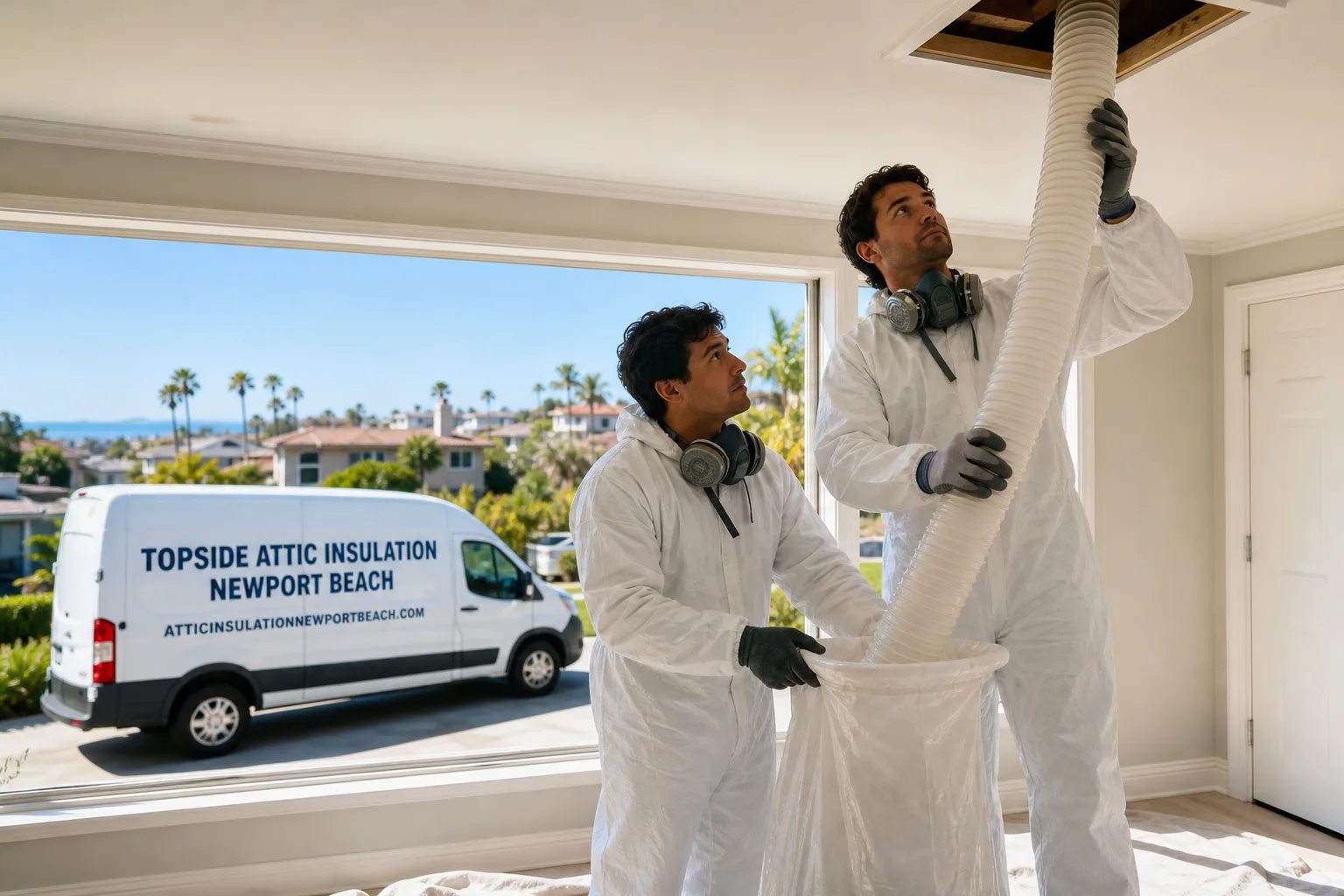
How Much Does Wall Insulation Cost in Newport Beach?
Wall insulation in Newport Beach typically costs between $1,800 and $6,500 for a standard single-family home, depending on wall type, insulation material, and whether air sealing is done first. Most homeowners in Corona del Mar, Eastbluff, and the Newport Heights area land somewhere between $2,400 and $4,200 for a whole-house wall insulation project. Spray foam jobs in older beach-adjacent homes with irregular stud bays can push past $7,000, while a targeted blown-in retrofit on a single wall section can come in under $800.
Wall Insulation Cost Breakdown (2026)
The table below reflects what Envelope Insulation Co. actually quotes in the Newport Beach market. These are not national averages pulled from a data aggregator – they are the ranges we write on job scopes for homes in this zip code, in this climate zone.
| Insulation Type / Service | Typical Cost Range | Best For |
|---|---|---|
| Blown-in cellulose (retrofit, existing walls) | $1.80 – $2.80 per sq ft of wall area | Older Newport Beach homes, 1950s-1980s builds |
| Blown-in fiberglass (retrofit, existing walls) | $1.60 – $2.50 per sq ft of wall area | Similar to cellulose; lower installed cost, slightly lower R-value density |
| Fiberglass batts (open-wall / new construction) | $0.65 – $1.20 per sq ft of wall area | Remodels, additions, walls already open to studs |
| Mineral wool / Rockwool batts (open-wall) | $1.10 – $1.90 per sq ft of wall area | Homes near PCH where fire resistance and sound control matter |
| Open-cell spray foam (open-wall) | $1.50 – $2.20 per sq ft of wall area | Gut remodels, irregular stud bays, excellent air sealing in one step |
| Closed-cell spray foam (open-wall or flash-and-batt) | $3.00 – $5.50 per sq ft of wall area | High moisture exposure (oceanfront homes, Peninsula Point), maximum R-value per inch |
| Air sealing (top plates, penetrations, outlets) before insulation | $350 – $950 added to wall project | Required on all Envelope Insulation Co. jobs before any insulation is added |
| Insulation removal (old, damaged, or rodent-contaminated) | $1.00 – $1.80 per sq ft of wall area | Pre-1980 homes with degraded fiberglass; rodent-affected walls |
| Whole-house wall insulation (typical 1,800-2,400 sq ft Newport Beach home) | $2,400 – $6,500 installed | Full retrofit or new construction envelope package |
A quick note on how to read these numbers: the square footage in the table refers to wall area, not floor area. A 2,000-square-foot Newport Beach home typically has 1,400 to 1,900 square feet of exterior wall area once you subtract windows, doors, and the garage wall. That distinction matters when you are comparing quotes – make sure any bid you receive is pricing wall area, not floor area, or the math won’t track.
What moves the needle most is whether the walls are open or closed. An open wall (during a remodel or new construction) brings installation cost down significantly because there is no drilling, no patching, and no drywall repair. A closed-wall retrofit adds labor, material for patching, and sometimes a small paint charge – but it is the reality for most Newport Beach homeowners who are not in the middle of a gut remodel. Blown-in cellulose or fiberglass, installed through small holes drilled from the interior or exterior, is the standard approach for retrofit jobs here.
What Affects Wall Insulation Pricing in Newport Beach
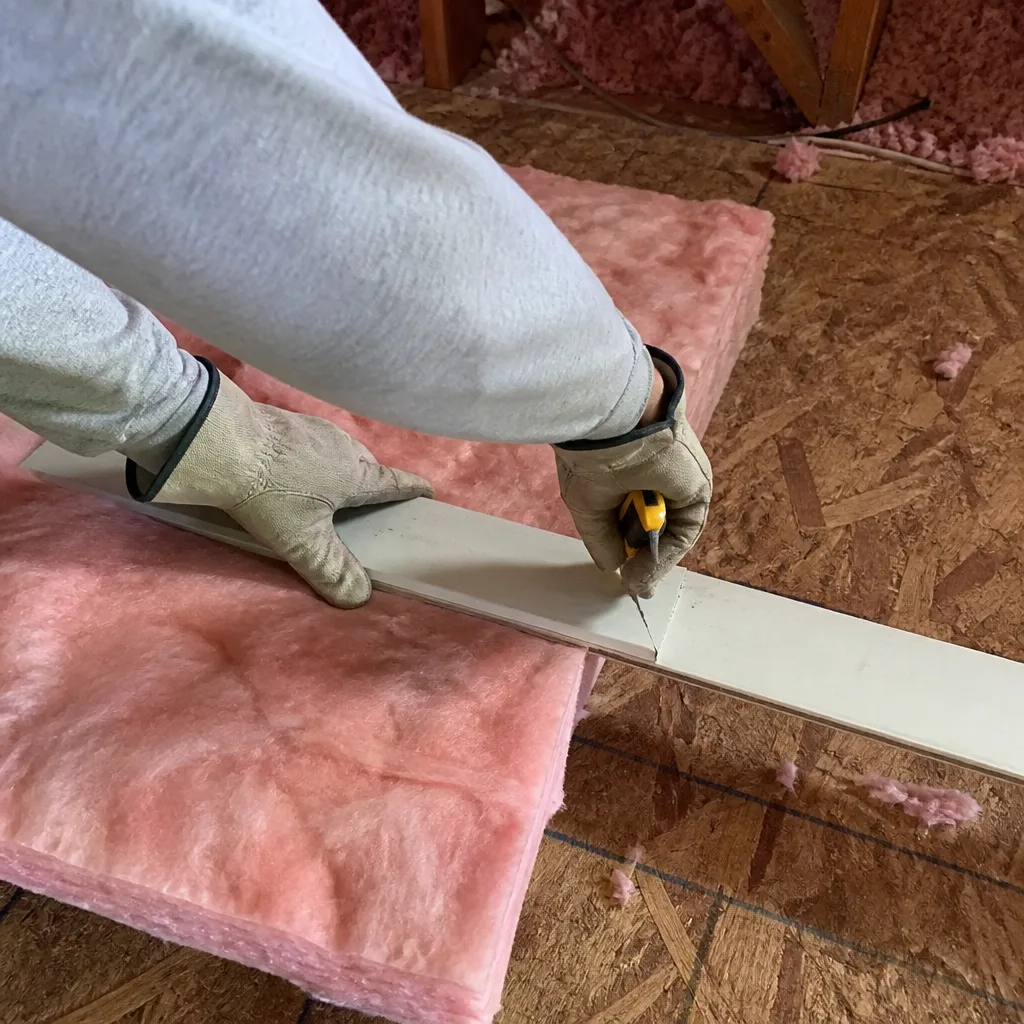
- Open wall vs. closed wall: The single biggest cost driver. If your walls are already open for a remodel, batt insulation can go in quickly and cleanly. A closed-wall retrofit adds drilling, specialized equipment, and patch-and-paint work, which can add $0.60 to $1.20 per square foot to the installed cost.
- Proximity to the coast and moisture exposure: Homes on the Newport Peninsula, Balboa Island, and along Pacific Coast Highway deal with salt air and elevated humidity year-round. Closed-cell spray foam becomes a stronger option in these locations because it acts as a vapor retarder in addition to an insulator. That performance comes at a higher material cost – roughly $3.00 to $5.50 per square foot versus $1.60 to $2.80 for blown-in products – but for an oceanfront property, the long-term moisture protection is often worth it.
- Wall depth and stud spacing: Standard 2×4 framing (common in Newport Beach homes built before 1990) allows for R-13 to R-15 batts or a dense-pack blown-in product. Homes with 2×6 framing – more common in newer builds in Newport Coast and the Bonita Canyon area – can accommodate R-19 to R-21, which adds modest material cost but meaningfully improves thermal performance. Irregular stud spacing in older craftsman or custom homes on the Balboa Peninsula can slow installation and raise labor cost.
- Material choice: Rockwool and closed-cell spray foam carry higher per-square-foot material costs than fiberglass batts or blown-in cellulose. Envelope Insulation Co. sources from Owens Corning, Johns Manville, Knauf, Rockwool, CertainTeed, Icynene, Demilec, and GreenFiber – no proprietary product lock-in, which means the material specified is based on the job’s actual performance needs, not on what happens to be in the truck.
- Air sealing scope: Newport Beach homes built before 1985 frequently have unblocked wall cavities that communicate directly with the attic space. Air sealing those connections – top plates, electrical penetrations, and outlet boxes in exterior walls – before insulation goes in is a step Envelope Insulation Co. does not skip. That work runs $350 to $950 on a typical Newport Beach job and is the reason before-and-after blower-door numbers actually show a meaningful improvement rather than marginal ones.
- Access and drywall patching: Some older Newport Beach homes have exterior siding that makes interior drilling the only practical approach, while others have stucco exteriors that make exterior drilling more efficient. The access method affects both labor time and patch cost. On jobs where drywall patching is required, that work is scoped and priced in writing before anything is drilled.
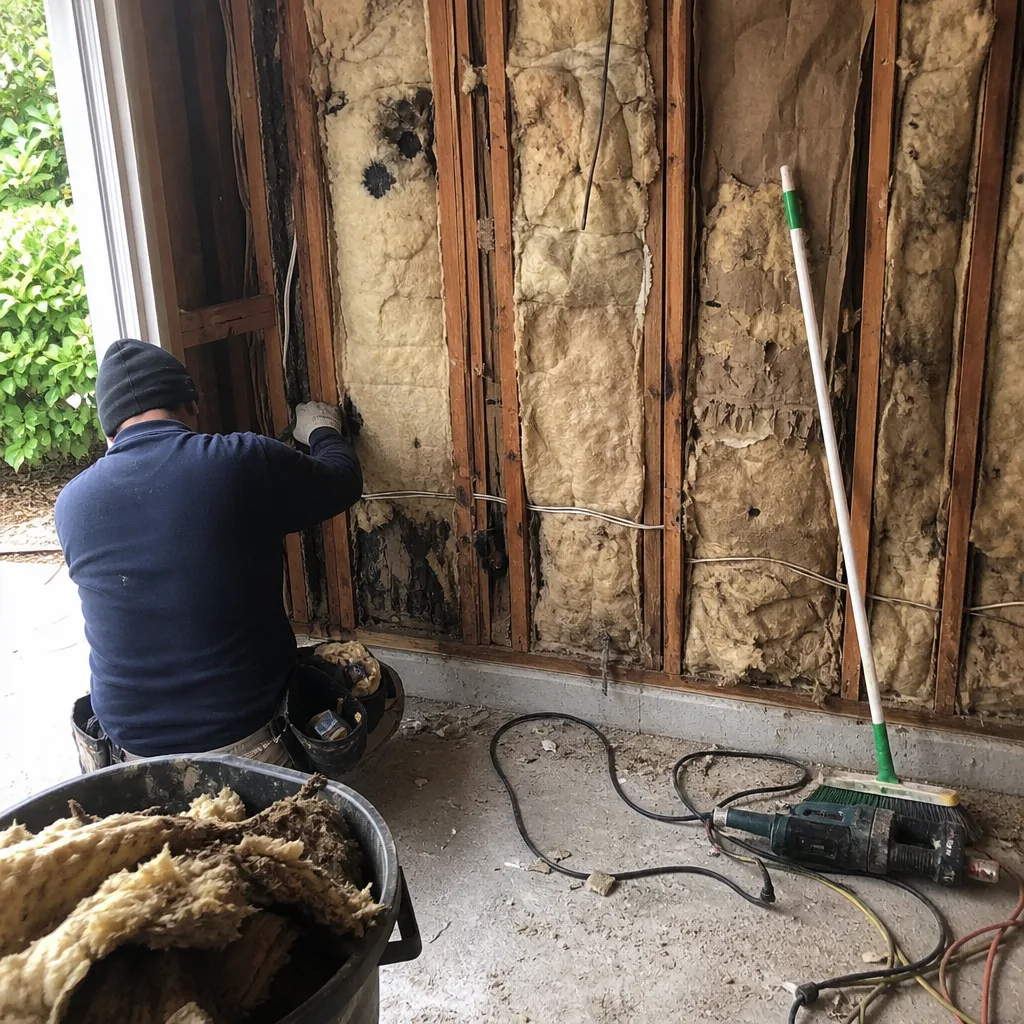 Before
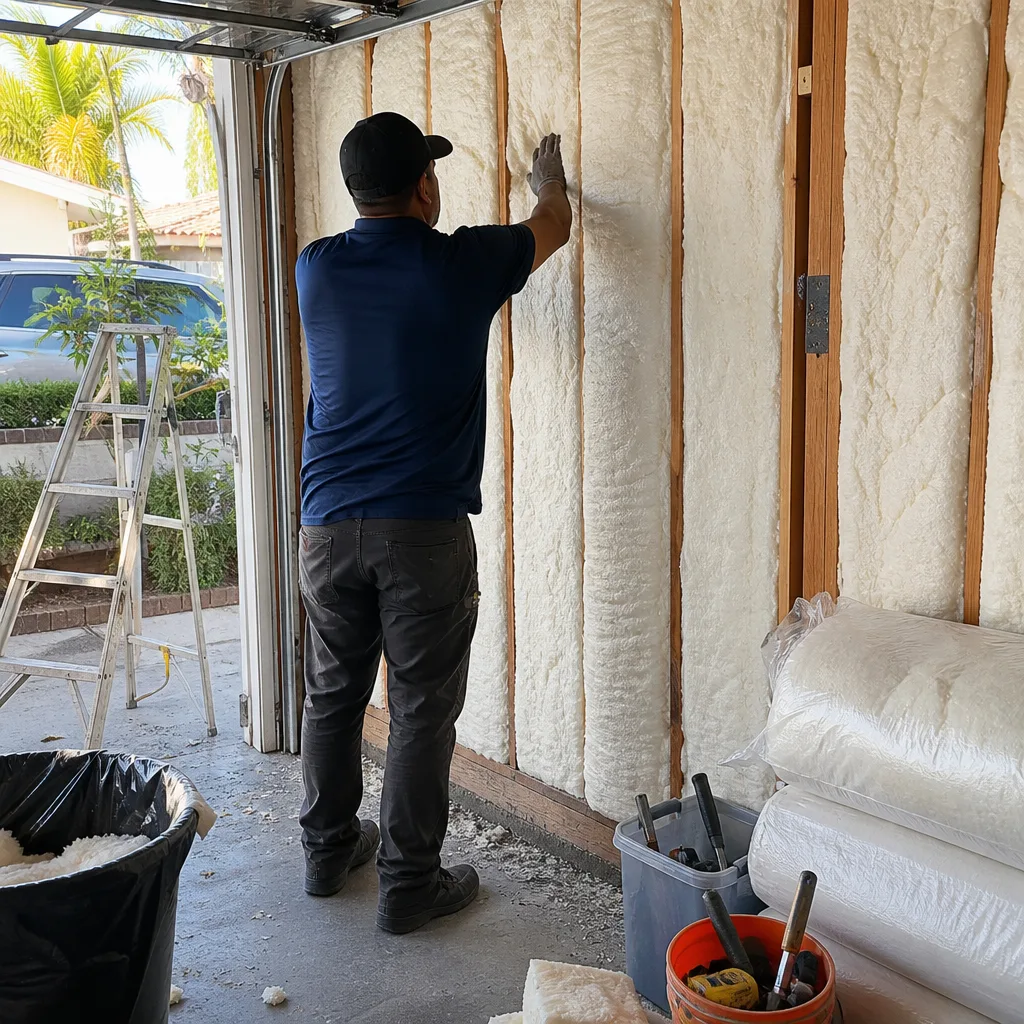 After
AfterNewport Beach Climate and Why It Still Matters for Wall Insulation
Newport Beach sits in California’s Climate Zone 8, which is the coastal zone characterized by mild temperatures, minimal heating-degree days, and elevated humidity relative to inland Orange County. The standard energy code for this zone – Title 24 – sets a minimum wall insulation requirement of R-13 for new 2×4 construction, but that floor is not the same as a performance target.
Here is what the climate actually does to walls in this market. Marine layer moisture, particularly in the stretch between early May and late June, keeps relative humidity elevated for weeks at a time. Walls with degraded or missing insulation – common in Newport Beach homes built in the 1960s and 1970s in neighborhoods like Lido Isle and the older parts of Newport Heights – can develop moisture-related issues inside wall cavities when interior conditioned air meets the cooler exterior sheathing. That is not a theoretical risk; it shows up in the infrared camera scans we do on older homes in this area, and it shapes which insulation product we recommend.
The thermal benefit of wall insulation in Newport Beach is real but more modest than in a high-desert market like Riverside or a cold-winter market. Where insulation earns its money here is on: noise reduction from street traffic and, for homes near John Wayne Airport’s flight path in areas like Harbor View Hills, aircraft noise; moisture management in coastal walls; and radiant heat gain through west-facing walls during the September and October heat events that hit the inland portions of Newport Beach harder than the coast.
Blown-In vs. Spray Foam vs. Batts: Which Is Right for Your Newport Beach Home?
Blown-In Cellulose or Fiberglass (Retrofit)
This is the most common approach for existing Newport Beach homes where walls are closed. A crew drills small holes (typically 2 inches in diameter) in a grid pattern, inserts a fill tube, and packs the cavity to a target density – usually 3.5 lb/cubic foot for cellulose dense-pack. The holes are patched and can be painted to match. Expect a crew of two to complete a typical Newport Beach single-story in one day. Cellulose from GreenFiber, which we use regularly, is made from recycled material and has a borate-based fire retardant built in.
Fiberglass or Rockwool Batts (Open Wall)
If your walls are already open – during a remodel, an addition, or new construction in Newport Coast or on a lot redevelopment in the Balboa Peninsula – batts go in quickly and cost less per square foot than any retrofit method. Rockwool (specifically Rockwool Safe’n’Sound or Comfortbatt, depending on the application) adds fire resistance and acoustic performance that is worth the modest cost premium in attached homes or homes near high-traffic streets like Coast Highway.
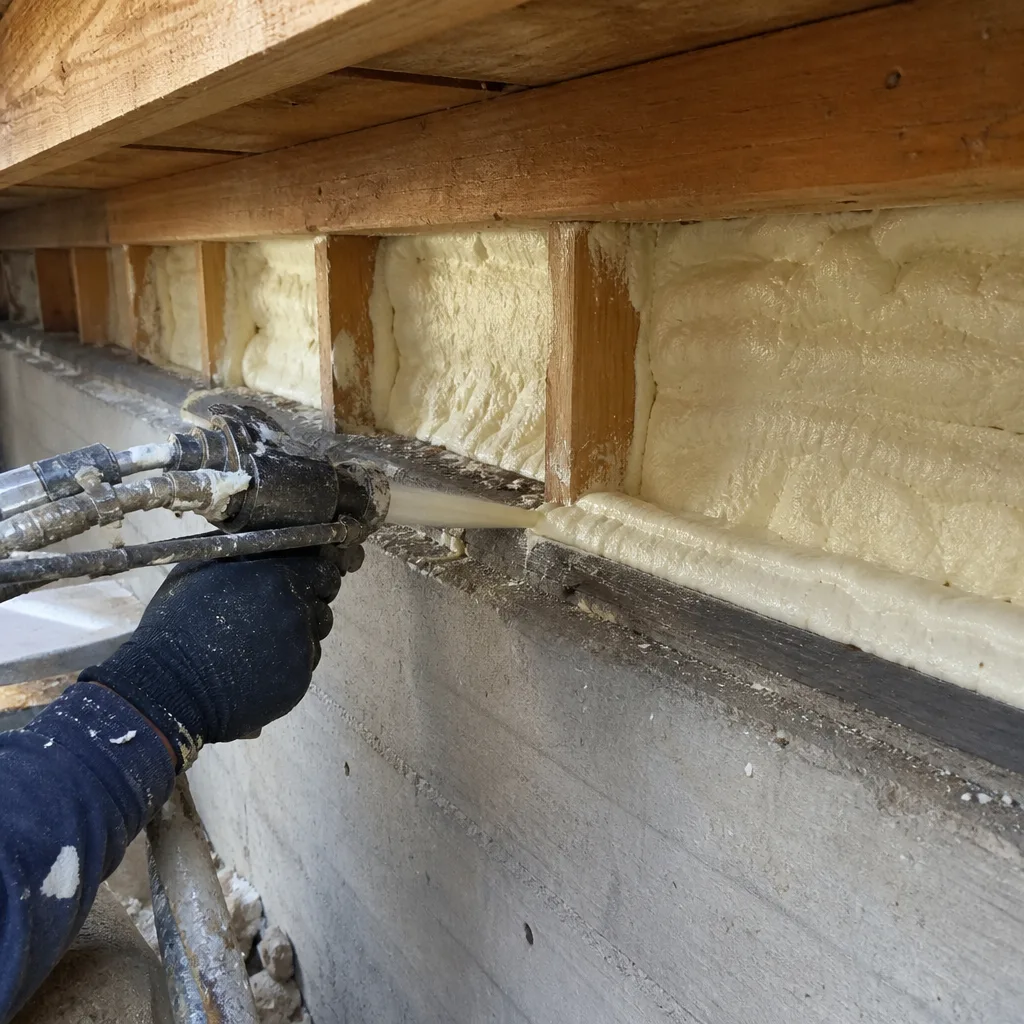
Spray Foam (Open Wall or Flash-and-Batt)
Closed-cell spray foam is the highest-performing wall insulation for moisture-exposed locations. At 2 inches of closed-cell foam, you get roughly R-12 plus a Class II vapor retarder built into the wall assembly – meaning it slows moisture migration through the wall without requiring a separate vapor barrier. On oceanfront homes on the Balboa Peninsula or in Crystal Cove-adjacent properties, we specify this product with regularity. Open-cell foam is a lower-cost option for gut remodels where moisture is less of a concern and the primary goal is air sealing combined with insulation in one pass.
A safety note on spray foam: two-component spray foam systems use isocyanate chemicals that require proper respiratory protection and ventilation during installation. This is not a DIY material. Installation should always be done by trained technicians with the correct PPE and equipment. We say this not to protect our business model, but because the health consequences of improper exposure are real and documented.
The Air Sealing Step That Most Newport Beach Contractors Skip
This is the part of the price guide that most competitors do not address, so we will be direct about it.
Insulation slows heat transfer. It does not stop air movement. A wall cavity that has gaps at the top plate – where the wall framing meets the attic floor – will allow conditioned air to escape into the attic regardless of what R-value you blow into it. In Newport Beach homes built before 1985, those gaps are almost universal. We have seen blower-door readings on homes in the Eastbluff and Harbor View Hills neighborhoods that read 3,800 to 4,600 CFM50 before sealing – meaning the home was losing the equivalent of several air exchanges per hour to uncontrolled leakage.
Under the Envelope Insulation Co. process, air sealing of top plates, can lights, electrical penetrations, and outlet boxes in exterior walls is completed before any insulation is added. On applicable jobs, we record a blower-door reading – a pressurization measurement that shows, in a single figure, how much conditioned air the home is losing – before and after the work. Those two numbers are documented and handed to the homeowner so the performance change is verifiable, not claimed.
That air sealing step costs $350 to $950 on a typical Newport Beach job. It is not an upsell. It is a prerequisite. Blowing insulation over an unsealed wall cavity improves thermal performance modestly and air leakage performance not at all. The two numbers on the blower-door report tell the story more accurately than anything we could write here.
How to Save on Wall Insulation in Newport Beach
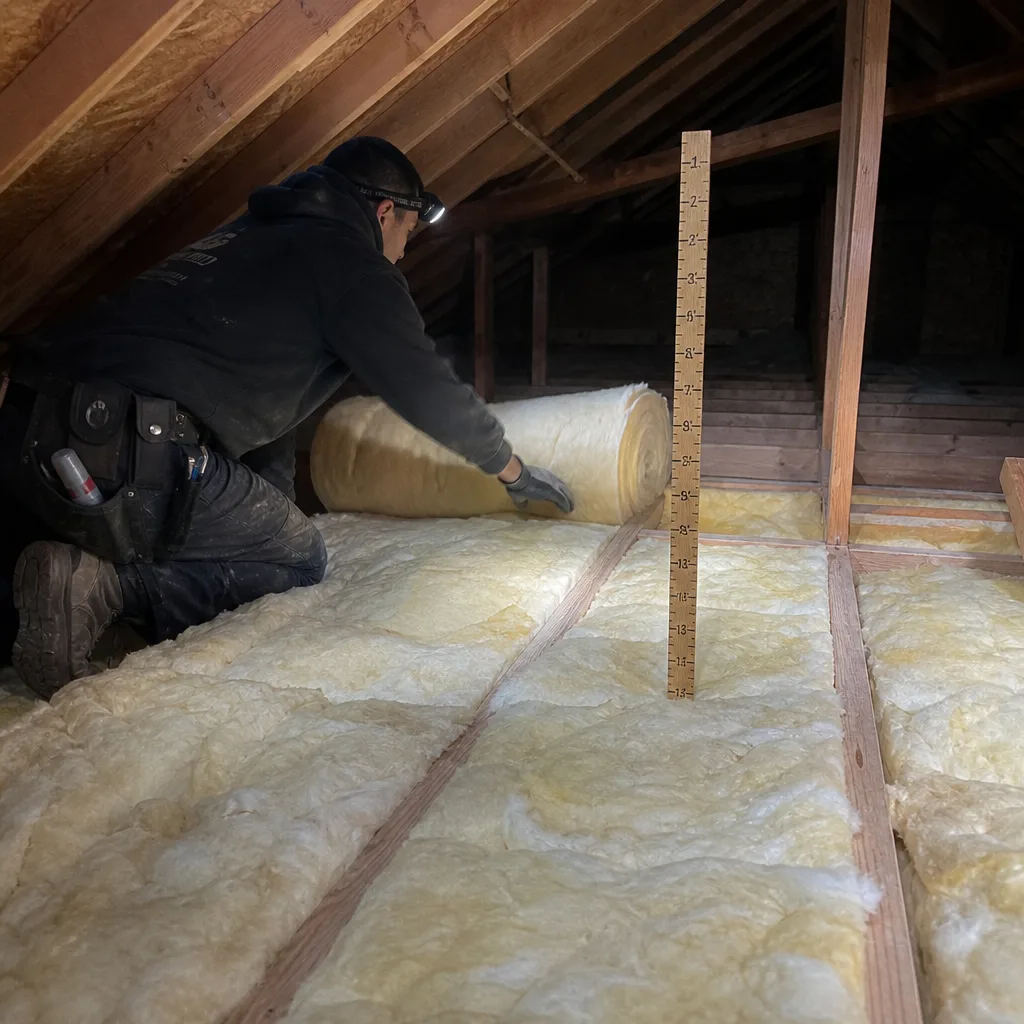
There are real ways to bring the cost down. There are also ways that look like savings but reduce the quality of the result. Below are the ones we stand behind.
- Time the project with a remodel: If you are planning a kitchen expansion, bathroom addition, or any project that opens walls, that is the lowest-cost window to add wall insulation. Batt installation in an open wall is faster and cheaper than retrofit drilling by a meaningful margin. Coordinate the insulation scope with your general contractor before drywall goes up.
- Prioritize west-facing and north-facing walls first: If budget requires phasing, west-facing walls take the most radiant heat load during Newport Beach’s fall heat events, and north-facing walls in older homes often have the worst existing coverage. Starting there gets the most performance per dollar spent.
- Check for California utility rebates: Southern California Edison and SoCalGas both offer rebate programs for qualifying insulation upgrades, and the federal 25C energy efficiency tax credit – which covers insulation improvements – was extended through 2032 under the Inflation Reduction Act. The credit covers 30% of the cost of qualifying insulation materials, up to $1,200 per year. Eligibility depends on your tax situation; consult a tax professional, but the credit is real and worth asking about before the project is priced.
- Get a second opinion on any written estimate: Envelope Insulation Co. offers a free second opinion on any written estimate from another contractor. Bring us the quote; we will read it with you and tell you what is in it, what is not, and whether the scope reflects what your home actually needs. No pressure, no obligation. That offer is part of the Haven Standard and does not expire.
- Ask about a combined air sealing and wall insulation scope: Doing air sealing and wall insulation in the same mobilization is more cost-effective than scheduling two separate visits. If you know your attic needs air sealing as well, a combined attic and wall envelope project spreads the mobilization cost across a larger scope and reduces the total price per square foot.
- Request a written price before any work starts: Under Haven Standard Clause 1, every Envelope Insulation Co. estimate is a flat price, written scope, and written warranty delivered before anyone lifts a tool. You will not receive a time-and-materials estimate that expands after the crew arrives. Comparing written, flat-price quotes is the only way to make an accurate cost comparison between contractors – verbal estimates and ballpark ranges are not comparable documents.
To get a written price for your Newport Beach home’s our Wall Insulation services, call (657) 261-8265. Estimates are free, and the price we write is the price you pay.
What the Job Looks Like, Start to Finish
Homeowners who research thoroughly – and most people reading a page like this do – usually want to know what the process actually involves before they commit. Here is the sequence for a typical closed-wall retrofit in Newport Beach.
- On-site assessment: Wes Okafor or a designated technician visits the home, walks the exterior and interior, checks wall depths and stud spacing, looks for existing insulation with an inspection camera where possible, and notes any access complications (stucco exterior, interior wood paneling, etc.).
- Written scope and price: Before leaving, or within 24 hours of the visit, a written scope is produced with a flat price, the material to be used, and the warranty terms. No work starts without this document. That is Haven Standard Clause 1, not a policy we can waive.
- Air sealing: On the scheduled install day, the crew begins with air sealing – top plates, outlet boxes in exterior walls, and any wall-to-attic penetrations. On applicable jobs, a blower-door reading is taken before sealing begins.
- Insulation installation: Holes are drilled in the grid pattern specified for the fill method, cavities are filled to the target density, and the fill tube is moved systematically to avoid gaps or voids. This is confirmed with a density probe on dense-pack jobs.
- Patching and documentation: Holes are patched flush, the Documented Photo Record is completed (photos of the work before, during, and after), and if a post-sealing blower-door reading was part of the scope, that number is recorded and provided to the homeowner.
- Written closeout: The homeowner receives the completed photo record, the blower-door report (if applicable), and a written confirmation of the 365-Day Done Right Promise covering the completed work.
FAQs – Wall Insulation Cost in Newport Beach
How much does it cost to insulate walls in Newport Beach in 2026?
Most wall insulation projects in Newport Beach run between $1,800 and $6,500 for a whole home, with the majority of single-family retrofits landing between $2,400 and $4,200. Per square foot of wall area, blown-in retrofits run $1.60 to $2.80, batts in open walls run $0.65 to $1.90 depending on material, and closed-cell spray foam runs $3.00 to $5.50. Air sealing before insulation adds $350 to $950 to a typical Newport Beach job and is not optional on our projects. Call (657) 261-8265 for a written price specific to your home’s dimensions and wall type.
Is it worth insulating existing walls in Newport Beach’s mild climate?
Yes, though the math works differently here than in colder markets. Newport Beach’s Climate Zone 8 means heating and cooling loads are relatively modest compared to inland California, but wall insulation still delivers on noise reduction, moisture management in coastal walls, and comfort during the October heat events that affect the inland portions of Newport Beach. Homes in the Lido Isle and Newport Heights areas that were built in the 1960s and 1970s frequently have no wall insulation at all – the energy and comfort gap compared to a properly insulated home is measurable on a blower-door test and noticeable on a utility bill. For a written assessment of what your specific walls would gain, call (657) 261-8265.
How long does wall insulation installation take in Newport Beach?
A typical closed-wall blown-in retrofit on a 1,800 to 2,400 square foot Newport Beach home takes one full day with a two-person crew, including air sealing, drilling, filling, and patching. Larger homes or homes with complicated exterior siding may take two days. Open-wall batt installation during a remodel is faster – usually half a day for a similar-sized home because there is no drilling or patching involved. The written scope we provide before any work starts will include a specific time estimate for your job.
Should I insulate walls or the attic first in Newport Beach?
Attic insulation and air sealing first, in nearly every case. The attic is the primary thermal boundary in a single-story Newport Beach home, and an unsealed attic floor will undermine wall insulation performance by allowing conditioned air to bypass the wall assembly entirely. If budget requires sequencing, attic air sealing and insulation delivers a larger measurable performance change per dollar in this climate zone. That said, a combined attic and wall envelope project done in one mobilization is more cost-effective than two separate visits. We can scope both in a single written estimate – call (657) 261-8265.
What is the best type of wall insulation for homes near the Newport Beach coast?
For homes on the Balboa Peninsula, Balboa Island, and Lido Isle – where salt air and elevated year-round humidity are constant – closed-cell spray foam is the strongest performer for open-wall applications because it provides both R-value (roughly R-6.5 per inch) and a built-in vapor retarder that slows moisture migration through the wall assembly. For closed-wall retrofits in these same locations, dense-pack cellulose performs well because its density resists moisture-driven settling, and borate-based cellulose from manufacturers like GreenFiber has some natural resistance to mold. The right answer depends on wall access, budget, and the specific moisture exposure of your home’s location – a written assessment is the only way to know for certain. Call (657) 261-8265 to schedule one.
Why Envelope Insulation Co. Handles Wall Insulation Differently
The home page covers the full picture of what the Haven Standard means in practice, but the short version for a wall insulation job is this: we do not insulate a wall before the air leaks in that wall assembly are sealed. That sequencing is not negotiable, and it is not an upsell – it is the difference between a job that shows a measurable performance improvement on a blower-door test and one that does not.
Since 2016, Envelope Insulation Co. has completed work on more than 9,000 homes, every one with a written price before work started and a documented photo record when the crew left. Wes Okafor leads the operation, and the standard he set in 2016 – written price, documented result, 365-Day Done Right Promise – applies to every Wall Insulation in Newport Beach project we take on, regardless of size.
If you have a written estimate from another contractor, bring it to us. We will read it with you, tell you what it covers and what it does not, and give you a written price of our own. No obligation, no time pressure. That free second-opinion offer does not expire.
To get a written estimate for your Newport Beach wall insulation project, call (657) 261-8265. A live person answers, any hour.
Pricing reflects the Newport Beach market as of 2026. Topside Attic Insulation Newport Beach offers free estimates – call (657) 261-8265.
Written by Wes Okafor, Owner at Envelope Insulation Co., serving Newport Beach since 2016.
What Our Customers Say
"The winter gas bill dropped by about a third. They had estimated a quarter, so they under-promised."
- Genevieve R."Two other companies quoted to blow more insulation on top of what was there. These were the only ones who said the existing material had to come out first, and explained why."
- Clifford E."Crawl space encapsulation done properly. Photographs of the vapour barrier at every seam, and the damp smell in the hallway is gone."
- Ainsley P.