
Rockwool Crawl Space Encapsulation & Vapor Barrier in Newport Beach: What to Know First
We provide independent Rockwool crawl space encapsulation and vapor barrier service in Newport Beach, typically completing most jobs in one to two days after our initial inspection. Most Rockwool crawl space projects in this market run between $3,800 and $8,500 depending on square footage, existing moisture damage, and whether the stone wool insulation can be salvaged or needs full removal. We publish a written price before any work starts, and every job closes with a Documented Photo Record and, where applicable, before-and-after blower-door readings that show the actual air-sealing result you paid for.
This page is for homeowners in Newport Beach, Corona del Mar, and the Balboa Peninsula who have Rockwool Comfortbatt, Safe’n’Sound, or AFB evo insulation in their crawl space and are dealing with moisture intrusion, musty odors, sagging batts, or the suspicion that their vapor barrier was never properly sealed at the seams. If that describes your situation, call (657) 261-8265. A live person answers 24/7.
How Rockwool Products Fail - and How We Fix Them
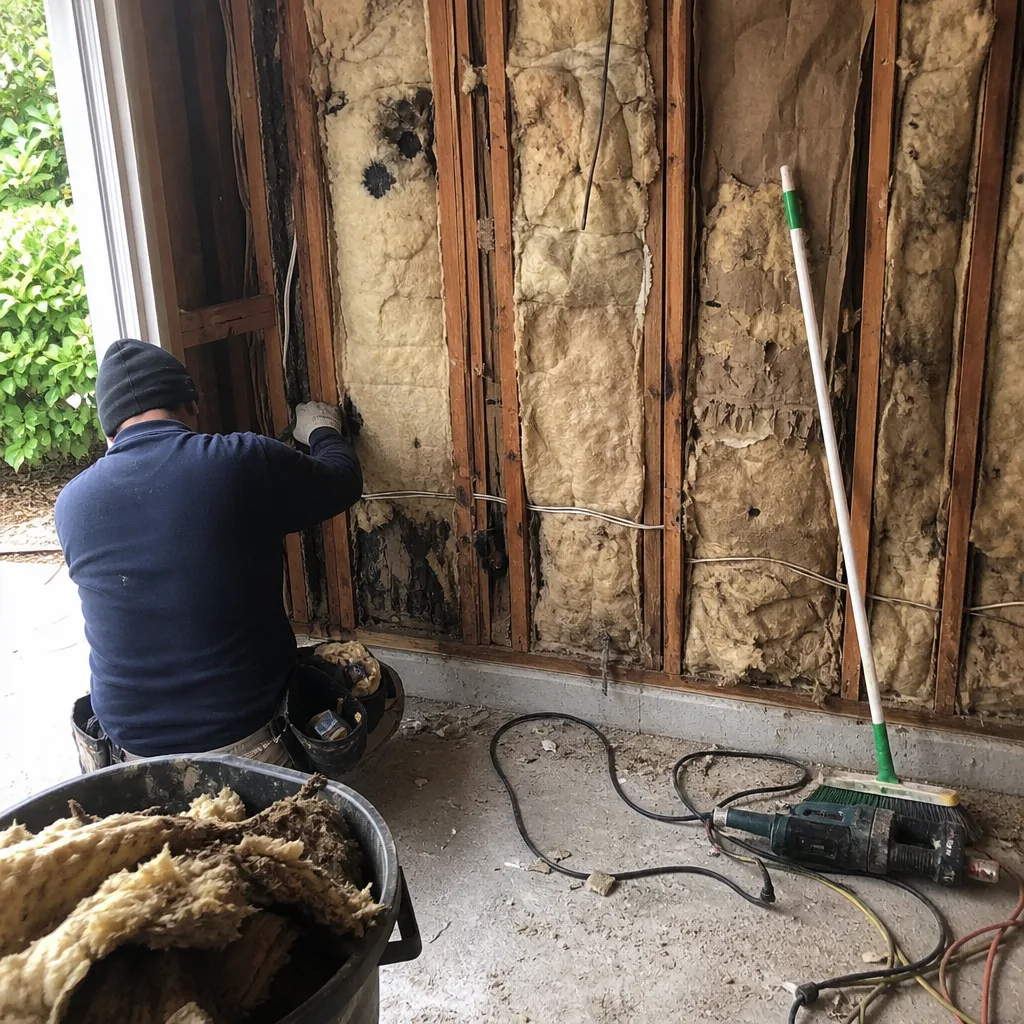
- Comfortbatt R-23 sagging off crawl space joists in harbor-adjacent homes. The hydrophobic binder in Comfortbatt resists liquid water but not the sustained humidity that builds in unventilated Newport Beach crawl spaces, especially within a half-mile of the water. Over 18 to 30 months, the friction fit loosens and batts drop onto the ground, where they wick moisture from the soil. We remove the fallen material, install mechanical fasteners or wire hangers rated for stone wool density, and seal the crawl space with a 20-mil reinforced vapor barrier before reinstalling.
- Safe’n’Sound compressing to half its labeled thickness in floor cavities. Safe’n’Sound is engineered for interior wall STC ratings, not load-bearing compression in crawl spaces where homeowners or prior contractors have used it as a cheap substitute for floor insulation. Once compressed, the R-value drops proportionally and the acoustic benefit is irrelevant. We document the compression with photos, remove the damaged batts, and specify Comfortbatt or a rigid Roxul Board (R-3 to R-6 per inch) matched to the actual floor joist depth.
- AFB evo retaining salt air corrosion in coastal Newport Beach installations. The evo line’s low-dust formulation includes a vegetable-oil-based binder that, in our observation, attracts and holds airborne salt particulates in properties west of Pacific Coast Highway. The insulation itself doesn’t corrode, but the retained salt accelerates galvanic corrosion on nearby ductwork and fasteners. We find this during inspection, recommend full encapsulation with a sealed vapor barrier rather than passive ventilation, and replace any corroded hanging hardware with stainless steel.
- Rockwool batts installed directly against dirt floors without a ground cover. This isn’t a product failure; it’s an installation failure we see repeatedly in 1960s-1980s Newport Beach tract homes. Even hydrophobic stone wool will wick ground moisture through capillary action when the bottom edge contacts damp soil. The batt’s bottom third deteriorates first, creating a visible tide line. We cut out the damaged sections, grade the crawl space floor for drainage, install a 20-mil vapor barrier with sealed seams and mechanical fastening to walls, and reinstall only above the new barrier line.
- Comfortbatt installed before air sealing, rendering the R-value nominal. Wes Okafor’s crew has pulled too many Newport Beach jobs where the prior contractor blew or stuffed insulation over unsealed rim joists, plumbing penetrations, and sill plate gaps. The R-value on the bag means nothing if the air is moving freely around it. We run a blower-door test - a pressurization reading that shows, in one number, how much conditioned air the building envelope is losing - seal all accessible leaks with foam and caulk appropriate for stone wool contact, then reinstall or supplement the Rockwool.
Our Rockwool Crawl Space Encapsulation & Vapor Barrier Process
- 1
Inspection and moisture mapping. We enter with humidity loggers, document existing Rockwool condition with photos, and identify whether the failure is product-specific, installation-specific, or environmental. You get the photos before we leave.
- 2
Blower-door test if the crawl space connects to conditioned space. Many Newport Beach homes have ductwork or plumbing chases that create unintentional air pathways. We measure so we can quantify the improvement after sealing.
- 3
Written price with scope. Under Haven Standard Clause 1: flat price, written scope, written warranty before anyone lifts a tool. No work starts without it.
- 4
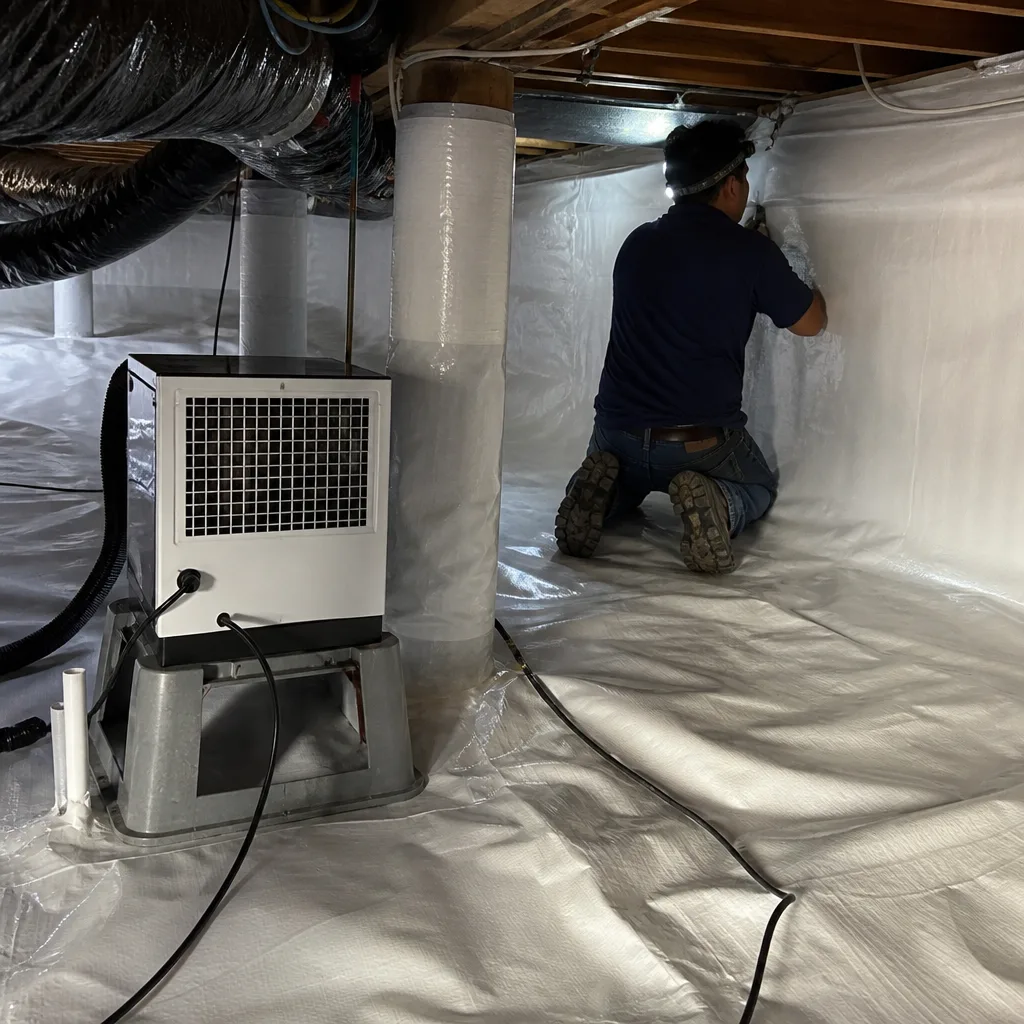
Removal, air sealing, and vapor barrier installation. We remove damaged Rockwool, seal all accessible leaks with materials compatible with stone wool, install a 20-mil reinforced vapor barrier with sealed seams and wall fastening, and add mechanical dehumidification if humidity readings warrant it.
- 5
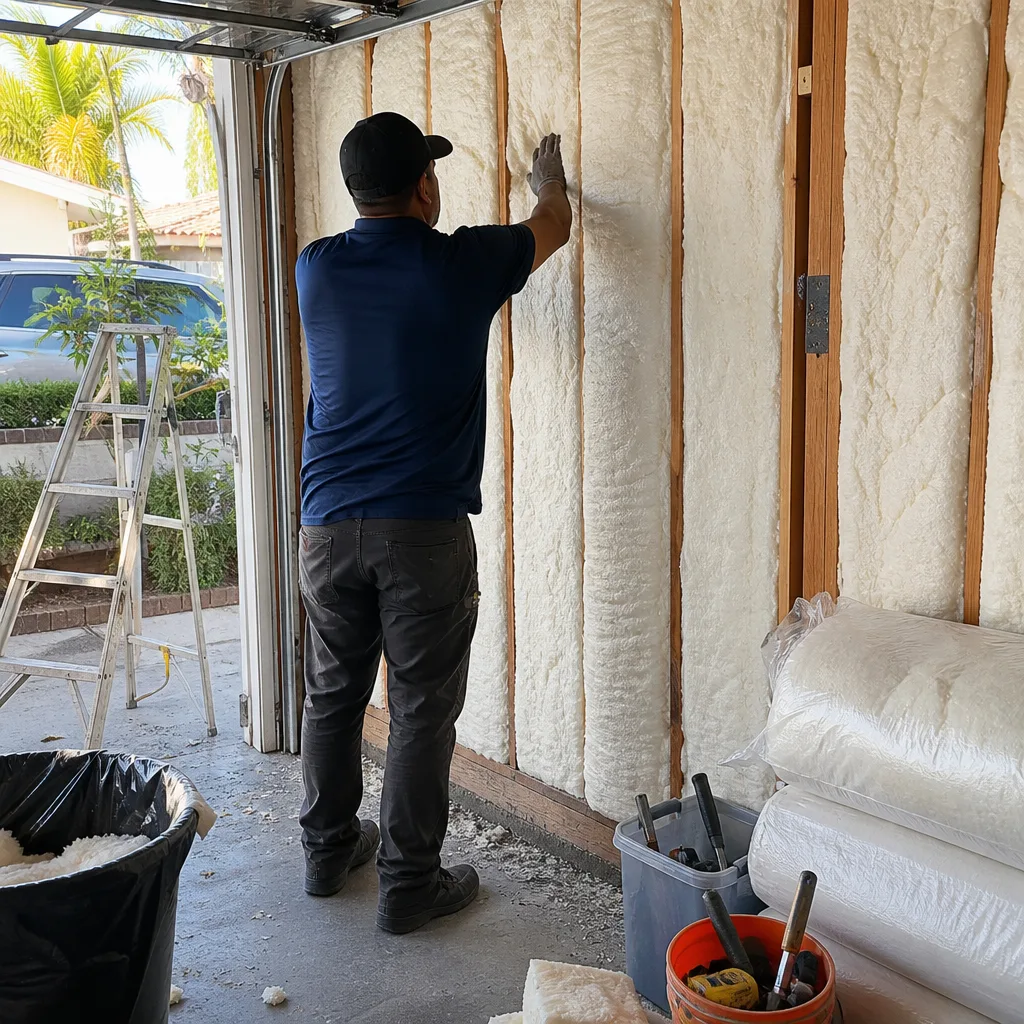
Reinstallation with proper support. Rockwool goes back with fasteners rated for its weight, not friction fit, in configurations appropriate to the product line. Comfortbatt for thermal; Safe’n’Sound only where acoustic isolation is the actual goal.
- 6
Documentation and final test. Documented Photo Record delivered. Blower-door retest on applicable jobs. Written warranty and 365-Day Done Right Promise in hand before we leave.
 Before
 After
AfterWhat Rockwool Crawl Space Encapsulation & Vapor Barrier Costs in Newport Beach
| Scenario | Typical Range |
|---|---|
| Vapor barrier installation only (existing Rockwool salvageable) | $3,800 - $5,200 |
| Rockwool removal, air sealing, and new vapor barrier | $5,500 - $7,800 |
| Full encapsulation with dehumidification and Rockwool reinstallation | $6,800 - $8,500 |
| Corrosion damage to fasteners/ductwork requiring replacement | Add $800 - $2,400 |
What moves the price: crawl space square footage, accessibility (some Newport Beach hillside homes have 18-inch clearances), extent of moisture damage to subfloor or framing, and whether the existing Rockwool can be cleaned and reused or must be hauled out. We also work with Reflectix and other brands if your project benefits from a hybrid approach.
Every estimate is free. Bring us a competing written quote and we’ll review it with you - our Free Second Opinion on Any Written Estimate. Call (657) 261-8265 to schedule.
Why Newport Beach Homeowners Call Topside Attic Insulation Newport Beach for Rockwool Work
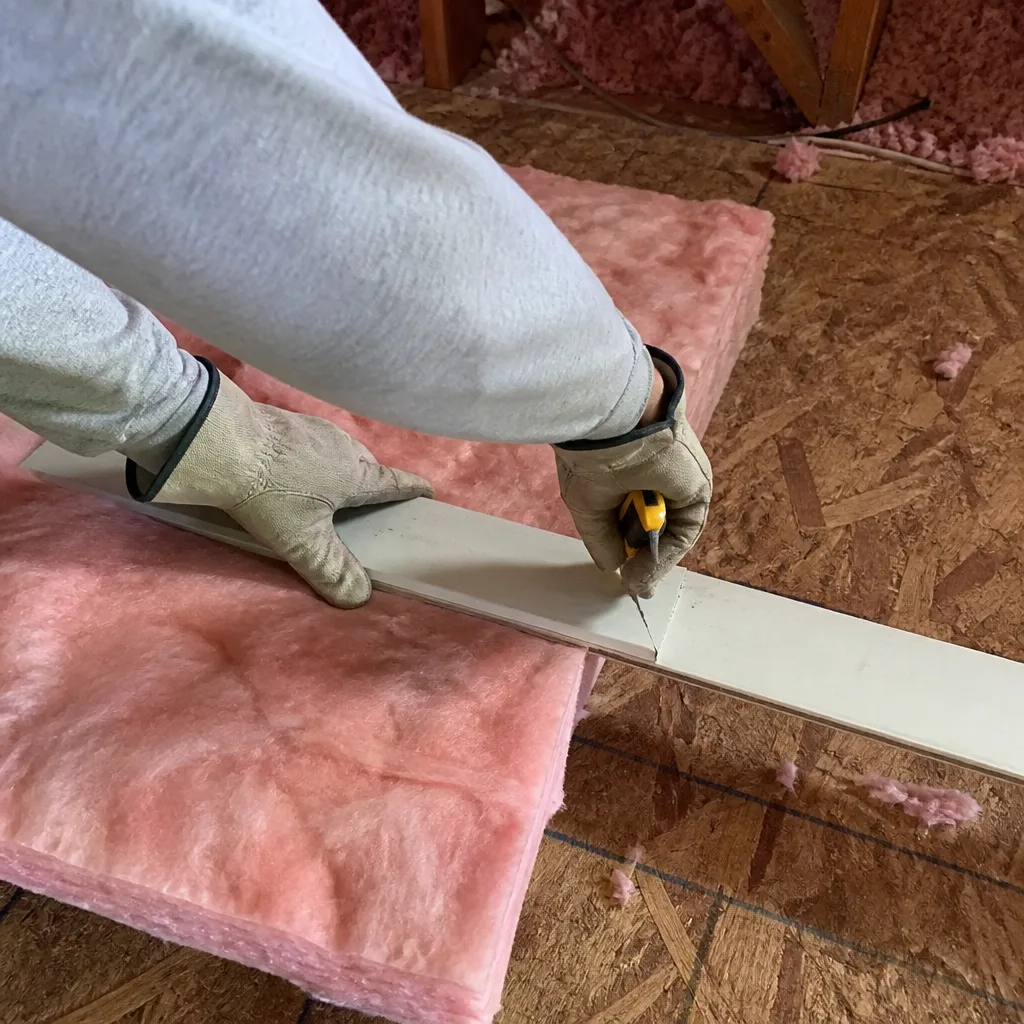
We’ve sealed and insulated over 9,000 homes since 2016, every one with a written price before work started and a documented record when the crew left. Our technicians are background-checked, uniformed, and trained specifically on stone wool behavior in coastal climates - they know the difference between Comfortbatt and Safe’n’Sound, and they won’t install either over unsealed air leaks.
The 365-Day Done Right Promise applies to all completed work. Calls are answered by a live person 24/7, no voicemail loops. As an independent Rockwool service provider, we have no manufacturer-mandated repair protocols that don’t match your home’s actual condition; we source materials from Rockwool, Owens Corning, Johns Manville, Knauf, and others with no proprietary lock-in.
Wes Okafor, who learned the trade through the HVAC and Building Sciences program at Olive-Harvey College in Chicago, has run blower-door tests on homes from the Balboa Peninsula to the hills above Corona del Mar. His sequencing - air sealing first, insulation second - is not how most crawl space jobs in Newport Beach were originally done. We fix that.
FAQs
Rockwool’s limited warranty covers manufacturing defects, not installation errors or environmental moisture intrusion. If your Comfortbatt failed because it was installed against bare dirt without a vapor barrier, that’s an installation issue, not a product defect. We document the actual cause with photos so you know whether warranty submission is worth pursuing. Call (657) 261-8265 and we’ll review what you’re seeing.
Rockwool does not manufacture “parts” for insulation in the way an HVAC brand makes compressors; we specify the correct product line from current Rockwool distribution. For vapor barriers, seam tape, and mechanical fasteners, we use quality third-party materials rated for crawl space application - often exceeding the durability of what was originally installed. We list every material by brand in your written scope before work starts.
If the batts are merely dislodged and show no moisture staining or compression damage, reinstallation with proper support and a new vapor barrier is usually the economical path - typically in the $3,800-$5,200 range. If the bottom third shows the brown tide line of ground contact wicking, or if Safe’n’Sound has compressed below 75% of labeled thickness, removal and replacement is the only fix that restores rated performance. We give you both numbers in writing and let the condition of the material decide.
We typically schedule inspections within 48 hours for crawl space encapsulation calls, and emergency moisture intrusion situations get same-day triage. Written price follows within 24 hours of inspection. Most jobs start within one week of approval. Call (657) 261-8265 - a live person answers, 24/7.
Yes, and that’s the point. A properly encapsulated crawl space shifts from passive ventilation (outside air in, conditioned air out) to a sealed conditioned or semi-conditioned space. We size any dehumidification or supply air transfer to maintain relative humidity below 60%, which protects both the Rockwool and your floor framing. The blower-door test before and after shows you exactly how much less air your home is losing - documented, not guessed.
Written by Wes Okafor, Owner, Topside Attic Insulation Newport Beach at Topside Attic Insulation Newport Beach, serving Newport Beach and nearby areas.