
Johns Manville Attic Insulation: The Newport Beach Owner’s Guide
We stock and install Johns Manville-compatible blown-in fiberglass and batt insulation in Newport Beach, with most attic retrofits running $2.80 to $4.50 per square foot installed depending on existing depth and access. Same-day starts are available when the attic is cleared for entry. Most Newport Beach homeowners discover their Johns Manville insulation is failing when upstairs rooms won’t cool below 78°F in August, or when their PG&E summer bill jumps 30% year-over-year despite no thermostat change.
Which Johns Manville Models This Applies To
Johns Manville produces several attic insulation lines you’ll find in Newport Beach homes built between 1985 and 2020: Climate Pro blown-in fiberglass (the loose-fill white or pink material), Spider custom-blown fiberglass with integrated adhesive, and Kraft-faced or unfaced batts in R-13 through R-38. The label matters. Climate Pro bags show a density spec of 0.5 to 2.5 pounds per cubic foot depending on the blown depth; Spider carries a distinct blue “SPDR” stamp on the bag seam. We’ve seen Newport Beach homeowners order standard Climate Pro when their original install was Spider, which creates a density mismatch that shows up as uneven thermal imaging within two seasons.
To identify what you have now, check the attic hatch framing for a stapled install card, or photograph any exposed bag remnants. The critical spec is settled depth versus labeled R-value. Johns Manville rates Climate Pro at R-2.5 per inch at 0.5 pcf density, but at Newport Beach’s mild coastal climate, many original installers stopped at R-30 (12 inches) when current Title 24 calls for R-38 in new construction. We don’t guess. We measure existing depth with a ruled probe, photograph the cavity condition, and match the replacement product to what’s actually required.
Topside Attic Insulation Newport Beach is an independent service provider, not affiliated with Johns Manville. We also stock compatible materials from Owens Corning, Knauf, and Reflectix where a hybrid system makes sense.
Signs Your Johns Manville Attic Insulation Is Failing
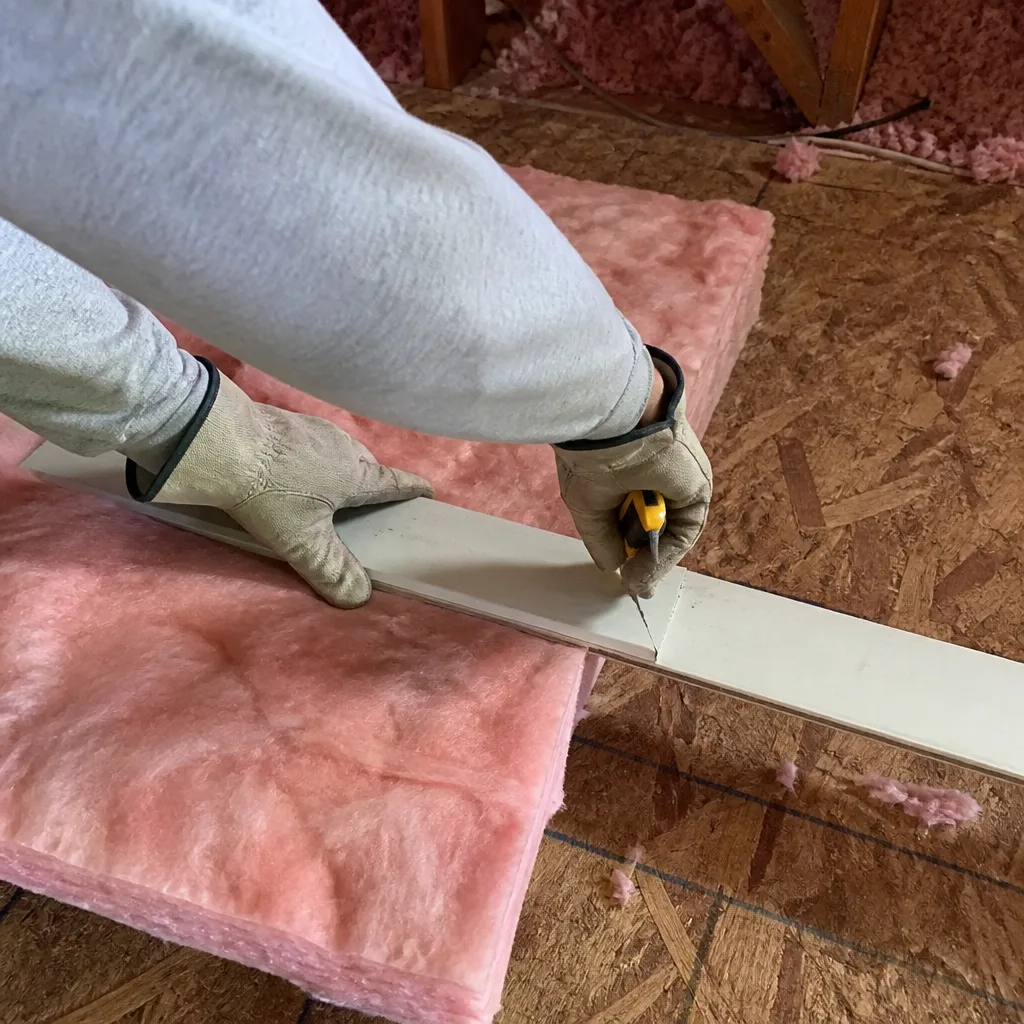
- Uneven temperature between rooms. When Climate Pro settles or gets disturbed by rodent activity, it creates thin spots above hallways and closets where the drywall ceiling reads 8 to 12 degrees warmer on an infrared camera. The fiberglass hasn’t vanished; it’s migrated toward the eaves or compressed around wiring.
- Visible moisture or dark staining on attic-side drywall. Johns Manville Kraft-faced batts can trap humidity if the facing was installed upside-down (vapor retarder on the wrong side). In Newport Beach’s marine layer mornings, this shows as gray streaking above bathrooms first.
- Insulation below the top of ceiling joists. Proper settled depth for R-38 is roughly 14 to 16 inches of Climate Pro. If you can see the wood framing, you’re under-insulated. We’ve measured original 1980s Newport Beach installs at 6 inches after three decades of settling.
- Drafty outlets and switch plates on exterior walls. This isn’t a wall insulation problem, usually. It’s the stack effect pulling conditioned air through top plate gaps that were never sealed before the Johns Manville went in. The insulation is doing nothing because the air is moving around it.
- HVAC runs constantly between 2 and 6 p.m. in summer. Your equipment is sized correctly; the attic is just bleeding cool air faster than the ducts can replace it. Blower-door tests we’ve run in Newport Beach’s older Corona del Mar cottages regularly show 3,800 CFM50 or higher with original insulation and no air sealing.
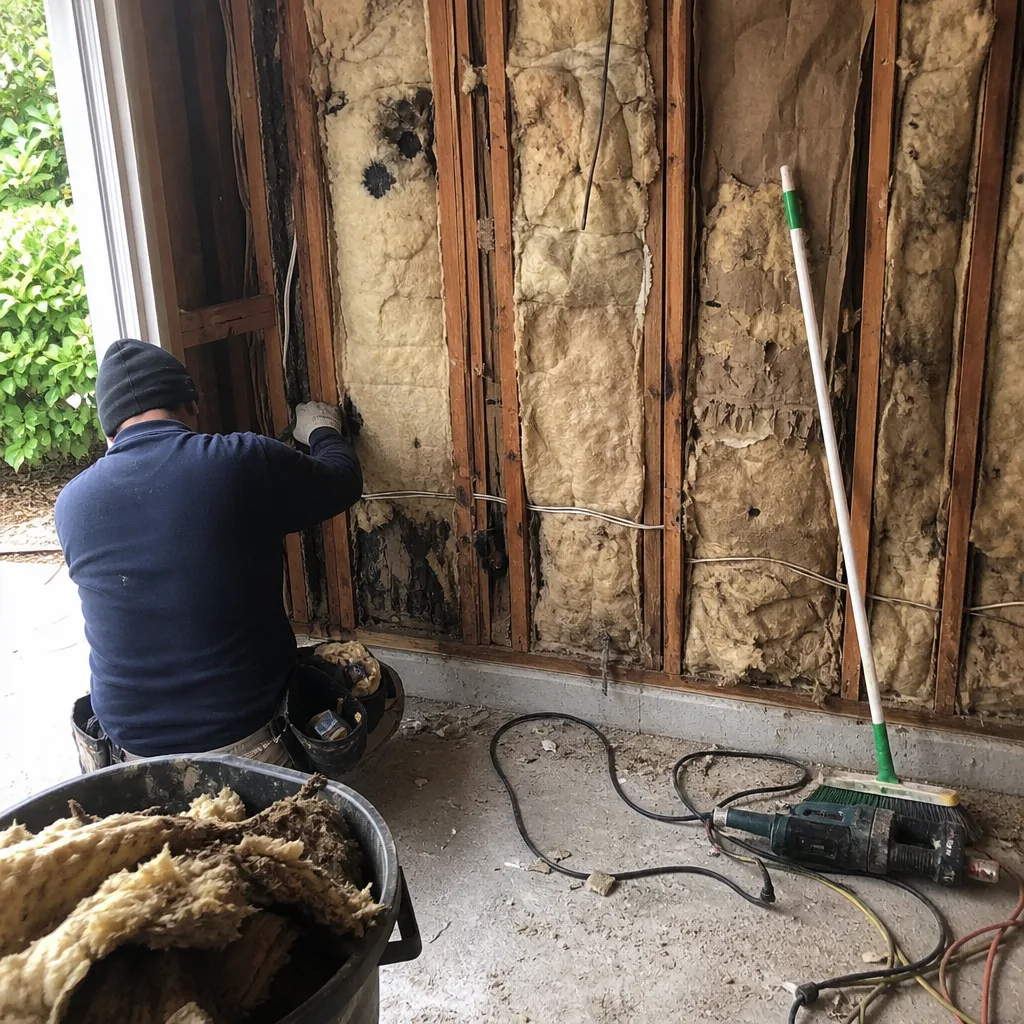 Before
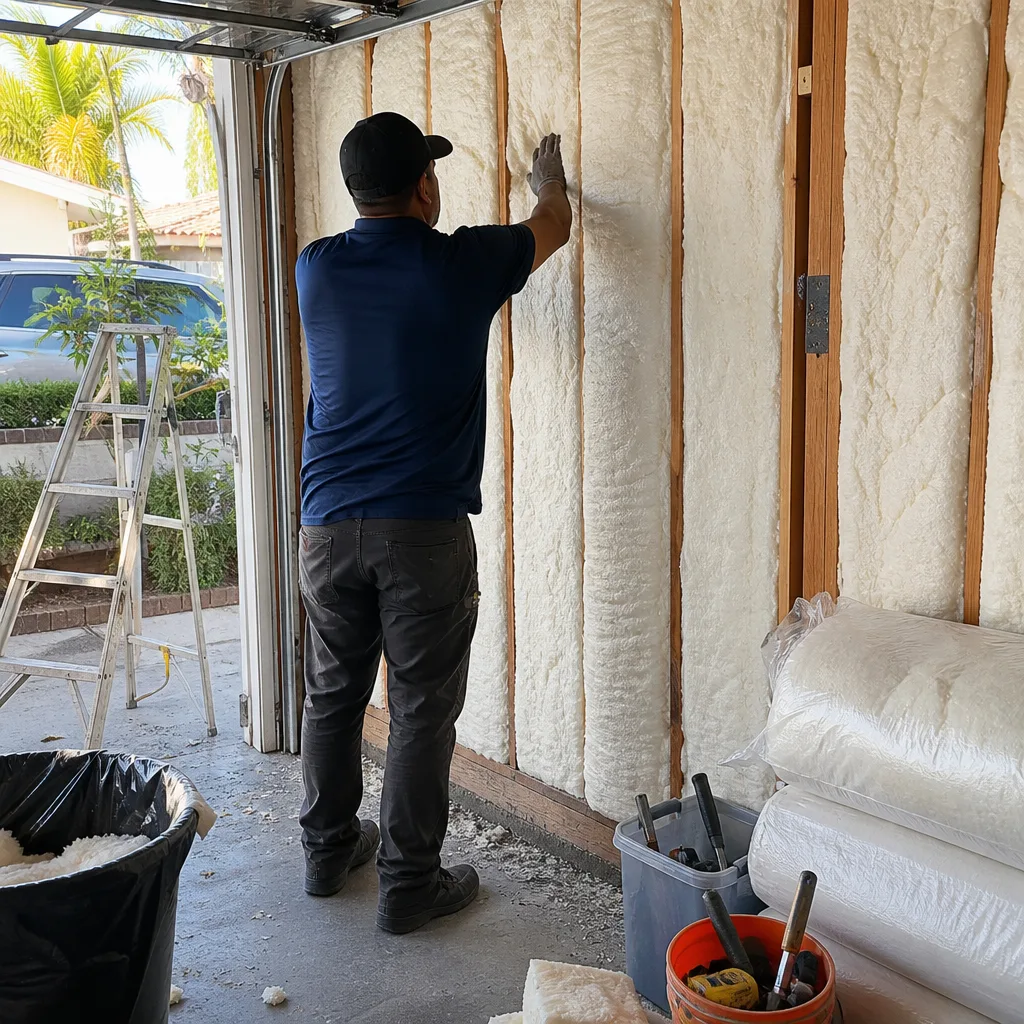 After
AfterReplacement Cost & What’s Included
Most Johns Manville attic insulation replacements in Newport Beach run $3,200 to $6,800 for a single-story home between 1,200 and 2,400 square feet of attic floor. Two-story homes with complex rooflines and limited hatch access push toward the upper end. That range includes removal of degraded material if needed, air sealing of top plates, can lights, and penetrations with fire-rated caulk and rigid foam, then new Climate Pro or Spider blown to specified depth.
What moves the needle: current depth (deeper existing material means higher removal labor), attic accessibility (steep pitches above Lido Isle’s tighter lots add time), and whether we find rodent contamination requiring sanitization before new insulation goes in. Every job gets a Written Price Before Any Work Starts under Haven Standard Clause 1. The 365-Day Done Right Promise covers settling, coverage gaps, or installation defects. We publish before-and-after blower-door numbers on every air-sealing job so you can verify the envelope improvement in a single figure.
DIY or Call Us?
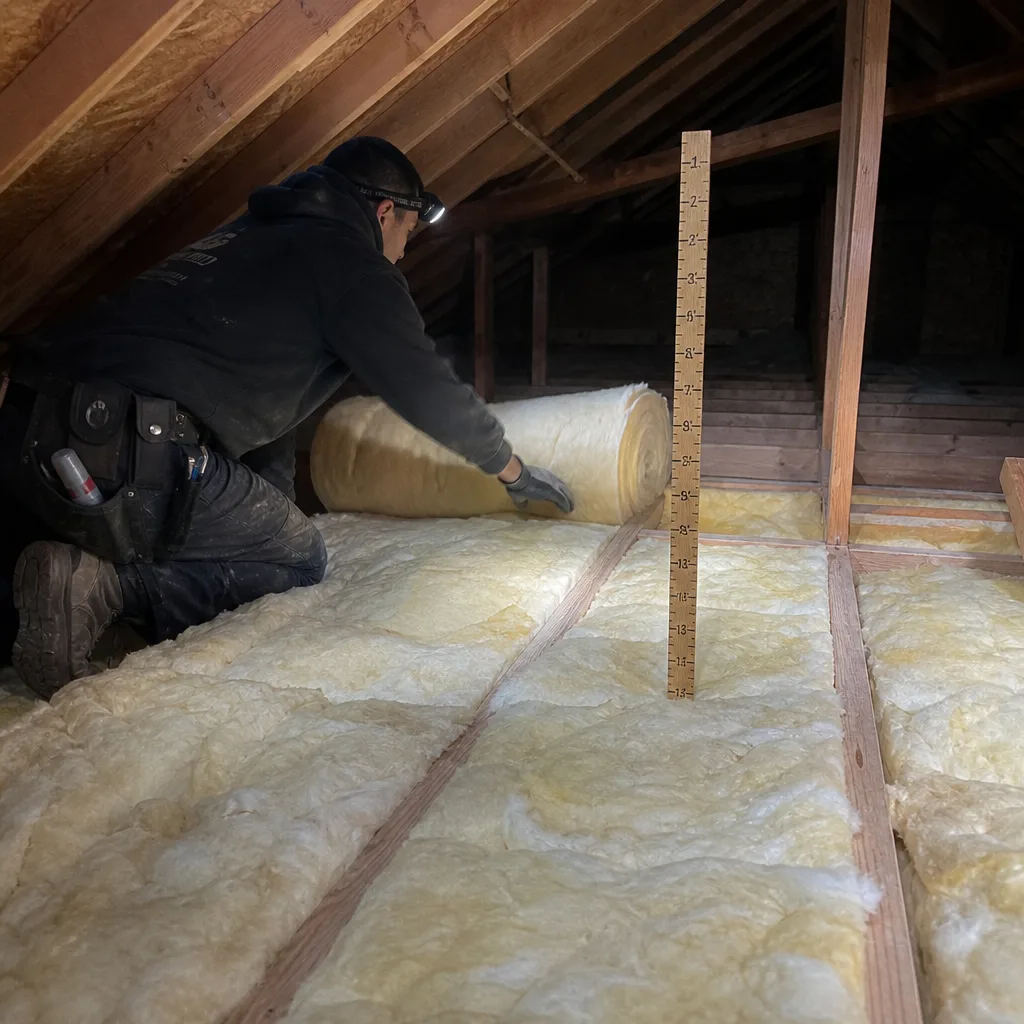
You can safely check your current insulation depth with a ruler or yardstick through the attic hatch, and photograph any labels you find. That’s it. Everything past that point involves real hazards. Attic flooring in Newport Beach’s 1960s through 1990s builds was rarely designed for foot traffic; we’ve seen homeowners put a leg through drywall more than once. Blown-in fiberglass requires a commercial hopper and proper PPE (respirator, not a dust mask) to avoid silicosis risk from older material. And without a blower-door test, you cannot identify the air leaks that will undermine whatever new insulation you add.
Seal the leaks first. Then insulate. The R-value on the bag means nothing if the air is moving freely around it. Wes Okafor learned this sequencing through the HVAC and Building Sciences program at Olive-Harvey College in Chicago, and we’ve applied it on over 9,000 homes since 2016. Call (657) 261-8265 for a free estimate with a written price before any work starts.
FAQs
Fiberglass itself doesn’t degrade chemically, but settled depth and contamination determine real performance. In Newport Beach’s salt-air environment, we see Climate Pro hold its original R-value for roughly 15 to 20 years if undisturbed, though rodent activity, trades walking through the attic, or failed recessed-can gaskets can cut effective lifespan to under 10 years. Call (657) 261-8265 and we’ll measure what you actually have left - estimates are free.
Sometimes, but only after air sealing and only if the existing material is dry, uncontaminated, and uncompressed. We’ve pulled jobs in Newport Beach where three layers of mismatched products created a vapor trap that rotted roof sheathing. We inspect first, document with photos, and give you a written scope that says exactly what stays and what goes. Call (657) 261-8265 to schedule.
Most single-story Newport Beach homes are completed in one day: removal (if needed) in the morning, air sealing and blower-door verification by early afternoon, then blow-in installation and final depth check before we leave. Two-story or limited-access homes may run into a second day. You’ll get a Documented Photo Record and, on air-sealing jobs, before-and-after blower-door readings before the crew packs up.
We keep Climate Pro and Spider in standard R-values on our trucks for Newport Beach jobs, with same-day starts available when the attic is cleared and accessible. Specialty densities or hybrid systems (Johns Manville plus Reflectix radiant barrier, for example) may require a next-day material pull. Call (657) 261-8265 to confirm availability for your specific job.
Written by Wes Okafor, Owner, Topside Attic Insulation Newport Beach at Topside Attic Insulation Newport Beach, serving Newport Beach and nearby areas.