
Icynene Attic Insulation: The Newport Beach Owner’s Guide
Most Icynene open-cell spray foam attic insulation jobs in Newport Beach run between $2.80 and $4.20 per board foot installed, with a typical 1,200-square-foot attic at R-38 landing in the $4,800 to $7,200 range. We stock Icynene LD-C-50, MD-R-200, and H2Foam Lite formulations on our trucks, and we can usually inspect and quote same-day. Homeowners usually notice the problem first as a second-floor that won’t cool below 78 degrees in August, or a sudden spike in their SCE bill after a roof leak or rodent intrusion has compromised the foam matrix.
Which Icynene Models This Applies To
Icynene’s product line breaks into three density grades, and getting this wrong changes both the price and the performance. LD-C-50 is the open-cell workhorse for most Newport Beach attics, rated at 0.5 lbs per cubic foot and vapor-permeable, which matters in our marine climate where moisture needs a path out. MD-R-200 hits 2.0 lbs per cubic foot and functions as a vapor barrier, something we specify only when the roof deck itself can’t be vented, like certain flat-roof additions off Coast Highway. H2Foam Lite is the water-blown closed-cell option at 2.8 lbs per cubic foot, used sparingly for rim joists or cathedral ceilings where space is tight and R-value per inch matters.
Identification starts with the spray pattern and hardness. Open-cell has a spongy give when you press a screwdriver into it; closed-cell feels like stale bread. Original Icynene jobs from 2010 to 2018 often carry a small stamp on the stud bay or a specification sheet left in the electrical panel. If you find nothing, we pull a core sample and match density in the field. We source Icynene formulations through our normal supply chain alongside Owens Corning, Johns Manville, and Demilec, but we are an independent service provider with no affiliation to Icynene Inc. For repairs, we rarely need OEM material; a matched-density open-cell from Demilec or a Knauf equivalent bonds chemically and thermally with existing Icynene, provided the substrate is clean and the temperature is above 60 degrees at application. The gotcha is overspray onto asphalt shingles: Icynene’s amine catalyst can degrade certain organic mat shingles if applied too thick at the eave, something we check before we quote.
Signs Your Icynene Attic Insulation Is Failing
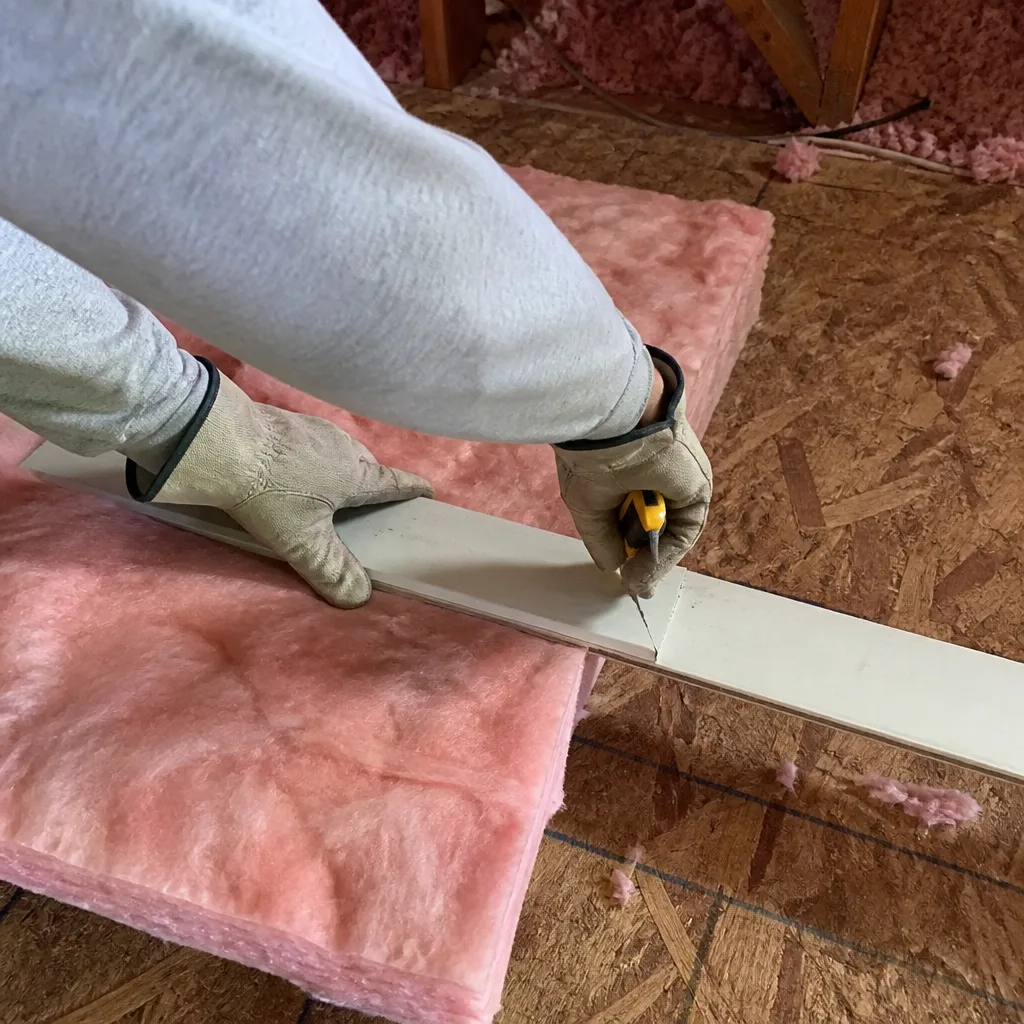
- Soft or crumbling foam at the roof deck. This is UV degradation where a gable vent was added after the original job, or where a bathroom fan duct detached and the moisture broke down the polymer chains. In Newport Beach, we see this most on west-facing pitches where afternoon heat accelerates the breakdown.
- Discoloration to yellow or brown. Rodent urine is the usual cause; once the pH shifts, the foam loses its bond to wood and can slump. We document this with photos and show the homeowner exactly where the attic access needs a better seal.
- Cold spots on the ceiling below. This means delamination, often from a roof leak that soaked the foam before it dried. The R-value doesn’t disappear, but the air gap behind the foam acts like an open window. We find this repeatedly in the harbor-adjacent neighborhoods where salt air corrodes flashing faster.
- Higher-than-expected energy bills with no equipment change. Icynene is an air barrier as much as insulation; if it’s compromised, your conditioned air exits through the attic and the HVAC runs overtime. We verify this with a blower-door test, a pressurization reading that shows, in one number, how much air the building envelope is losing.
- Visible shrinkage pulling away from rafters. Early Icynene formulations from 2005 to 2012 had higher shrinkage rates, especially if applied below manufacturer temperature specs during a cold snap. The gap is usually at the top plate or around chimney framing.
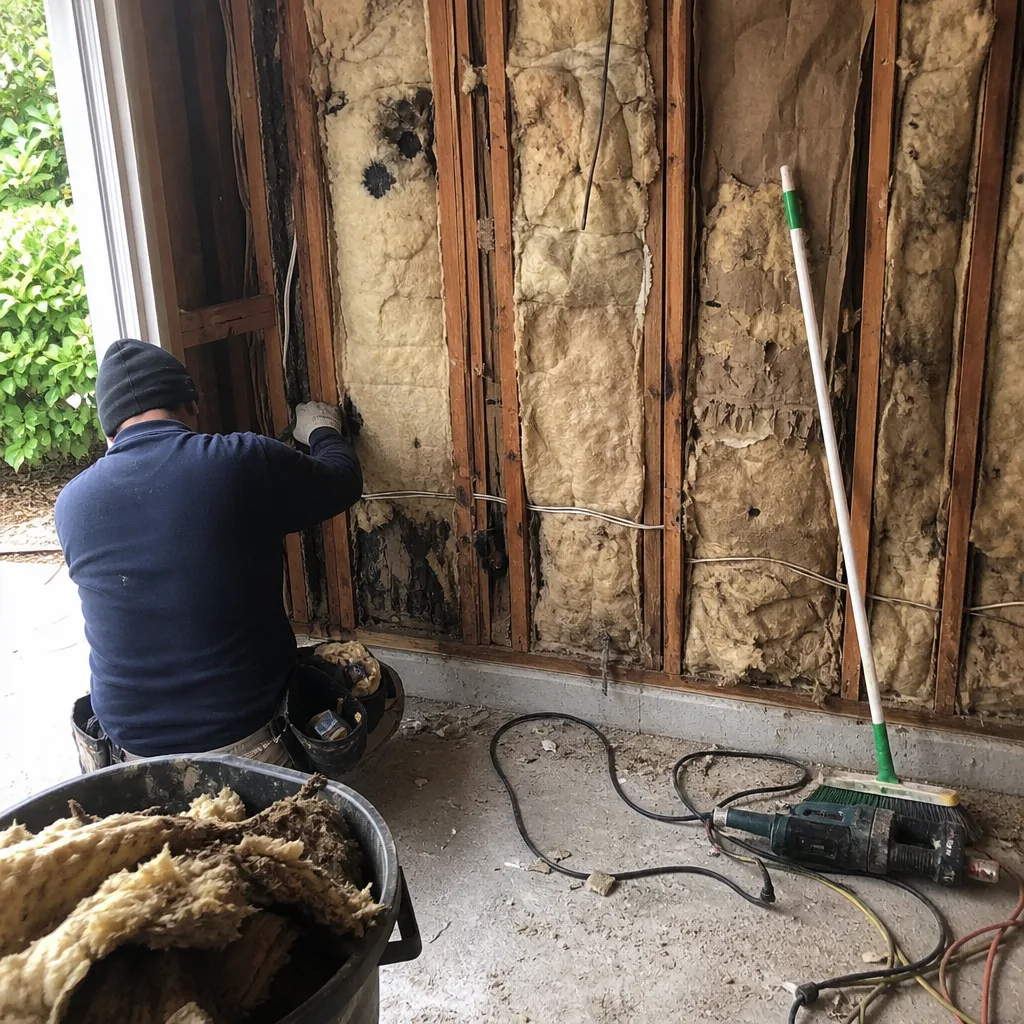 Before
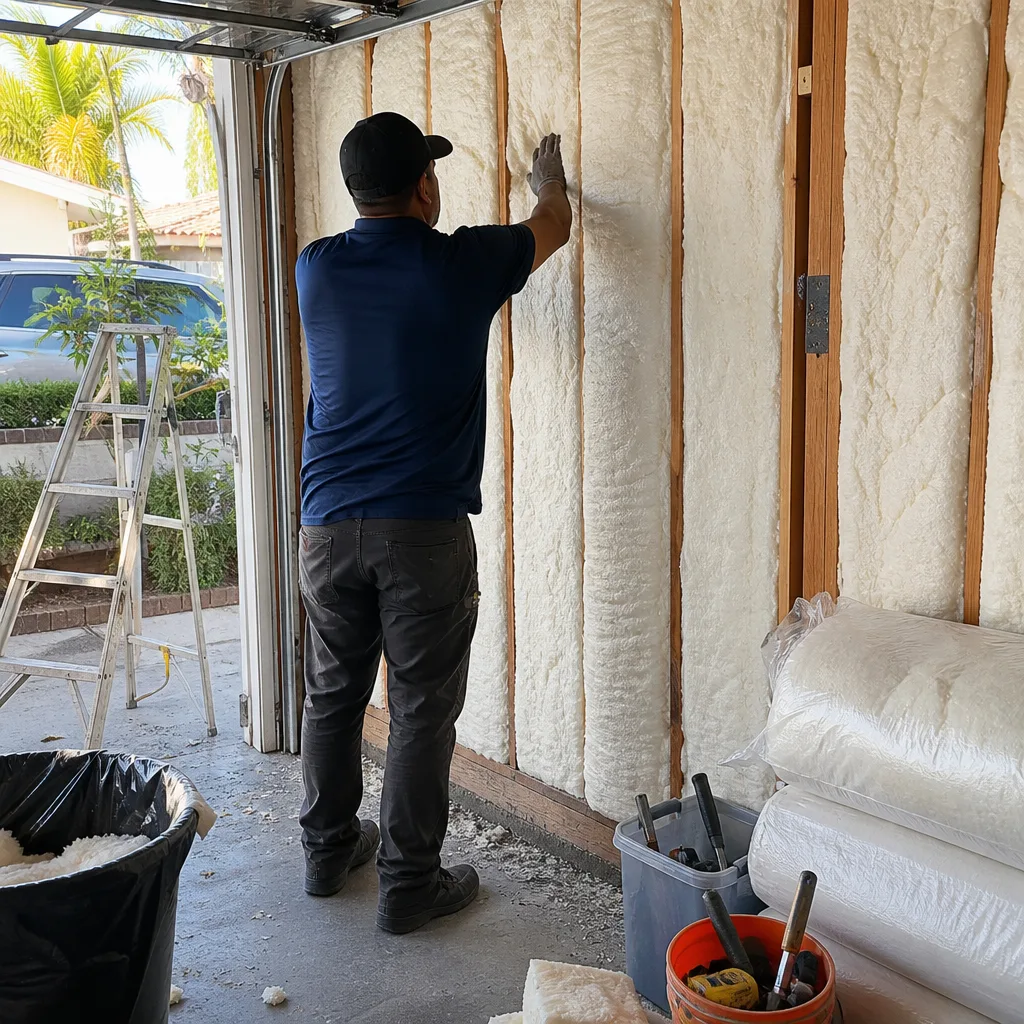 After
AfterReplacement Cost & What’s Included
| Scope | Price Range (Newport Beach) |
|---|---|
| Spot repair, up to 50 sq ft | $850 - $1,400 |
| Partial re-spray, 200-400 sq ft | $2,800 - $5,200 |
| Full attic removal and replacement, 1,000+ sq ft | $6,500 - $11,000 |
| Air sealing + blower-door verification (add to any) | $1,200 - $2,400 |
What drives the range: accessibility (a 12/12 pitch above Corona del Mar costs more than a walkable ranch in Eastbluff), whether existing foam needs mechanical removal or can be patched over, and whether the roof deck needs repair first. Every quote is flat and written before work starts, per Haven Standard Clause 1. The 365-Day Done Right Promise covers adhesion, coverage, and the final blower-door number. We deliver a Documented Photo Record showing before, during, and after, plus the written scope and warranty before anyone lifts a tool.
DIY or Call Us?
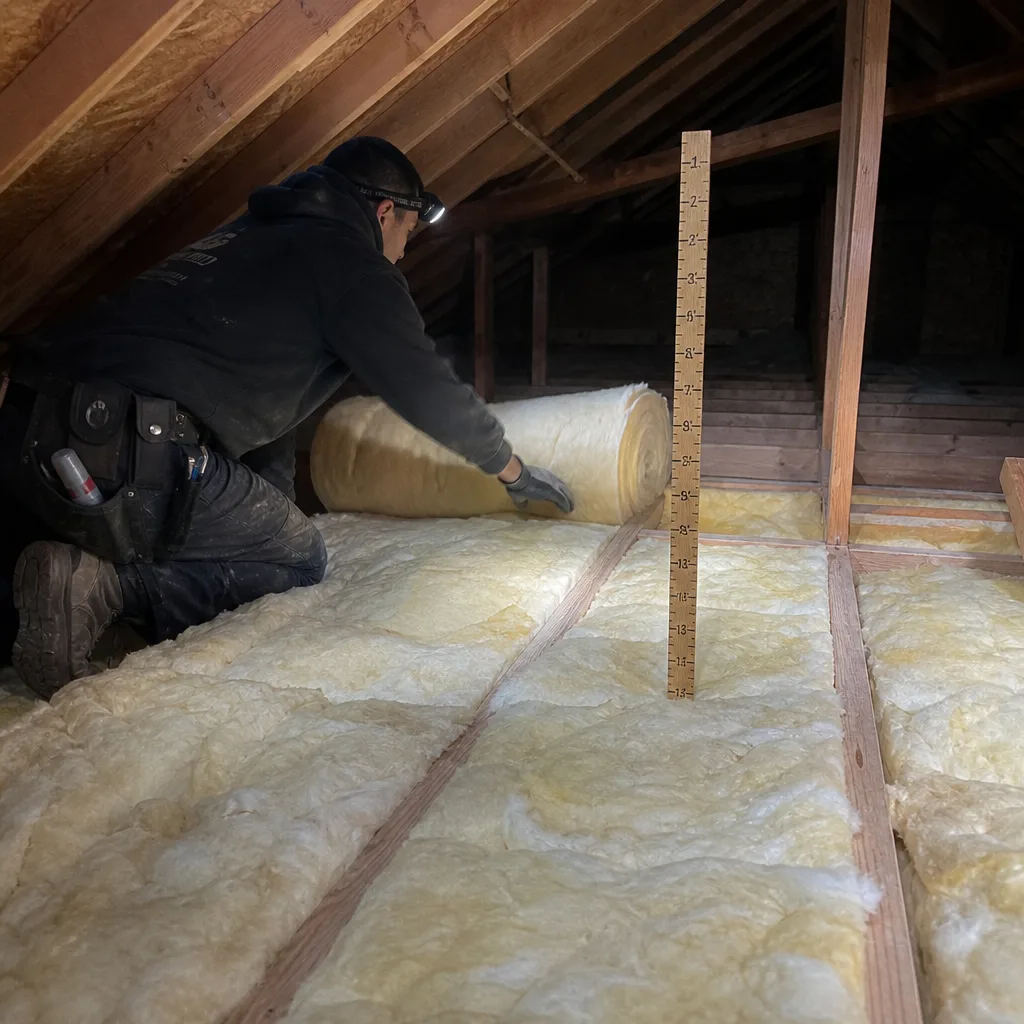
There’s a short list of what a homeowner can safely check. Look for the obvious: disconnected bath fan ducts, daylight through the ridge vent, or rodent droppings on the foam surface. Note the locations. Take photos. That’s it.
Everything else belongs to someone with the right respirator, rigging, and training. Spray foam application involves isocyanates and flame-retardant chemicals that require supplied-air respirators and full containment. Removal with a reciprocating saw or wire brush kicks up particulate that settles in the HVAC system. And the structural question, whether a compromised section can be patched or the whole bay needs stripping, takes a density test and a moisture meter to answer honestly. We’ve seen homeowners spray Great Stuff into a delaminated cavity and call it fixed; six months later the wood rot is worse and the repair costs triple. Seal the leaks first. Then insulate. The R-value on the bag means nothing if the air is moving freely around it. Call (657) 261-8265 and we’ll read your situation with you, no charge for the assessment.
FAQs
Properly applied Icynene open-cell foam lasts 80+ years in a dry attic, but our coastal climate introduces real variance. Salt air infiltration through poorly sealed eaves, plus the occasional roof leak during a winter storm, can degrade foam in 10 to 15 years if the attic isn’t also an air-sealed envelope. We verify this with a blower-door test before we quote any repair. Call (657) 261-8265 for an exact read on your attic’s condition - estimates are free.
Small delaminated areas, up to roughly a square foot, can be cut back to sound substrate and patched with matched-density foam. Larger areas with moisture intrusion or rodent contamination need full removal; the contaminants penetrate the cell structure and patching over them traps the problem. We make this call after a core sample and moisture reading, both included in our free assessment. Call (657) 261-8265 to schedule.
Spot repairs finish in a single day. Full attic removals with re-spray need two to three days: one for mechanical removal and deck prep, one for application and cure, sometimes a third for trim and cleanup if the attic is finished or densely stored. We don’t rush cure time; premature occupancy risks off-gassing and poor adhesion. Call (657) 261-8265 to check current scheduling.
We stock Icynene-compatible open-cell and closed-cell formulations in standard densities, plus Reflectix radiant barrier for hybrid assemblies. For exact Icynene OEM color matches or legacy formulations, we order with a 48-hour lead time. Most Newport Beach jobs don’t need OEM; the thermal and air-barrier performance comes from proper density and application technique, not the brand on the drum. Call (657) 261-8265 to confirm what’s right for your repair.
Ready to get your attic performing the way it was designed to? Call (657) 261-8265 for a free estimate. We’ll run the blower-door test, show you the numbers, and give you a written price before any work starts. Haven Standard: Have it in writing.
Written by Wes Okafor, Owner, Topside Attic Insulation Newport Beach at Topside Attic Insulation Newport Beach, serving Newport Beach and nearby areas.