
Icynene Attic Air Sealing: The Newport Beach Owner’s Guide
We stock and install Icynene-compatible attic air sealing assemblies in Newport Beach, with most completed jobs running between $1,800 and $3,400 depending on attic square footage and penetration count. Same-day service is available when you call before noon, and we carry the common Icynene gasket sets, spray foam applicator tips, and cured-foam removal tools on every truck. Most Newport Beach homeowners discover their Icynene air sealing has failed when a recent energy audit shows elevated CFM50 readings, or when they notice hot attic air pushing through can light trims and top plate gaps that were once sealed tight.
Which Icynene Models This Applies To
Icynene’s open-cell spray foam systems, specifically the LD-C-50 and MD-R-200 series installed in Newport Beach attics between 2010 and 2020, rely on a continuous air barrier at the attic floor plane. The critical wear components are the cured-foam gaskets around top plates, the foam-to-drywall bond at partition walls, and the sealant beads at chase penetrations for plumbing and electrical. You can identify your system by the Icynene batch label, usually found on a joist or rafter near the attic access hatch; the series code is stamped in the upper right corner.
The compatibility gotcha: Icynene’s early LD-C-50 formulations (pre-2014) cure to a slightly softer density than later batches, so replacement gaskets must match the durometer or the new seal will over-compress the old foam and create a gap. We stock both the OEM Icynene gasket sets and the SpecSeal SSS-200 aftermarket equivalent, which we prefer for the pre-2014 installs because its 40 Shore A durometer matches the original foam compression characteristics. Topside Attic Insulation Newport Beach is an independent service provider, not affiliated with Icynene.
Signs Your Icynene Attic Air Sealing Is Failing
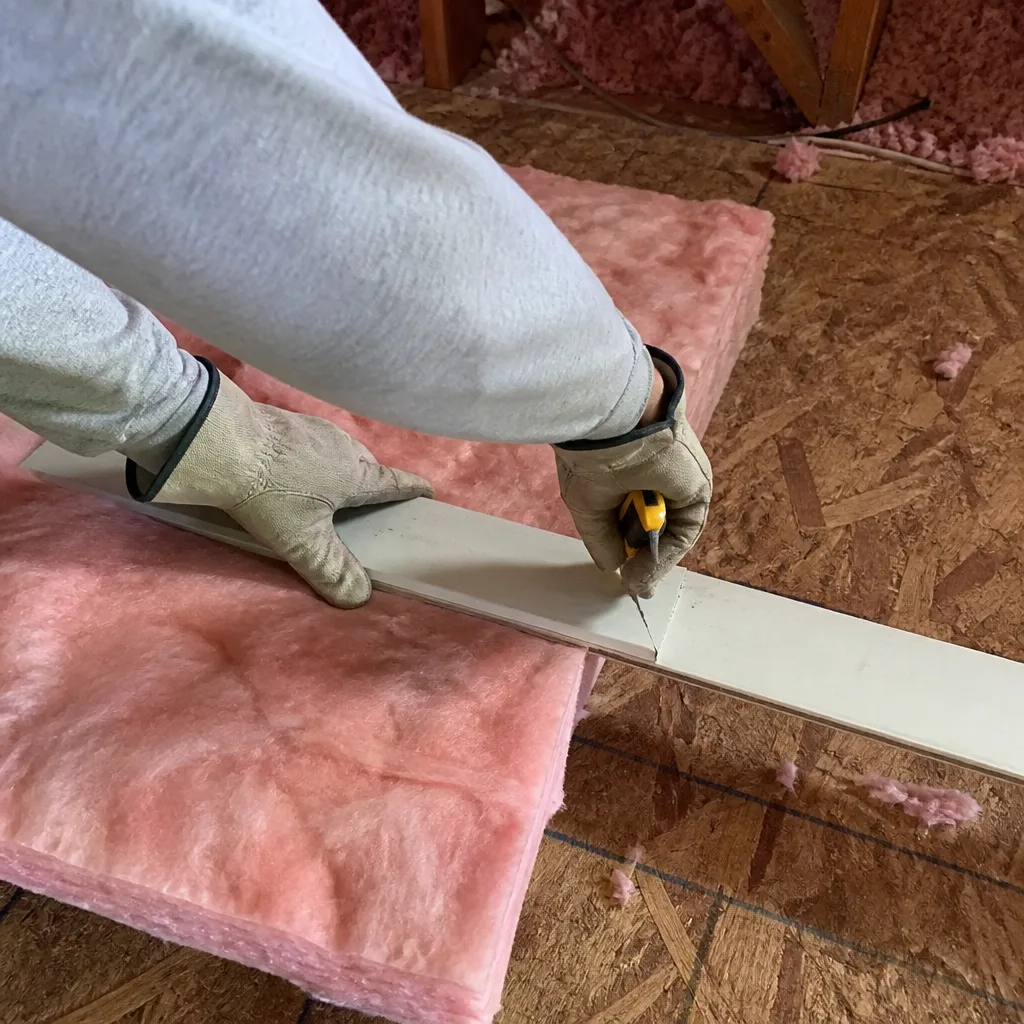
- Hot spots on ceiling drywall below attic penetrations. The Icynene seal around can light housings and top plates has cracked or pulled away, allowing attic air (often 140°F in a Newport Beach August) to convect directly against the drywall. We see this most often in the wood-framed homes east of Jamboree Road where truss uplift cycles the foam annually.
- Dust streaking around ceiling registers and light trims. When the attic floor depressurizes relative to conditioned space, it pulls attic particulates through any gap the Icynene no longer seals. The streaking pattern points to the exact failure location.
- Blower-door reading creep between audits. A home that tested at 2,800 CFM50 after original Icynene installation now reads 3,600 or higher. The foam hasn’t disappeared; the bond at framing interfaces has degraded, especially where southern roof planes cook the top plates.
- Musty odor in upper rooms during Santa Ana wind events. Positive attic pressure forces air through failed Icynene seals at wire penetrations and chase walls. Newport Beach’s coastal humidity plus attic heat grows mold on the conditioned-side drywall.
- Insulation settling away from attic floor perimeter. Air moving through a failed Icynene seal carries enough velocity to redistribute loose-fill insulation, creating bare strips at eaves and top plates that are visible from the attic hatch.
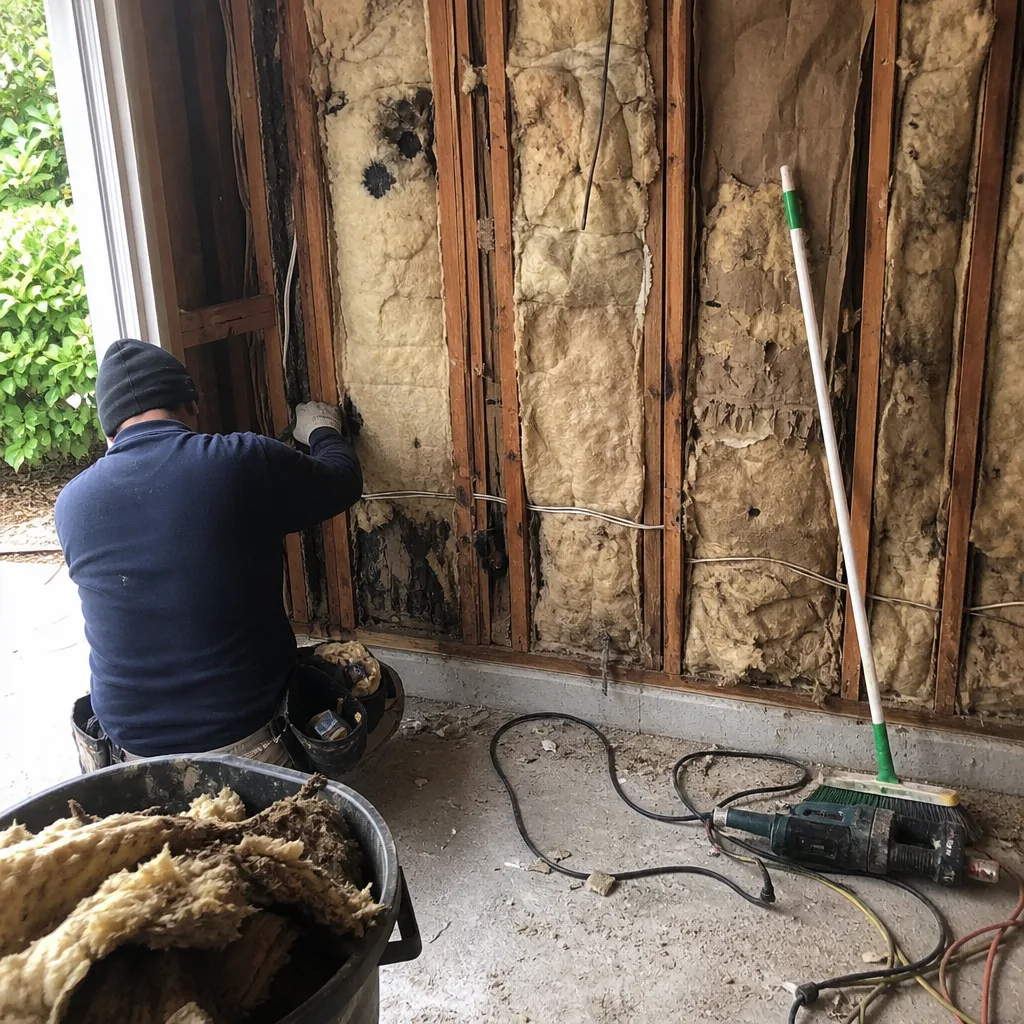 Before
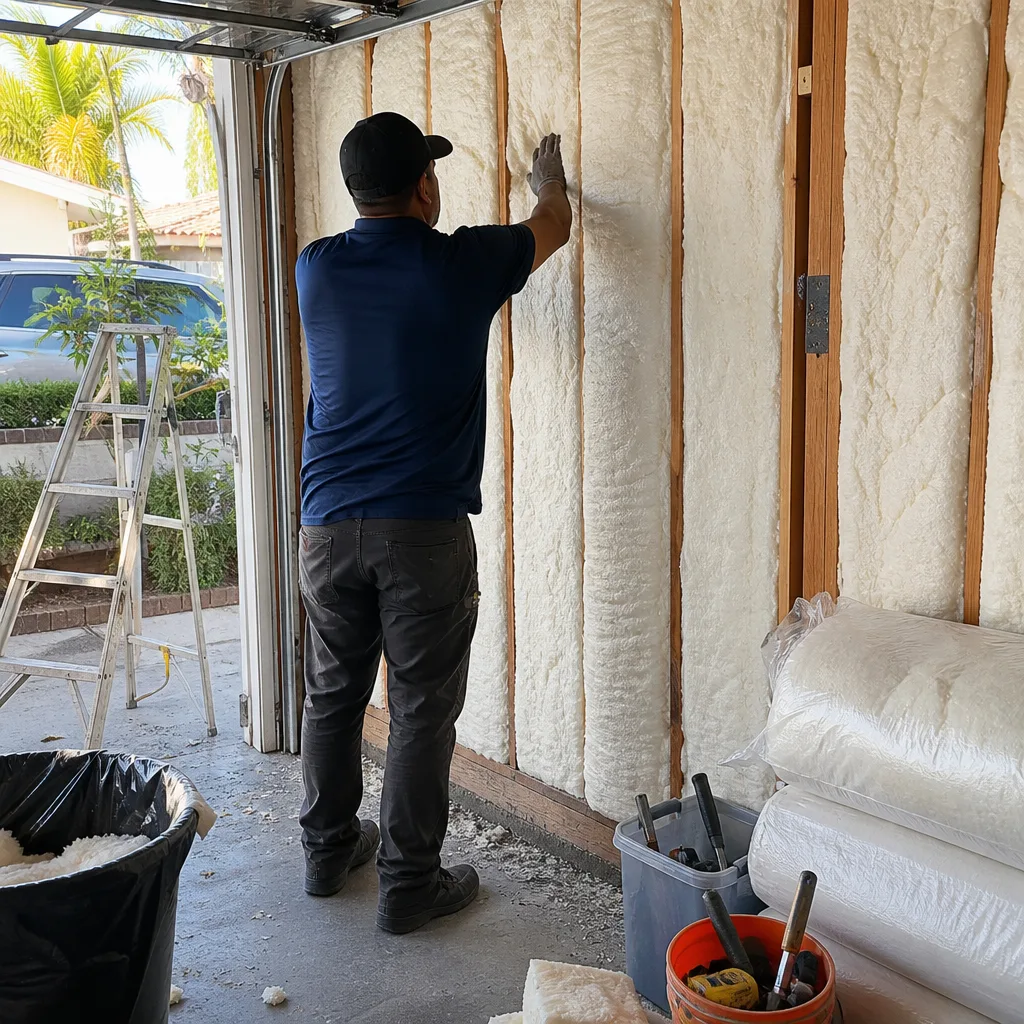 After
AfterReplacement Cost & What’s Included
Most Icynene attic air sealing reworks in Newport Beach run $1,800 to $3,400 for attics between 800 and 2,200 square feet. The low end covers targeted repair: gasket replacement at top plates and can lights, foam touch-up at chase penetrations, spot removal of degraded material. The high end involves full attic floor re-sealing, which we recommend when the original Icynene application exceeds 12 years or when the blower-door reading has degraded by more than 30 percent.
Every job includes: removal of failed cured foam with dedicated cutting tools (not hand scraping, which damages drywall), surface prep with Icynene-compatible primer, new gasket or foam application, and a post-work blower-door test so you see the CFM50 reduction in writing. We also stock Reflectix radiant barrier tape for chase wrapping where heat gain is severe. Under Haven Standard Clause 1, you get a written price before anyone lifts a tool, and the 365-Day Done Right Promise covers the seal integrity.
DIY or Call Us?
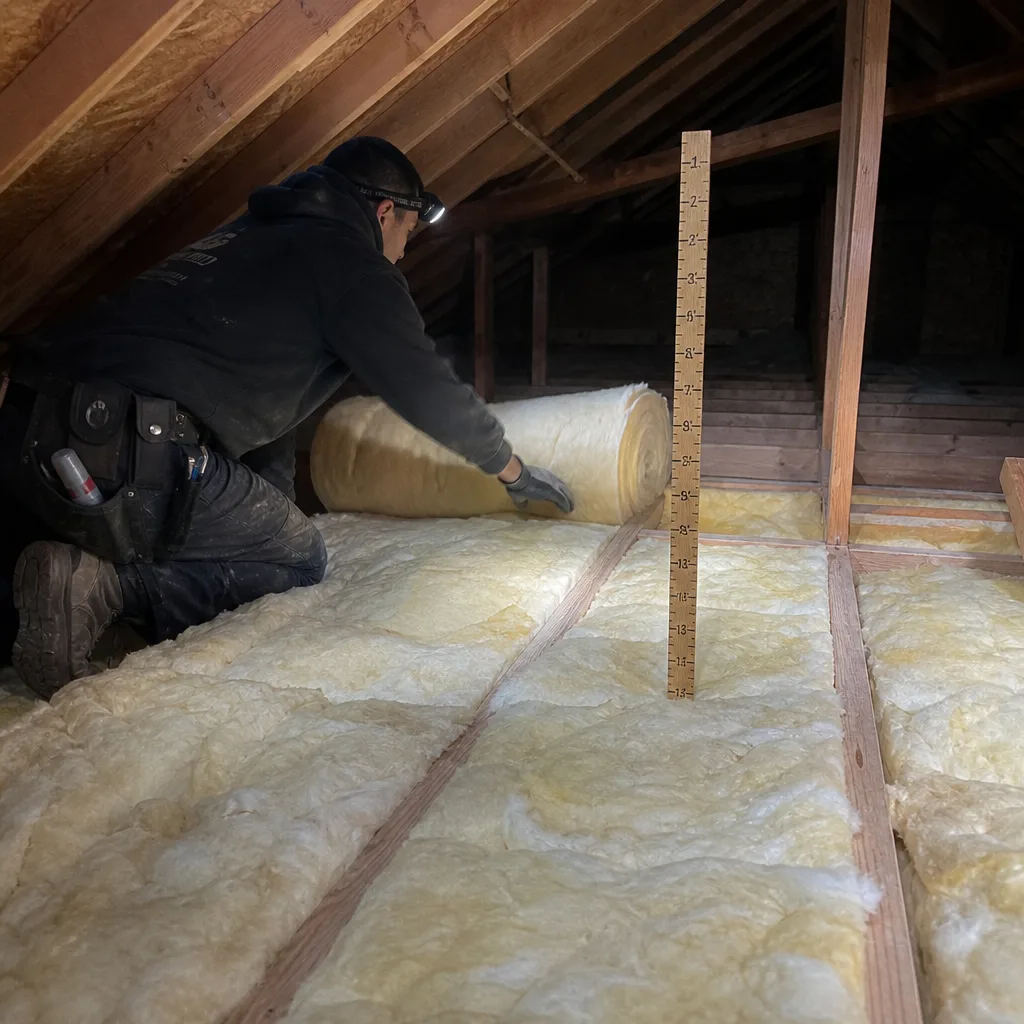
There’s safe checking, and then there’s work that belongs to someone with a respirator and training.
What you can do: from the attic hatch with a flashlight, look for visible gaps at top plates, cracked foam around can lights, and bare spots where insulation has shifted. Note the Icynene batch label if you find it. That’s useful information for us, and it costs you nothing.
What you shouldn’t do: cut or remove cured Icynene foam yourself. The mechanical removal disturbs fiberglass and possibly rodent droppings, and the dust load in a Newport Beach attic that’s been sealed for a decade is significant. More critically, re-applying open-cell foam without controlling substrate temperature and moisture content produces a bond that fails in eighteen months. We’ve re-repaired enough DIY attempts to know the pattern. Call (657) 261-8265 and we’ll run the blower-door test first so you know exactly what you’re dealing with.
FAQs
In our experience across coastal Orange County, a properly applied Icynene attic seal lasts 12 to 18 years before bond degradation at framing interfaces becomes measurable. The coastal thermal cycle, less severe than inland heat, actually helps; the bigger stressor is truss uplift in the older wood-framed stock west of MacArthur Boulevard. After year 15, we recommend a blower-door test every two years to catch degradation before it affects your conditioned air loss. Call (657) 261-8265 to schedule; estimates are free.
Localized repair is viable when the failure is limited to gasket separation at can lights or top plates, which describes about sixty percent of the calls we get. Full replacement becomes necessary when the original Icynene has widespread chalking, moisture intrusion has compromised the foam matrix, or the homeowner wants updated performance documentation for a home sale. We make that call after the blower-door test and a photo survey, both included in our initial visit. Call (657) 261-8265 for an exact scope and price.
A targeted Icynene seal repair on a typical Newport Beach attic runs four to six hours; full attic floor re-sealing takes one to two days depending on square footage and penetration density. We work from written scope, so the time estimate is in your proposal before we start. The crew leaves a Documented Photo Record and the post-work blower-door reading. Call (657) 261-8265 to check same-day availability.
We carry the common gasket sets, spray foam applicators, cured-foam cutting tools, and Icynene-compatible primers on every vehicle. For the LD-C-50 pre-2014 durometer-matched gaskets, we stock both OEM and the SpecSeal equivalent. Less common chase wrap materials for custom penetrations may require a next-day pull from our Anaheim supply house, but we never start a job without confirming every material is on hand. Call (657) 261-8265 and we’ll verify stock against your batch label.
Seal the leaks first. Then insulate. The R-value on the bag means nothing if the air is moving freely around it. Wes Okafor learned that sequencing at Olive-Harvey College on Chicago’s far southeast side, and he’s applied it to every attic from the Balboa Peninsula to the hills above Corona del Mar since.
Written by Wes Okafor, Owner, Topside Attic Insulation Newport Beach at Topside Attic Insulation Newport Beach, serving Newport Beach and nearby areas.