
Attic Baffles & Ventilation Prep in Newport Beach, CA
Attic baffles – also called rafter vents or chute vents – are rigid channels installed between rafters at the eaves that keep soffit airflow open after insulation is added. Without them, blown insulation blocks the intake vents along your roofline, starving the attic of fresh air and creating moisture and heat problems that no amount of R-value can fix. At Topside Attic Insulation Newport Beach, ventilation prep is completed before a single pound of insulation goes in – not as an add-on, but as a hard prerequisite built into every Attic Insulation in Newport Beach project we take on.
Newport Beach’s coastal climate makes this more consequential than most homeowners expect. The marine layer that rolls in off the Pacific – common from May through August in neighborhoods like Balboa Peninsula, Corona del Mar, and Newport Heights – carries enough ambient moisture to condense inside an attic that isn’t breathing correctly. We’ve pulled insulation in homes near Lido Isle and found the OSB sheathing dark with moisture damage that started not from a roof leak, but from blocked soffits. Proper baffle installation and ventilation prep prevent exactly that.
If you want to talk through what your attic needs before committing to anything, call us at (657) 261-8265. A live person picks up – no voicemail loop, no callback window.
When You Need Attic Baffles & Ventilation Prep
- You’re planning new blown-in insulation. Blown-in cellulose or fiberglass (like GreenFiber cellulose, which we use on a number of Newport Beach jobs) migrates toward soffit openings during installation. Without baffles creating a physical barrier, it piles against the eaves and blocks the intake vents the attic depends on.
- Your existing insulation has been piled high and you’re noticing warm ceilings despite adequate R-value. This is a classic sign that soffit intake is blocked. We see it regularly in Corona del Mar homes built in the 1970s and early 1980s where original blown insulation was added without any ventilation prep.
- Your attic shows signs of moisture or mold near the eaves. Condensation tends to concentrate at the roof perimeter first. In Newport Beach’s marine layer environment, a poorly ventilated attic can accumulate enough moisture to support mold growth on the underside of the roof deck even in the absence of a visible leak.
- Your energy bills are higher in summer than the insulation level would predict. When soffits are blocked, the attic can’t exhaust heat through ridge or gable vents. Attic temperatures in Newport Beach during September – before the marine layer reasserts itself – can exceed 150°F when ventilation is compromised, and that heat transfers directly through the ceiling into conditioned space.
- A home inspector or energy auditor flagged inadequate attic ventilation. This comes up frequently in Newport Beach homes that changed ownership between 2018 and 2023 and had insulation added by previous owners without a ventilation assessment first.
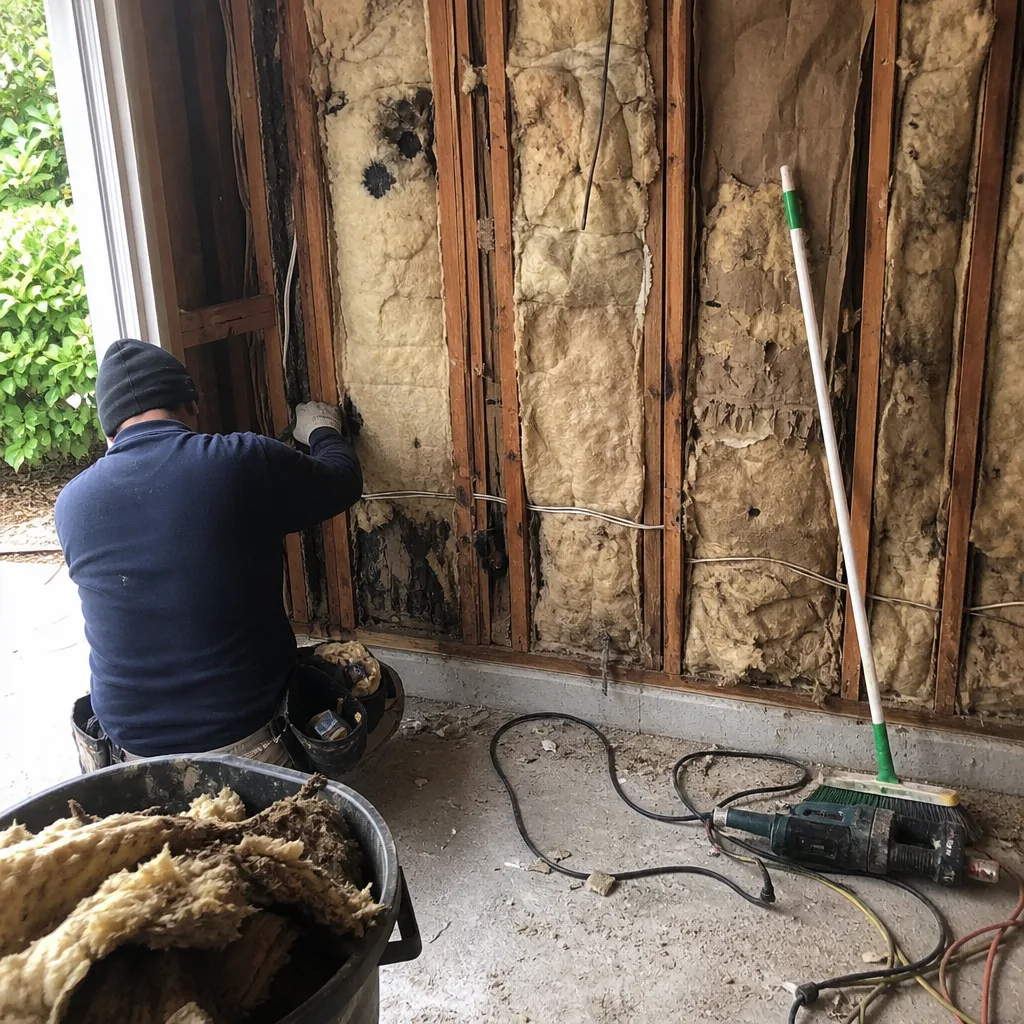
- You’re having old insulation removed and replaced. Removal is the right time to inspect baffles, replace any that are damaged, and install them where they were never present – before anything new goes in.
Our Attic Baffles & Ventilation Prep Process
-
Pre-Work Attic Inspection and Documentation
Before touching anything, our technician photographs the attic floor, eaves, and any visible rafter bays. We’re looking at the existing soffit vent coverage, whether any baffles are present, and whether the current insulation has already migrated into the eave zone. You receive a copy of this photo record – it’s part of every visit under the Haven Standard, not something available on request. We also note the net free ventilation area – the combined open area of intake and exhaust vents – and calculate whether it meets the 1:150 or 1:300 ratio California Building Code requires, depending on whether there’s a vapor retarder present.
-
Air Sealing of Top Plates, Penetrations, and Can Lights
Baffles address ventilation. Air sealing addresses a different problem: conditioned air escaping through gaps in the thermal envelope. We complete air sealing before ventilation prep and before any insulation is added – not after. Top plates (the framing members at the ceiling-wall junction), electrical and plumbing penetrations, and recessed can lights are sealed with low-expansion spray foam or an appropriate caulk. On applicable jobs we run a blower-door test – a pressurization measurement that shows, in one number, how much air your building envelope is losing – before and after sealing so you can see what actually changed. This sequencing matters: insulation over an unsealed attic floor is insulation doing half its job.
-
Baffle Installation at Each Rafter Bay
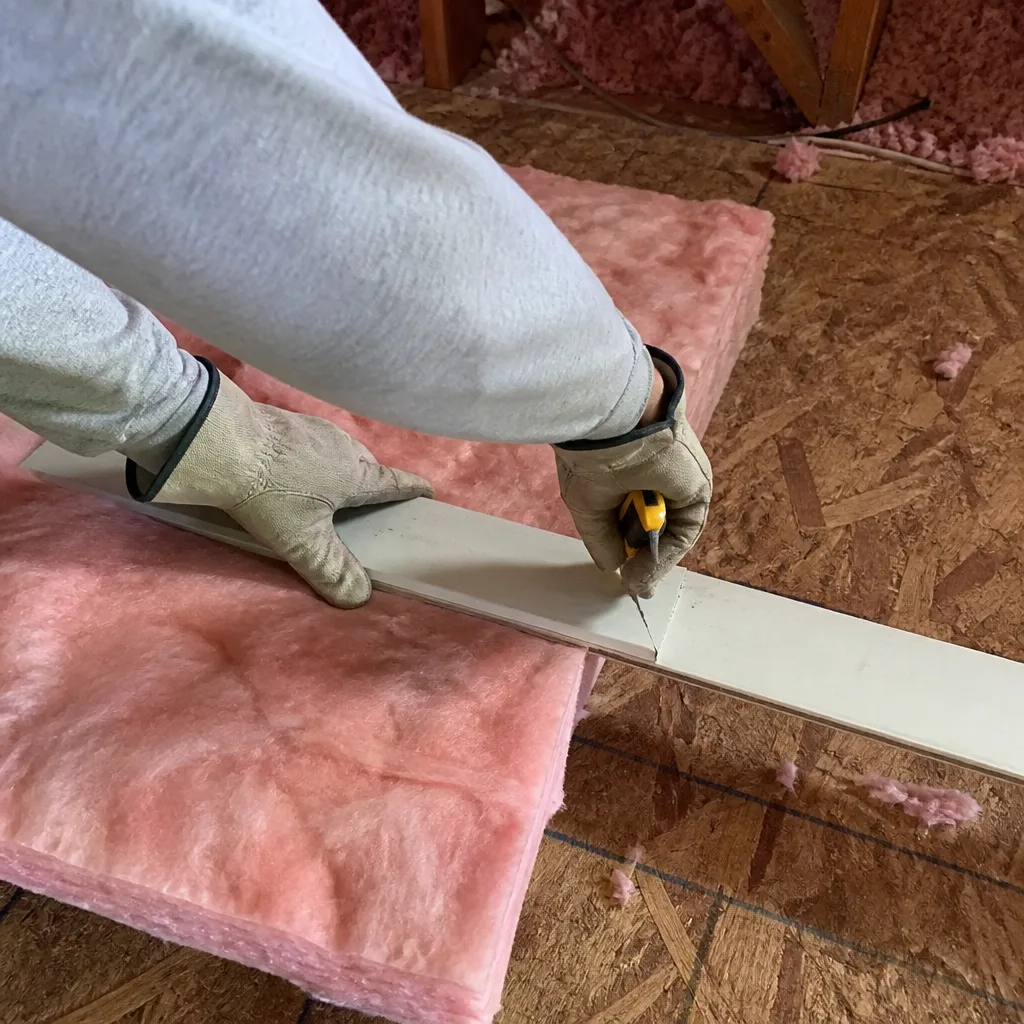
We install Attic Batt Insulation baffles – typically rigid foam or cardboard chute vents, depending on rafter bay depth and the insulation type going in – in every rafter bay that communicates with a soffit vent opening. Each baffle runs from the soffit plate up the rafter to a height that exceeds the planned insulation depth by at least two inches, maintaining an unobstructed air channel from the soffit intake to the open attic space above. In Newport Beach’s older housing stock in areas like Eastbluff and Harbor View Hills, rafter bays are sometimes irregular, which means some baffles require field-trimming to fit correctly. We cut them on-site; we don’t skip bays because they’re inconvenient.
-
Exhaust Vent Assessment and Adjustment
Intake ventilation only works when there’s a corresponding exhaust path. We check ridge vents, gable vents, and any power ventilators for blockage, damaged screens, or inadequate sizing. A baffle installation that opens up soffit intake without a clear exhaust path just moves the imbalance. If we find that exhaust venting needs work, we document it in the written scope and give you a flat price for any additional work before anything is done – Haven Standard Clause 1: written price before any work starts, no exceptions.
-
Pre-Insulation Photo Record
Once baffles are installed, air sealing is complete, and ventilation is confirmed balanced, we photograph the finished prep work before Attic Insulation services begin. This is the record you get showing what was done before insulation covered it. It’s the only way to verify – not just trust – that the prep work happened. We include it in the documented photo record delivered at job close, alongside any blower-door readings taken during the visit.
-
Written Scope and Warranty Delivered Before Insulation Begins
The ventilation prep scope, the baffle count, the air-sealing locations, and the 365-Day Done Right Promise are all written down and in your hands before insulation work starts. If anything isn’t right within the first year, we make it right – no fee, no argument. The promise is written, not verbal, and it covers the prep work as thoroughly as it covers the insulation itself.
 Before
 After
AfterAttic Baffles & Ventilation Prep Pricing in Newport Beach
How Much Does Attic Insulation Cost? (2026 Price Guide) - Newport Beach, CA depends on four variables for ventilation prep: the number of rafter bays that need baffles, whether air sealing is being done at the same time (it should be), the attic’s accessibility, and whether any exhaust vent work is needed. Here’s an honest breakdown of what most Newport Beach homeowners pay:
| Scope | Typical Range |
|---|---|
| Baffle installation only (1,000-1,500 sq ft attic, full perimeter) | $350 – $650 |
| Baffle installation + attic air sealing (top plates, penetrations, can lights) | $750 – $1,400 |
| Baffle + air sealing + exhaust vent adjustment or replacement | $1,100 – $2,000 |
| Blower-door test (before and after, with documented readings) | $150 – $300 (often bundled into full-scope jobs) |
These ranges reflect Newport Beach market conditions and the labor time typical for the housing stock here. A 2,400-square-foot home in Newport Coast with a low-pitch roof and limited attic clearance will run toward the top of the range; a straightforward 1,200-square-foot home in West Newport with a conventional gable roof and good access will run toward the bottom.
What doesn’t affect our price: whether the job is large or small, whether you’ve already spoken with another contractor, or whether you want to ask questions before committing. Under the Haven Standard, the written price comes before any work starts – that’s not something we negotiate away from on a case-by-case basis. And if you’ve received a written estimate from another contractor, we’ll read it with you at no charge and tell you exactly what we’d do differently and why.
Call (657) 261-8265 to schedule a free on-site assessment for Attic Insulation Near Me in Newport Beach, CA. We’ll walk the attic, count the rafter bays, note the existing vent configuration, and give you a flat written price before we schedule any work.
FAQs – Attic Baffles & Ventilation Prep
What are attic baffles and why do they matter in Newport Beach?
Attic baffles are rigid channels installed in rafter bays at the eaves that keep a clear airflow path from soffit intake vents to the open attic, even after insulation is added. In Newport Beach specifically, they matter because the coastal marine layer carries moisture-laden air that an improperly ventilated attic can’t exhaust. When soffits are blocked – by insulation that was installed without baffles – that moisture accumulates on the underside of the roof deck, and OSB sheathing that stays damp long enough will degrade and support mold growth. Baffles are not an optional upgrade; they’re what makes the ventilation system work as designed after insulation work is done.
Can baffles be installed without removing existing insulation?
Sometimes, but it depends on how far existing insulation has migrated into the rafter bays. If blown insulation is packed against the soffit plate, we need to clear it from that zone before a baffle can be installed and secured properly – and that clearing needs to be done carefully to avoid distributing material into the vent openings. We assess this during the initial attic inspection and document what we find. If partial clearing is required, that labor is scoped and priced in writing before we touch anything. What we won’t do is install a baffle on top of compacted insulation and call the job done; a baffle that isn’t seated against the roof deck isn’t channeling air – it’s just a piece of foam in the way.
Does ventilation prep affect how much insulation I need?
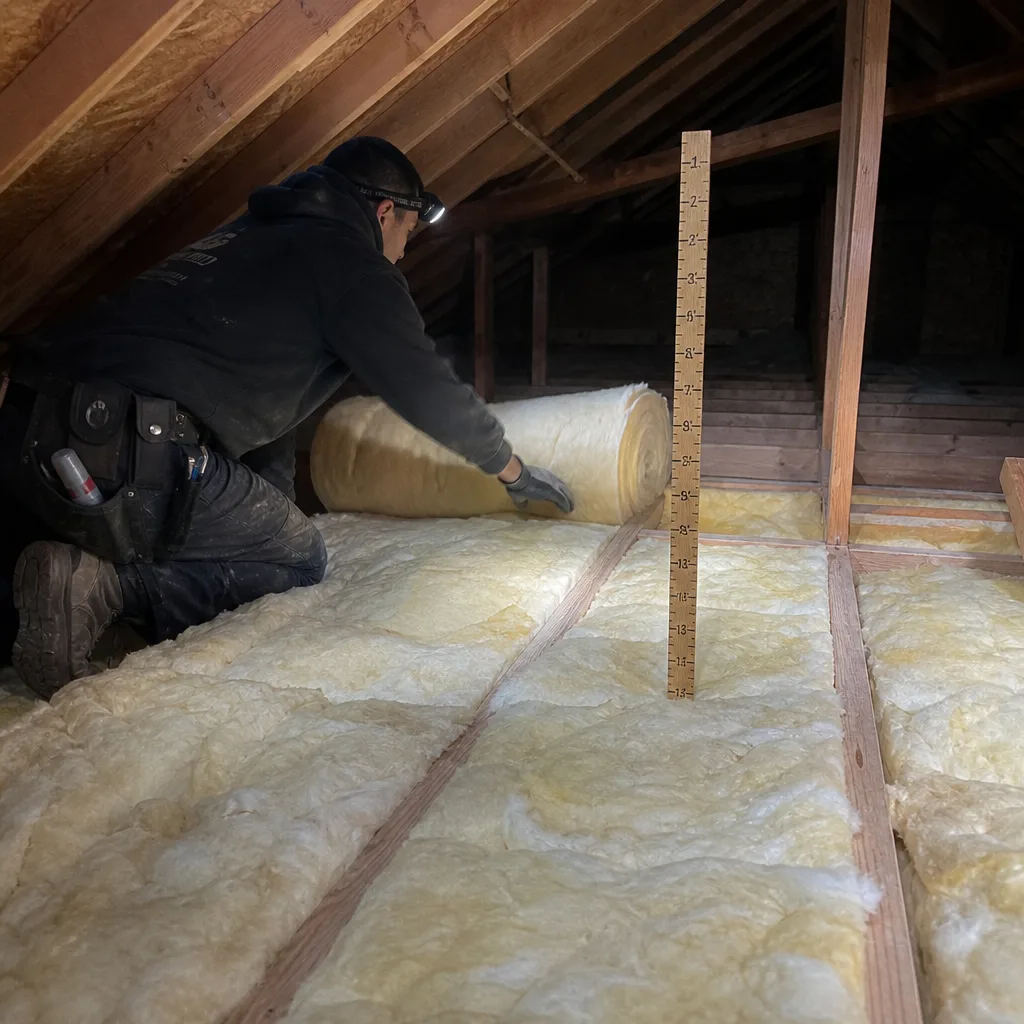
Not the target R-value, but sometimes the practical depth. California’s Title 24 energy code sets minimum R-value requirements for attic insulation in Newport Beach’s climate zone (Zone 6), and baffles don’t change that target. What they do affect is how deep insulation can be installed at the eaves without blocking the soffit vent opening. A properly installed baffle gives you a two-inch (minimum) clear air channel at the roofline while still allowing full-depth insulation in the center of the attic. On jobs where we’re adding GreenFiber blown cellulose or blown fiberglass to reach a target depth, baffle height is calculated before the fill begins so the depth at the perimeter is consistent with the rest of the attic floor. This is one reason sequencing matters: the baffle depth sets the insulation depth, not the other way around.
How do I know the ventilation prep work was actually done correctly?
You get a documented photo record showing each step – the pre-work condition, the air-sealing locations, and the installed baffles – before insulation covers any of it. That photo record is delivered at job close, included on every visit under the Haven Standard, not available as an upgrade. On jobs where a blower-door test is part of the scope, you receive the before and after CFM50 readings – a pressurization figure that shows, in one number, how much conditioned air the envelope was losing before sealing and after. Documentation you can look at is the only honest answer to “how do I know”; if a contractor can’t show you what they did before it was covered, you’re taking their word for it.
Key Takeaways
- Attic baffles maintain a clear soffit-to-ridge airflow path after insulation is installed – without them, blown insulation blocks the intake vents the ventilation system depends on.
- Newport Beach’s marine layer climate makes proper attic ventilation more consequential than in drier inland climates; blocked soffits concentrate moisture at the roof perimeter.
- Ventilation prep – baffles, air sealing, and exhaust vent assessment – is completed before insulation at Topside Attic Insulation Newport Beach, not after.
- Pricing for baffle installation and ventilation prep in Newport Beach typically runs $350 to $2,000 depending on scope, attic size, and whether exhaust vent work is needed.
- Every job closes with a documented photo record showing the prep work before insulation covered it, and with a flat written price delivered before any work starts.
- The 365-Day Done Right Promise applies to ventilation prep work as fully as it applies to insulation – in writing, not verbally.
Topside Attic Insulation Newport Beach is independently owned and operated under The Haven Standard since 2016, and is part of the broader home building-envelope services network. If your attic needs baffle installation, ventilation prep, or a full air-sealing assessment before new insulation goes in, call (657) 261-8265 – a live person answers, the assessment is free, and the written price comes before any work starts.
Written by Wes Okafor, Owner at Topside Attic Insulation Newport Beach, serving Newport Beach.