
Rockwool Attic Insulation: The Newport Beach Owner’s Guide
We stock and install Rockwool-compatible attic insulation systems in Newport Beach, with most residential jobs running between $2,800 and $5,400 depending on attic square footage and whether air sealing is needed first. Same-day installation is available on stocked Comfortbatt and AFB evo orders placed before 10 a.m. Most Newport Beach homeowners discover their Rockwool insulation is failing when upstairs rooms won’t stay cool despite the AC running flat out, or when they pull up attic access and find batts that have compressed to half their labeled thickness, settled away from top plates, or darkened from dust infiltration through bypasses that were never sealed.
Which Rockwool Models This Applies To
We work with the full Rockwool residential line: Comfortbatt (standard wall and attic batts in R-15 through R-30), AFB evo (acoustic/fire batt for partition walls that sometimes gets mis-spec’d in attics), Toprock DD (dense deck board for cathedral ceilings common in Corona del Mar remodels), and Safe’n’Sound (technically a wall product, but we find it in older Newport Beach attic hatches where the original installer grabbed what was on the truck).
Identification is straightforward once you’re up there. Comfortbatt carries a foil-faced or unfaced label with density marking, 3.5 lb/ft³ for standard batts, and the color is that muted brown Rockwool gets from basalt and recycled steel slag. AFB evo is darker, nearly black, and noticeably denser at 6.0 lb/ft³. Check the paper tag if it’s still legible; humidity in Newport Beach attics, especially within a mile of the water, degrades paper labels in four to six years.
OEM Rockwool is what we install. There is no quality aftermarket equivalent that matches the density and fire rating, and substituting generic mineral wool voids the thermal performance claim. We’ve seen homeowners in the Bluffs try to patch with hardware-store mineral wool and discover the R-value per inch drops from 4.2 to 3.0. We don’t do that. We stock Comfortbatt R-30 and R-38 on the truck; AFB evo and Toprock DD we pull from our Costa Mesa supplier with four hours’ notice.
Signs Your Rockwool Attic Insulation Is Failing
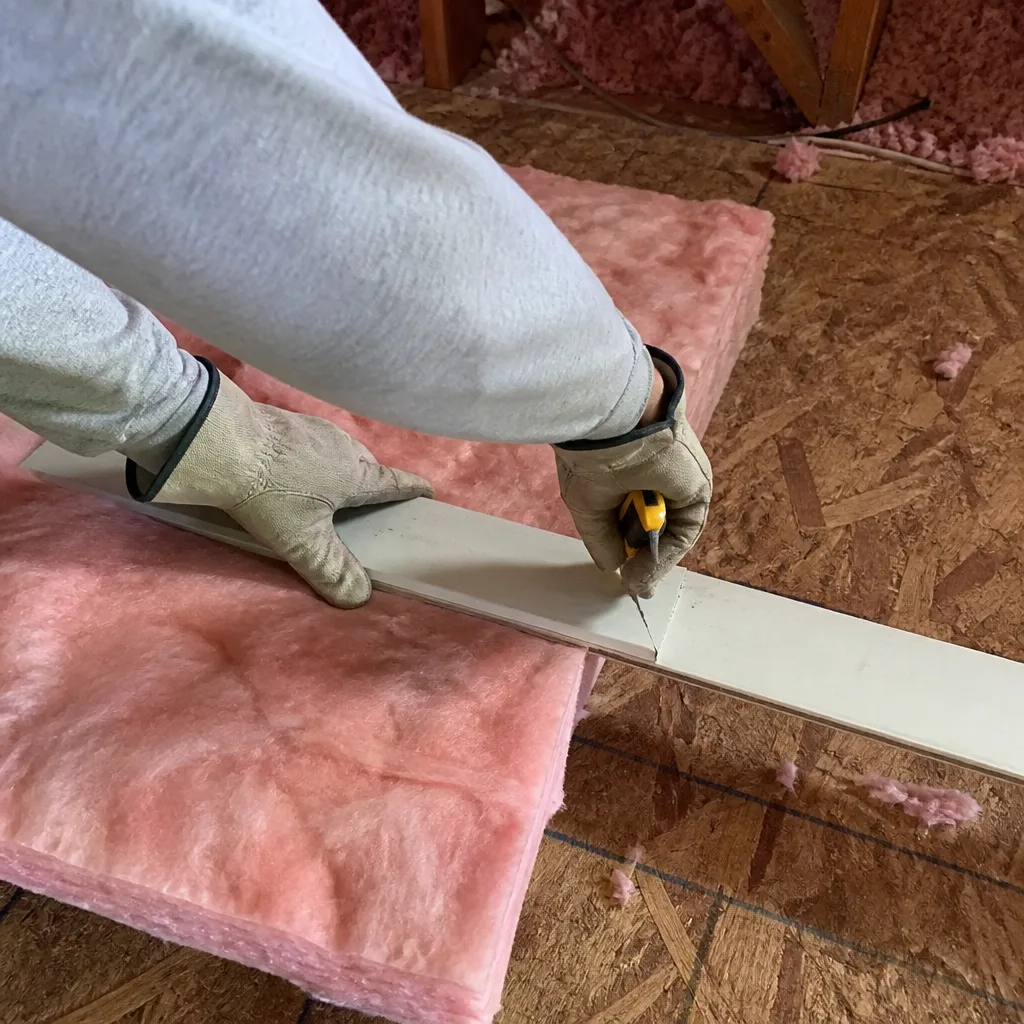
- Upstairs rooms run 8-12°F warmer than downstairs. Rockwool doesn’t lose R-value with age the way fiberglass can, but it fails completely when bypass air moves around it. In Newport Beach, we see this most in 1960s-1980s ranch homes where top plates were never sealed and Pacific onshore pressure drives conditioned air straight out the attic.
- Batts have settled below the top of the ceiling joists. Rockwool is denser than fiberglass and shouldn’t settle much, but if it was installed over an unsealed attic floor, vibration and air movement break the friction hold. Once a batt drops below joist height, the exposed lumber becomes a thermal bridge.
- Visible darkening or streaking on the batt face. Clean Rockwool is that uniform brown. Dark streaks mean air is moving through, carrying dust and pollutants from the living space. This is diagnostic gold: it shows you exactly where the leaks are.
- Ice damming or condensation stains on roof decking. Rare in Newport Beach proper, but we see it in the canyon homes above Pacific Coast Highway where nighttime temps drop below dew point. Insulation with compromised coverage lets warm, moist air hit cold sheathing.
- Energy bills climbing year-over-year with no rate change. Rockwool is stable, but the building envelope around it isn’t. We pulled blower-door readings last month on a Dover Shores home: 3,800 CFM50, with Rockwool batts that looked fine until you lifted them and found a 4-inch gap at every top plate.
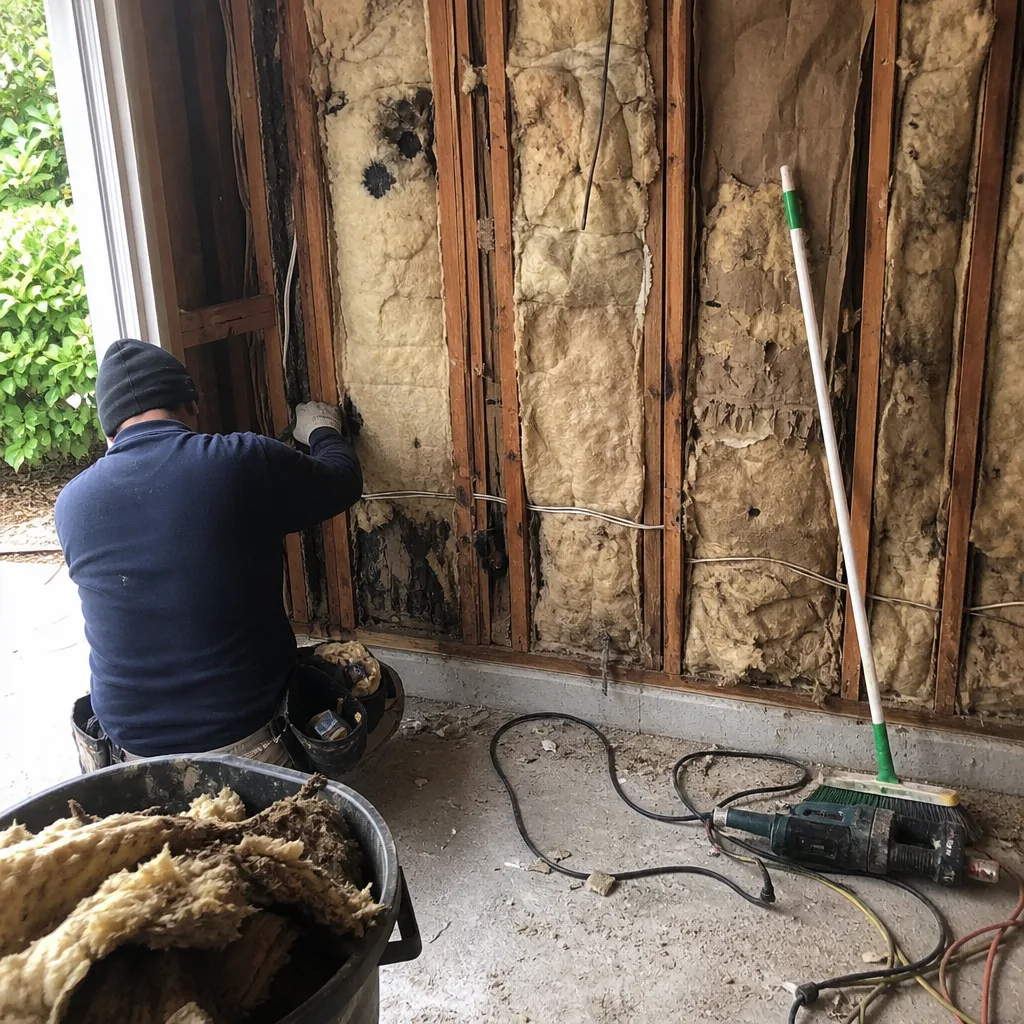 Before
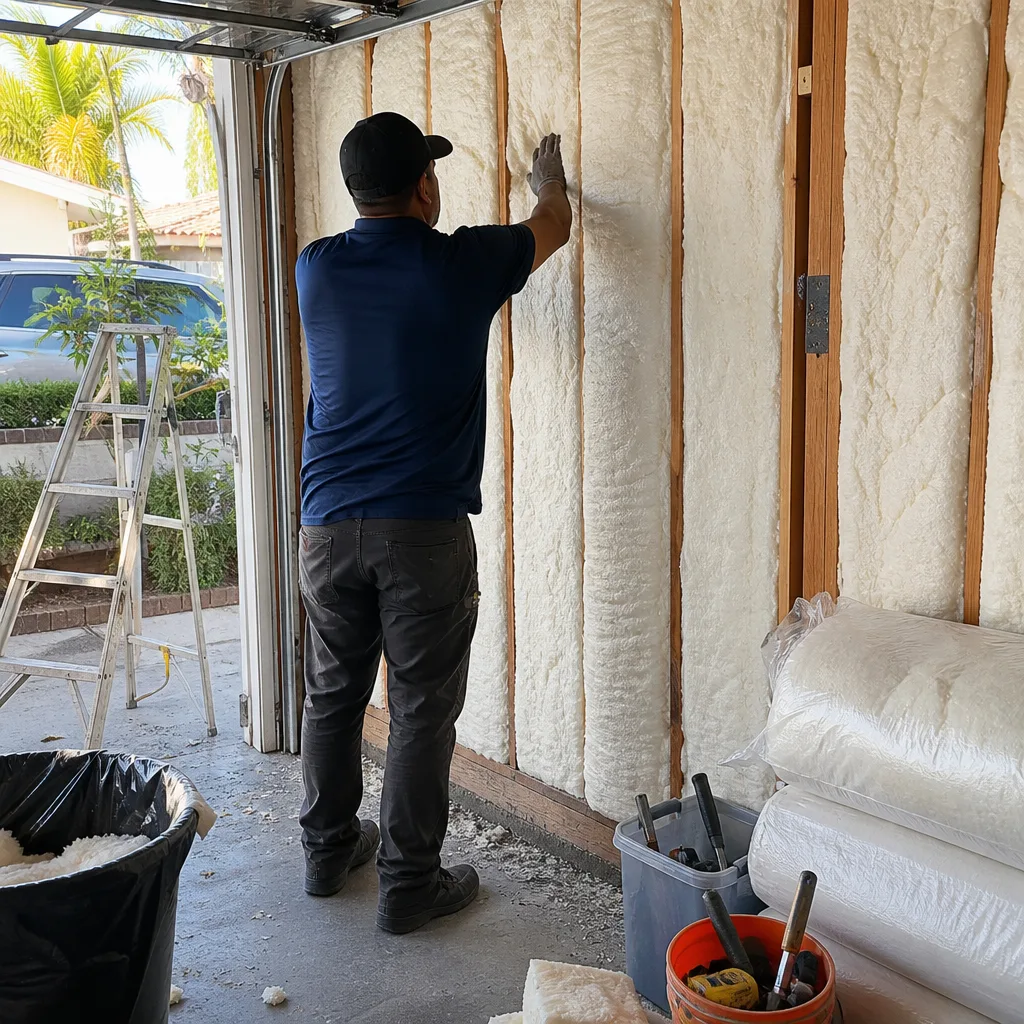 After
AfterReplacement Cost & What’s Included
Most full-attic Rockwool installations in Newport Beach run $2,800-$5,400. The low end covers a 1,000 sq ft attic with good access, straight joist bays, and existing insulation that can stay in place after we verify it’s clean. The high end hits 2,500+ sq ft with complex rooflines, removal of contaminated old material, and extensive air sealing of top plates, can lights, and chimney chases.
Every job includes: removal and disposal of old insulation if needed; air sealing of all accessible bypasses with foam and fire-rated caulk; installation of new Rockwool batts cut to fit tightly around obstructions; a Documented Photo Record of before, during, and after; and on applicable jobs, before-and-after blower-door numbers so you see the actual air leakage reduction. Under Haven Standard Clause 1, you get a written price, written scope, and written warranty before anyone lifts a tool. The 365-Day Done Right Promise covers all work. We don’t do “call for pricing.” The price is the price.
DIY or Call Us?
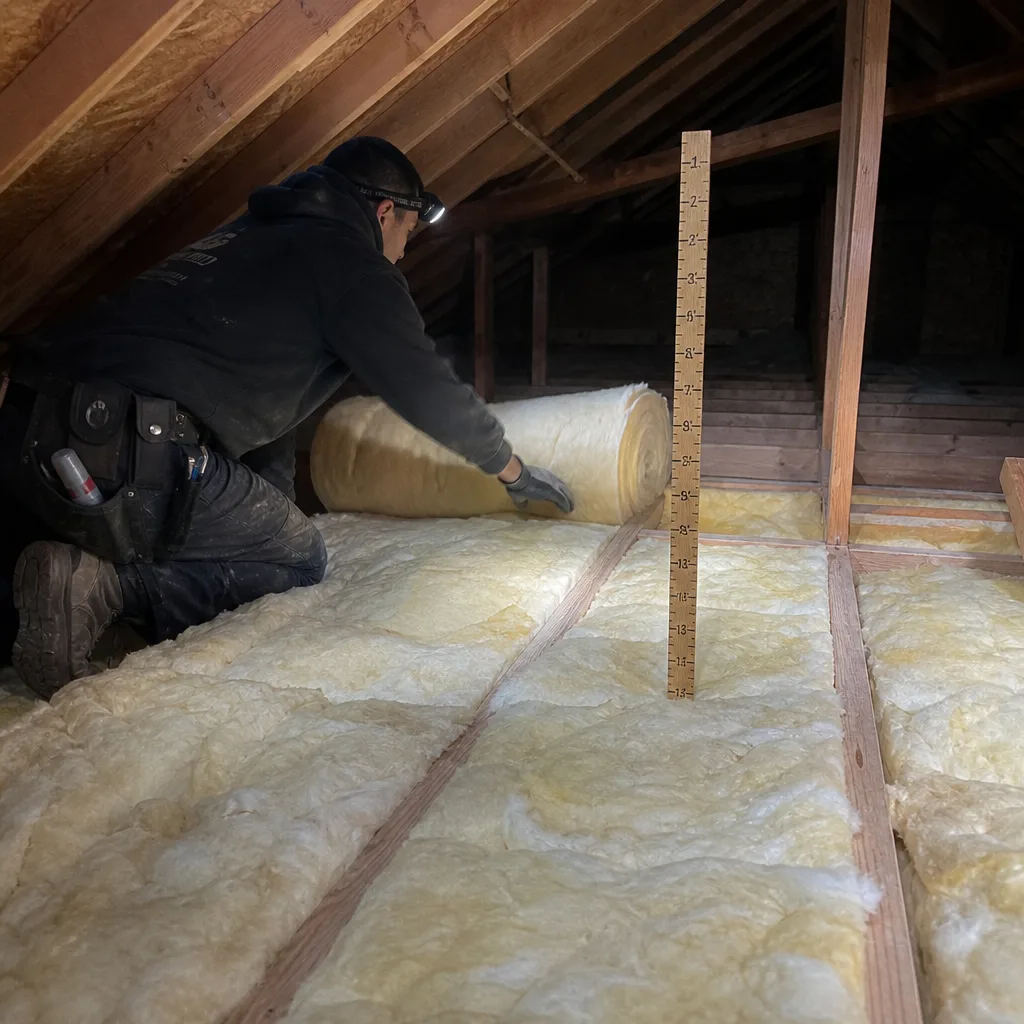
Here’s what you can safely check yourself. Look at the attic access hatch: is it weatherstripped? Is the pull-down stair frame sealed? These are the leaks that matter most per square inch, and most homeowners can fix them with foam gasket and caulk from any hardware store. You can also verify your Rockwool label and take photos of any settled or stained areas.
Here’s where DIY goes wrong. Rockwool batts are dense, 3.5 lb/ft³, which means a full attic load is heavier than it looks and harder to cut cleanly around electrical and HVAC penetrations. More critically, you cannot assess air leakage without a blower-door test, and blowing or laying new insulation over unsealed bypasses is the single most common mistake we correct in Newport Beach. We’ve torn out three DIY jobs in the last eighteen months where the homeowner spent $1,800 on material and labor, then paid us to remove it, seal properly, and reinstall. Seal the leaks first. Then insulate. The R-value on the bag means nothing if the air is moving freely around it.
We’re not affiliated with Rockwool; we’re an independent insulation contractor that sources their material because the density and fire performance hold up in coastal California conditions. If you want a second opinion on another contractor’s written estimate, bring it. We’ll read it with you.
FAQs
Rockwool itself is effectively permanent; the basalt and slag fibers don’t degrade, settle, or absorb moisture. The failure point is always the envelope around it. In Newport Beach’s marine climate, with salt air and moderate humidity, we’ve found Rockwool batts still performing at labeled R-value after 25 years in homes where the original installer sealed top plates properly. In homes where they didn’t, we see functional failure in 5-10 years as bypass air compresses and contaminates the material. Call (657) 261-8265 for an attic inspection and blower-door test; estimates are free.
Localized repair is possible if the existing batts are clean, uncompressed, and the air leaks that caused the failure have been found and sealed. We do this in about 20% of Newport Beach jobs, typically in newer homes with isolated installation errors. If the material is stained, compressed below labeled thickness, or has been exposed to rodent activity, replacement is the only defensible option. We don’t patch over compromised insulation and call it done. Call (657) 261-8265 and we’ll tell you which category you’re in after a site visit.
A standard 1,500 sq ft Newport Beach attic, with removal, air sealing, and new Rockwool batts, takes one crew day of 6-8 hours. Complex jobs with steep pitches, limited access, or extensive can-light sealing run into a second day. We don’t rush the air-sealing phase; that’s where the performance lives. You’ll get a named technician, a text when they’re on the way, and a Documented Photo Record before we leave. Call (657) 261-8265 to schedule.
We stock Comfortbatt R-30 and R-38 on every truck. AFB evo, Toprock DD, and specialty thicknesses we pull from our Costa Mesa supplier with same-day or next-morning delivery. For Newport Beach jobs, that means we can typically start within 48 hours of your written approval. We don’t take deposits before material is on-site. Call (657) 261-8265 to confirm current stock for your specific R-value and square footage.
Ready to stop losing conditioned air through your attic? Call (657) 261-8265 for a free written estimate. We’ll run a blower-door test, show you the leakage points, and give you a flat price before any work starts. Haven Standard: have it in writing.
Written by Wes Okafor, Owner, Topside Attic Insulation Newport Beach at Topside Attic Insulation Newport Beach, serving Newport Beach and nearby areas.